

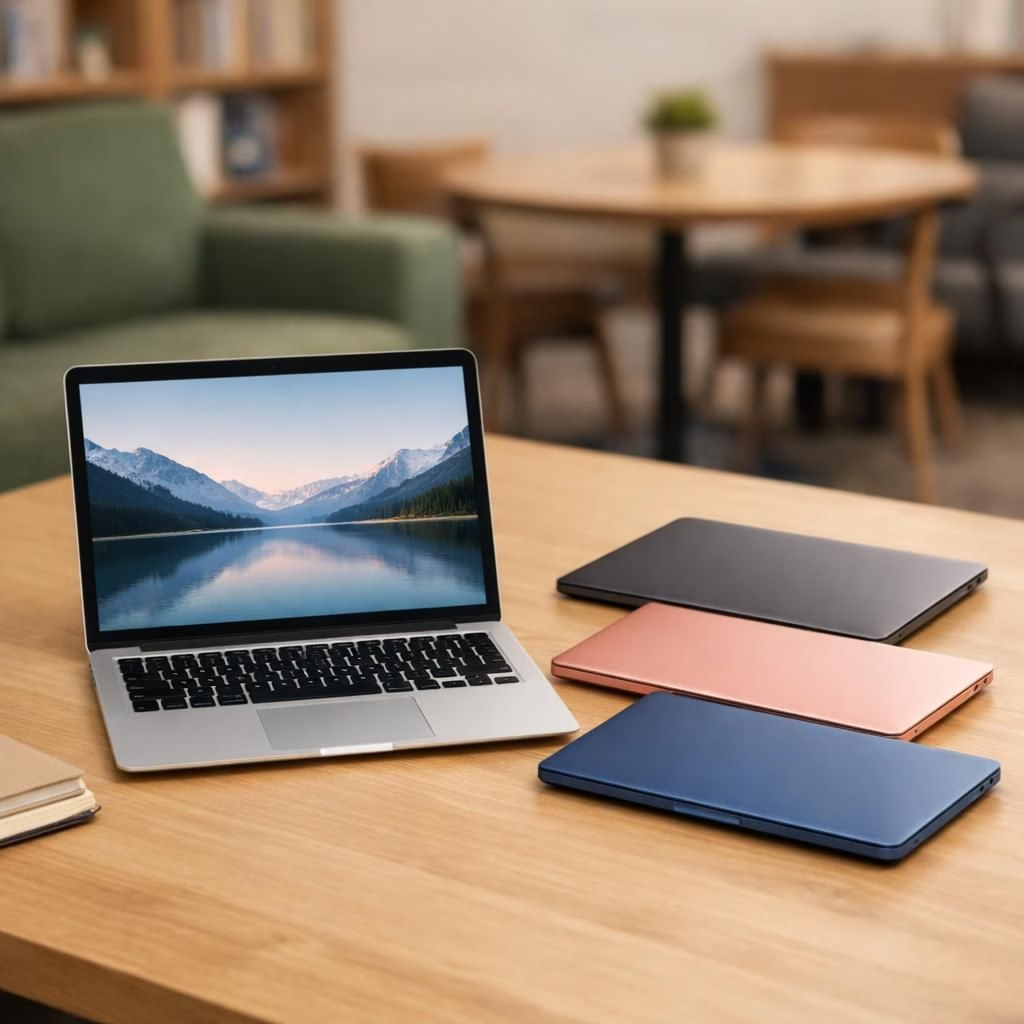
Apple MacBook heads into the budget arena with a sub-$750 model, and Budget Laptop fans might finally see a friendlier price tag without sacrificing wit. The J700, insiders say, will swap the M-series chip for an iPhone-class A-series processor, a move that could spark debates about performance per dollar and the stubborn romance of speed. The display is rumored to measure slightly under 13 inches, a size that bookmarks a sweet spot between portability and productive real estate. It’s designed for students and enterprise users alike, a pairing that promises disruption for Chromebooks and budget Windows laptops that have long owned the bargain aisle. The chassis remains aluminum, not plastic, and Apple has developed a new forging technique to shave production time and costs. This could be a tester for future pricier machines, a proof of concept with a friendly spine. The price is pegged around $699 to $750, a number that invites procurement teams and students alike to take a closer look. Colors are planned, with a palette that nods to the 24-inch iMac and its unapologetic cheerfulness. In short, the J700 aims to show that affordable can still feel distinctly Apple, and that smart compromises can be a thing of beauty.
Apple MacBook Budget Laptop Strategy for the Sub-$750 Era
On paper, the J700 is a tidy saver. The internals are trimmed for cost, with 8GB of RAM as a practical baseline and a leaner port lineup that favors fewer USB-C ports over flashy universality. The display could be a step down from the Air, perhaps a lower-quality LCD, but that’s a trade many students will tolerate for the price. The target price range—roughly $699 to $750—reads like a dare to Budget Laptop users everywhere: perform what you need, and do it cheaply. Apple reportedly intends a March launch, which keeps this device out of the back-to-school season chaos and in the spotlight for spring procurement. The forging technique is the real party trick here, letting the aluminum shell arrive packed with stiffness without the student-filed price tag. It’s not plastic, and it’s not pretending to be premium; it’s a clever, cost-conscious interpretation of the MacBook formula. Budget Laptop oriented buyers should watch for early hands-on impressions from evaluation units.
Yes, Apple MacBook fans will ask if this is still Apple, or if this is the budget cousin trying on a MacBook disguise. The answer, in brief, is that it’s the same family with a different mood. The emphasis is on practicality, not peacocking; on compatibility with school networks and reliable enterprise apps; and on a price that makes a Chromebook tremble a little in its boot sequence. The market reality remains simple: if you can deliver decent performance at a sub-$750 price, you win the first mile of the race. The early chatter around the J700 suggests a device that doesn’t pretend to be premium, but does pretend to be useful. It could be the quiet, polite revolution budget-conscious buyers have been hoping for, a device that respects constraints while still offering a recognizable Apple vibe. Budget Laptop enthusiasts may be especially interested in how far the design can stretch before the price goes up.
From a product-management angle, this is a thoughtful exercise in value design. The J700 prioritizes essential tasks: word processing, browsing, emailing, light creative work, and classroom video. It emphasizes battery life and a reliable keyboard, rather than heavyweight specs that inflate price and risk. The forging technique deserves its own round of applause; it’s a smart step toward cheaper, faster production, and perhaps a hint that future Apple notebooks might share some of these techniques without losing the aura of rigidity and build quality that Apple buyers expect. In practice, the device will likely ship with 8GB of memory, a handful of USB-C ports, and an LCD panel that is adequate for everyday tasks but not a cinema experience. The price tag and palette are designed to invite a wide audience—students, trainers, and budget-conscious professionals— to consider an alternative that feels familiar yet friendly to their wallets. For many buyers, a Budget Laptop becomes a reliable companion for daily tasks, offering a predictable balance of performance and price.
In schools and offices, the Budget Laptop approach can streamline deployments. The forged aluminum chassis promises durability without forcing teams to stretch budgets. It’s not about chasing premium materials; it’s about delivering a solid user experience at a sensible price. For extra context on how ecosystem choices affect procurement, see our note about Apple Watch deals in related coverage: Apple Watch deals.
Budget Laptop Color Story and Forge Tech
The color story is loud without shouting. It’s a deliberate contrast to the cooler, more reserved tones that often define budget machines. This is part marketing, part engineering: color invites use, but the forging technique invites trust. The aluminum chassis brings rigidity and a sense of premium feel, while the new manufacturing method helps keep costs down. It’s a clever balancing act that gives buyers a sense of owning something durable without needing to stretch beyond their means. The rumored LCD panel is described as lower-quality, but the broader package remains competitive when you weigh software capabilities, ecosystem familiarity, and total cost of ownership. The J700 doesn’t pretend to be a high-end flagship; it wears its budget badge with a confident stride and a wink that says, “you can have color, you can have Mac, and you can keep your lunch money.” In markets where Chromebooks and budget Windows laptops have dominated the day, this device seeks to remind buyers that price and personality can coexist with reasonable performance and reliable software support. You can also see parallels in other Apple ecosystem stories, like our Vision Pro coverage and related app news. Vision Pro app news.
From a long-term perspective, the J700 could push other manufacturers to rethink the low end. If the forging technique proves scalable, Apple could apply the approach to pricier lines later, spreading efficiency gains across the lineup. The device’s success will hinge on more than raw numbers; it will hinge on the intangibles—keyboard feel, road-tested reliability, and the ease of deployment in schools and organizations. In that sense, the J700 becomes a case study in economical innovation: do more with less, but keep the user experience intact. As budget laptop battles continue, this model claims a spot in the conversation by offering a distinct personality and a practical value proposition that many buyers will appreciate, especially those balancing needs across work and study in 2026.
We live in a world where value is judged not only by price but by experience. The J700 attempts to deliver both: a recognizable Apple feel, enough horsepower for everyday tasks, and a design that resists the drab trap of Budget Laptop machines. It’s not about pretending to be premium; it’s about delivering a useful, pleasant, and affordable tool for real life. If the forged aluminum holds up to daily wear and if the battery life meets expectations, the J700 could become a reliable partner for students grinding through lectures and enterprise users managing deadlines—without breaking the bank.
What do you think about a sub-$750 Apple MacBook with an iPhone-class processor, a 13-inch-ish display, and a colorful finish? Will this transform the budget laptop landscape in 2026, or will it simply be a clever blip in an ongoing price war? Share your thoughts in the comments below and tell us which color option you’d choose for your daily grind.
Special thanks to Bloomberg’s Mark Gurman for the original reporting that inspired this rewrite. Original reporting: Bloomberg Power On: J700 and the budget MacBook strategy. Your insights help us refine the story and keep the tech conversation lively and accurate.
Practical steps for evaluating a Budget Laptop like the J700
- Check RAM and storage expectations to match your daily tasks.
- Try the keyboard and trackpad in a store or demo unit.
- Evaluate the port layout for dongles and charging needs.
- Consider software compatibility and deployment in schools or offices.
FAQ
- Will the J700 run macOS? No. Rumors suggest it uses a different, iPhone-class chip with its own software stack, not macOS.
- When could it launch? A March release has been floated, aiming for spring procurement cycles.
- Is 8GB RAM enough? For light tasks and classroom work, yes, but multitasking will be limited compared with higher-end models.
- How many ports will it have? Expect a modest USB-C port count, fewer than the Air or Pro lines.
Conclusion and next steps
The J700 is a bold opening act in the sub-$750 market. It pairs a familiar Apple vibe with a practical, budget-friendly design. If the forging technique delivers real-world durability and the battery holds up, the J700 could become a trusted companion for students and professionals alike. If you’re shopping this category, watch for hands-on impressions in March and compare it against Chromebooks and budget Windows laptops on total cost of ownership and software usability. You can also get a broader sense of Apple’s ecosystem by reading about related product news, such as our Vision Pro app coverage.