

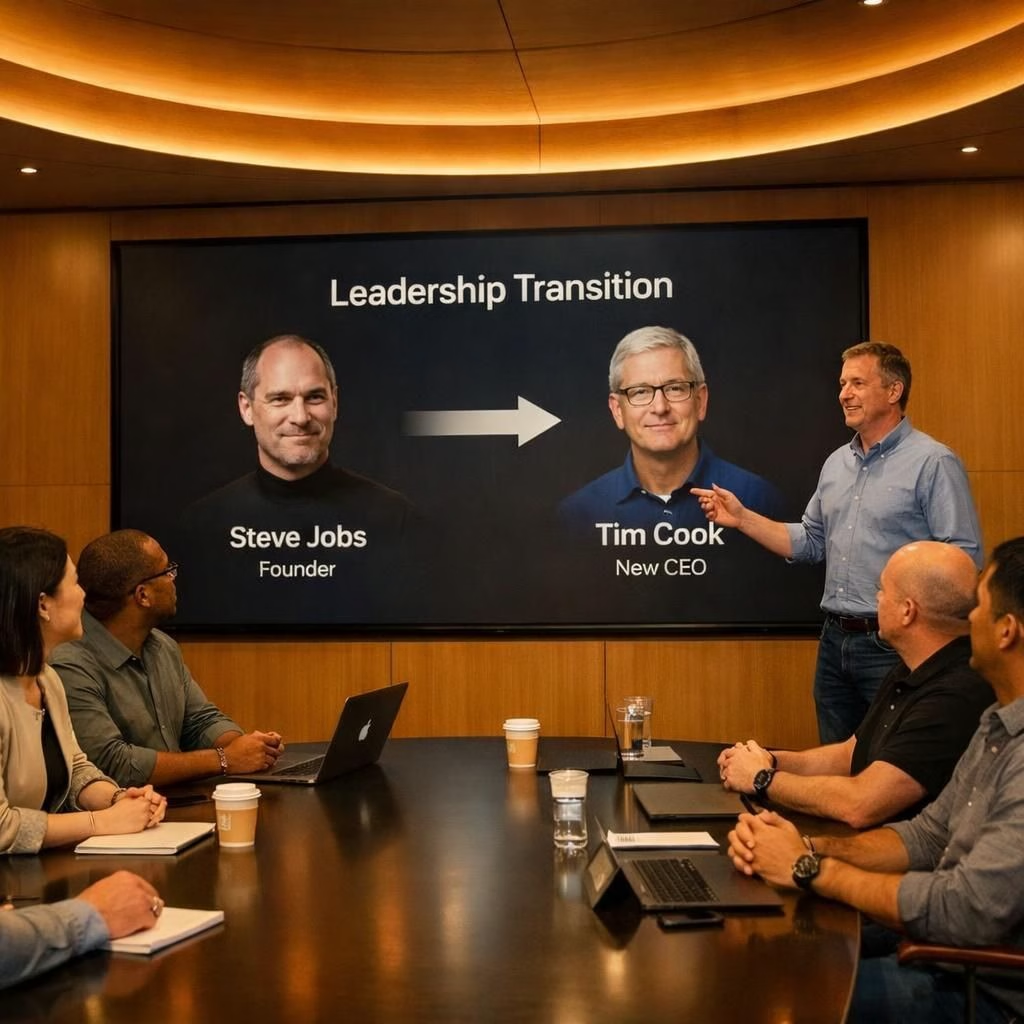
In the realm of Apple leadership, Tim Cook has steered the ship through a high-stakes maze for 15 years. This week, Apple confirms a plan that reads like a well-timed boardroom pivot. The company announces that Tim Cook will step down later this year, moving to executive chairman of the board, with John Ternus named next CEO. In a memo to employees, Tim Cook reflects on his 15-year journey since being asked by Apple founder Steve Jobs to take on the role in 2011. He stresses that Apple’s core values—simplicity, innovation, excellence, and a commitment to enriching lives—remain the foundation of the company’s success. Tim Cook adds that Apple’s future has never looked brighter, a message delivered with quiet confidence. He praises the culture and the team, noting their brilliance and dedication as what makes Apple special. Finally, he notes that the transition will be collaborative and smooth over the summer as he works closely with Ternus before stepping fully into the executive chairman role.
Apple leadership: Tim Cook’s next chapter
With this appointment, Apple leadership signals continuity rather than a dramatic overhaul. John Ternus, long known inside Apple for his engineering rigor and calm, practical optimism, steps into the spotlight as the next CEO. Colleagues describe him as a visionary with integrity, someone who can translate bold ideas into tangible hardware while keeping the company’s ethos intact. The transition plan, narrated as a summer handoff, aims to minimize disruption for teams, suppliers, and users. Tim Cook will remain CEO through the summer, then slide into executive chairman duties while offering counsel whenever needed. Apple’s board has framed this as a deliberate, thoughtful evolution rather than a spectacle, reinforcing the idea that leadership continuity matters as much as leadership novelty. The Steve Jobs Theater town hall, scheduled for a morning in the coming weeks, will formally kick off this era and set the tone for what comes next.
Tim Cook and Apple leadership culture
Any transition like this tests corporate culture, and Apple’s culture appears to pass the test with grace. The memo highlights values that have helped Apple survive and thrive for decades, explaining that the company’s identity isn’t a single person but a framework of decisions. The Steve Jobs legacy is invoked not as nostalgia but as a living compass for new leadership. Across the company, teams continue to push the boundaries of what’s possible, delivering products that feel inevitable in hindsight yet are born from a process that prizes focus, quality, and a humane user experience. The new CEO will need to defend the core identity while steering into new markets and ideas. Ternus’s approach to cross-functional collaboration, his openness to feedback, and his proven ability to ship dependable hardware align with what Apple has always valued: rapid iteration, disciplined execution, and a user-first mindset. The town hall at the Steve Jobs Theater serves as a public moment of transition—a chance to hear directly from leadership about priorities, timing, and how the culture will stay intact as Apple grows.
For teams, this is more than a change in title. It’s a chance to lean into clarity, to see how strategy translates into daily work, and to feel confident that the best ideas still rise to the top when they’re tested by intelligent peers. For customers, the transition promises continuity: fewer disruptions, a continuous focus on secrecy-turned-reliability, and an ongoing commitment to design-led innovation that respects privacy, performance, and sustainability. The leadership handoff is being framed not as a curtain fall but as a well-rehearsed act in a long-running spectacle—the Apple show—with the same cast but a new director behind the curtain guiding the next scene.
Key takeaways for readers who track corporate leadership: a) continuity matters as much as change, b) a strong culture can outlive a single leader, and c) a thoughtful transition minimizes risk while signaling ambition. The leadership team emphasizes that Tim Cook remains in place through the summer, ensuring a stable bridge to John Ternus’s tenure. They remind staff that the values that built Apple—simplicity, innovation, excellence, and enriching lives—will continue to animate every project, product, and partnership. This isn’t a dramatic pivot so much as a strategic, well-timed evolution that makes room for bold bets while keeping the engine humming.
We’d love to hear your thoughts—please share them in the comments below. Original article: Apple Newsroom — Tim Cook stepping down article. Thank you to the Apple Newsroom for the original material.
Apple leadership in a new era
As Apple enters this next chapter, the emphasis remains on the core values of simplicity, innovation, excellence, and enriching lives. Leadership continuity helps preserve a user-first approach that has defined the company for decades. For teams, the focus is on clear priorities and disciplined execution. For customers, the promise is ongoing reliability, privacy protections, and a commitment to sustainable innovation.
Tim Cook’s leadership legacy
During his 15 years at Apple, the leadership team repeatedly navigated supply challenges, streaming service integrations, and design breakthroughs. The transition does not erase that legacy; it reframes it as a foundation the next leader will build on with the same sense of purpose, collaboration, and accountability.
Practical steps for teams during the transition
- Maintain continuity in product roadmaps and release timelines.
- Keep design and privacy standards at the forefront of every decision.
- Foster cross-functional collaboration to ensure smooth handoffs between teams.
- Communicate changes clearly with suppliers and partners to avoid disruption.
FAQ about the leadership transition
- What does this change mean for Apple’s product strategy? It signals continued emphasis on core values and a steady path toward future hardware and services.
- Who is John Ternus? He is Apple’s senior vice president of hardware engineering, known for his engineering rigor and a collaborative approach.
- When will the transition happen? The plan calls for a gradual handoff through the summer, with the formal change in leadership step later in the year.
- Will Tim Cook remain involved? Yes. He will serve as executive chairman and support the company during the transition.