

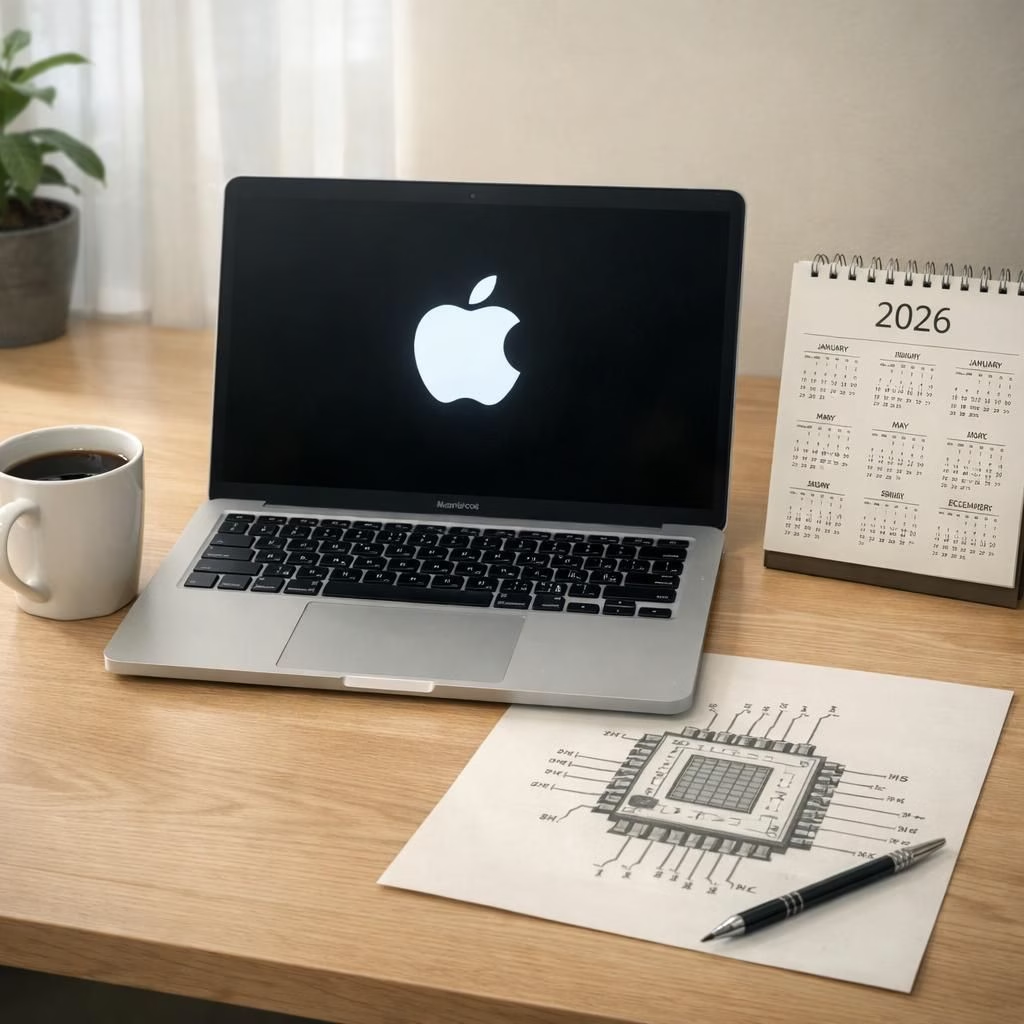
Apple has named Johny Srouji Chief Hardware Officer, signaling a sharper hardware strategy for 2026. The move places Apple at the center of its silicon design and on-device intelligence.
Apple and Johny Srouji: The Chief Hardware Officer era begins in 2026
Johny Srouji has built a reputation for turning complex silicon into reliable performance. The hardware chief is known for leading teams that balance power, efficiency, and longevity in slim devices. His work at Apple has been a tour through disciplined engineering and ambitious benchmarks.
With this appointment, Apple signals a deeper commitment to end-to-end silicon ownership—from the M-series to potential on-device accelerators. The executive team bets that hardware design, supply-chain resilience, and software-hardware cohesion will increasingly drive product excellence through 2026.
Historically, the hardware group ran on tight cycles and ruthless prioritization. Johny Srouji‘s leadership emphasizes cross-functional cadence, with design, manufacturing, and software teams moving in step. When timelines tighten, decisions combine pragmatism with optimism, yielding chips that perform reliably in laptops, phones, and emerging wearables.
Apple and Johny Srouji: What this means for future devices in 2026
For users, the practical effect is clearer device lines and more capable silicon. Apple gains an integrated silicon strategy where the A-series, M-series, and any future accelerators share a common toolbox. This alignment reduces friction between hardware capabilities and software features, enabling longer battery life, faster on-device machine learning, and stronger on-device security.
From a security lens, the leadership matters. A sharper hardware-software integration reduces attack surfaces, and a cross-functional team tends to produce more robust, auditable designs. In 2026, Apple benefits from this alignment as chips become more capable while still prioritizing privacy and data protection.
On the device-engineering front, the focus shifts toward efficiency, thermal management, and modest single-core gains that compound across tasks. Apple can pursue ambitious computing forms—mixed reality, edge AI, and energy-efficient sensors—without sacrificing the sleek form factors users expect. Johny Srouji now has direct oversight to steer those bets across product lines.
There is also a human element. The people on the hardware teams—engineers, testers, and designers—will feel the leadership shift. With a clear mandate from Apple, they can work longer days with purpose, knowing the aim is to deliver a more capable and dependable device family across the board.
Looking ahead, the role may evolve as component diversification grows. If Apple aims to own critical IP, this signals a move toward stronger in-house silicon and tighter OS collaboration. In practice, that means closer collaboration between silicon teams and OS developers, more on-device AI, and security-by-design in the 2026 product cycle.
The leadership change may prompt other tech firms to rethink hardware leadership. When a company assigns chief hardware responsibility to a single executive, cadence improves and supply chains tighten. The result could be faster shipping, better products, and fewer late-night crunches on tiny optimizations that pay off in battery life and user experience.
Original source material: Special thanks to the original reporting outlets for this coverage. Source: Google News coverage (original article). Thank you for helping document this leadership transition.
We invite readers to share their thoughts in the comments below.
Practical takeaways for users and developers
- Expect longer battery life and better efficiency as silicon goals align more closely with software tasks.
- On-device AI capabilities may advance, improving performance in everyday apps.
- Security-by-design becomes a standard aspect of new devices across the lineup.
- The cadence of hardware updates may become more predictable across product families.
FAQ
- Who is Johny Srouji?
- Johny Srouji is Apple’s Chief Hardware Officer, overseeing silicon strategy and related hardware-software integration.
- What does a Chief Hardware Officer do at Apple?
- Leads end-to-end silicon development, coordinates with OS and product teams, and directs how hardware shapes software experiences.
- How will this affect devices in 2026?
- Expect a tighter hardware-software loop, better security, and more capable chips across the iPhone, Mac, and wearables.
- Will we see more on-device AI?
- Yes—on-device AI is likely to become more capable and efficient, with less reliance on cloud processing.
References
- Apple Newsroom: Johny Srouji Named Apple’s Chief Hardware Officer
- Google News coverage (original article)