

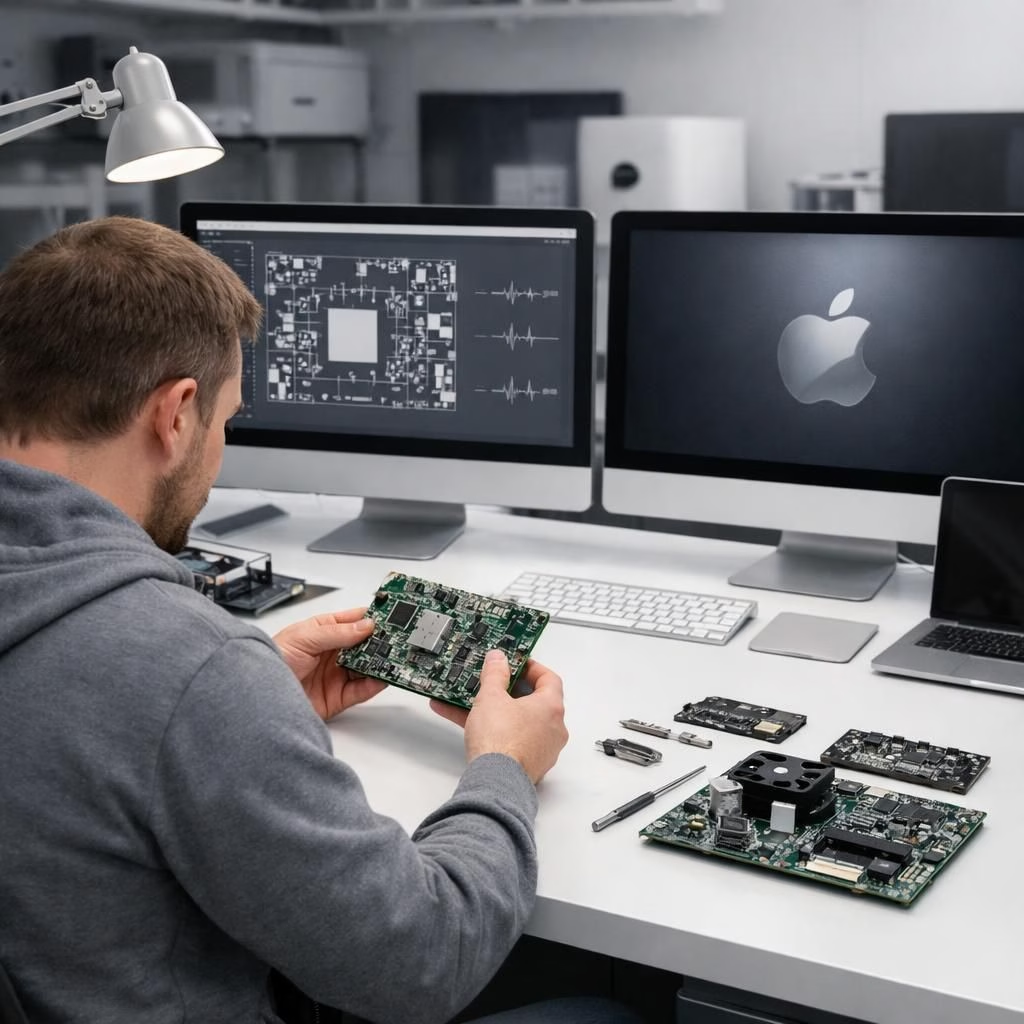
Johny Srouji and Chief Hardware Officer: A 2026 Update
Johny Srouji is set to broaden his influence at Apple as the Chief Hardware Officer, signaling a hardware-first strategy for 2026. The move suggests the company aims to tighten the loop between silicon design, system architecture, and product execution. In practical terms, this means Johny Srouji will be responsible for steering the hardware conversations that shape every device Apple ships, from iPhone to Mac and beyond. This isn’t ceremonial — the Chief Hardware Officer title implies direct accountability for performance, power efficiency, and the complex engineering tradeoffs that power Apple’s most demanding products.
To understand why Apple is making this shift, it helps to recall that Apple’s recent success has centered on the hard math of silicon and the soft math of software. The leadership change places Johny Srouji at the center of a system that blends chips, boards, firmware, and driver software into coherent, market-ready packages. In practice, this means more cross-functional alignment between hardware teams and software platforms, with the Chief Hardware Officer acting as the bridge between design intent and real-world performance. The goal is a smoother path from concept to customer, with fewer accelerations needed to fix misalignments after launch.
One must also note the surrounding leadership shakeup. Reports indicate that John Ternus, another veteran Apple executive, is transitioning toward a new focus at the executive level. The combination of Srouji’s broader remit and Ternus’ evolving role points to a year of reorganizing priorities around core devices and future platforms. In this context, the Chief Hardware Officer will be the primary owner of silicon roadmaps, production readiness, and the hardware-software interfaces that underpin Apple’s premium experience. For readers who track Apple’s internal shifts, the move is a signal that the company wants fewer handoffs and more single-point accountability for hardware success.
From a strategic perspective, the focus on hardware leadership positions Apple to respond faster to supply chain realities, component constraints, and the rapid pace of silicon innovation. The Chief Hardware Officer will be expected to coordinate with supplier ecosystems, manage risk across multiple tiers, and ensure that hardware advancements translate into meaningful user benefits. This approach aligns with the broader trend in technology where hardware decisions are not isolated box-level choices but integral parts of a holistic product strategy. When Johny Srouji leads this charge, the emphasis is on end-to-end quality, predictable release cadences, and tangible improvements in speed, efficiency, and reliability across Apple devices.
Hardware leadership in 2026: concrete expectations
In concrete terms, the role of the Chief Hardware Officer is expected to touch several domains. The internal teams will champion silicon architecture that reduces power draw without compromising performance. They will also drive packaging strategies, thermal management, and system integration that keep devices slim, quiet, and cool under load. For Johny Srouji, this means a tight feedback loop between design iterations and field performance metrics, with a sharper focus on manufacturing realities. The practical outcome should be devices that feel faster, last longer on a charge, and deliver consistent experiences even under heavy workloads.
For enthusiasts who follow Apple’s hardware storytelling, the appointment hints at a future where hardware and software become even more tightly coupled. Expect more attention to SoC (system on chip) integration, more optimized interconnects, and perhaps new approaches to how Apple handles firmware updates and hardware feature enablement. The Chief Hardware Officer will also be watching the clock on product roadmaps, ensuring that hardware upgrades align with software ecosystems and services that define the Apple experience. The synergy can translate to longer product lifecycles and better performance consistency across generations.
Practical implications for product teams
- Faster, more power-efficient SoCs that extend battery life without compromising performance.
- Sharper thermal management and packaging that keep devices slim and quiet under load.
- Stronger hardware-software integration, enabling firmware-driven feature enhancements.
The Chief Hardware Officer Role and Johny Srouji’s Expanded Focus
With this restructuring, the Chief Hardware Officer becomes the architect of Apple’s hardware ambition. The role emphasizes end-to-end accountability for performance across temperature, power, and computational throughput. In this model, Johny Srouji will coordinate with design engineering, materials science, supply chain, and manufacturing teams to ensure new hardware concepts translate into reliable, scalable products. The expanded focus means more direct oversight of fab selection, test regimes, and yield optimization, all while staying aligned with software teams that extract value from every hardware improvement.
It’s worth noting that leadership changes at this level can ripple outward into a company’s culture and cadence. A Chief Hardware Officer with broad scope tends to push for early hardware verification, parallel development tracks, and more aggressive risk mitigation in the face of component shortages. The hope is that these practices will avoid late-stage design pivots and keep Apple on track for ambitious release timelines. A stable, predictable hardware program under Johny Srouji could help Apple push into new form factors or product categories with fewer surprises at launch. In short, the new structure aims to deliver hardware that feels inevitable, not accidental, to users around the world.
From a market perspective, the appointment of a dedicated hardware leader signals Apple’s continued commitment to silicon-driven innovation. By consolidating leadership under the Chief Hardware Officer, the company signals that hardware progress is not a side quest but a central pillar of its competitive strategy. Investors and analysts who watch Apple’s device ecosystem will be looking for clearer roadmaps, measurable improvements in battery life, thermal performance, and overall device responsiveness. If the Chief Hardware Officer delivers on this promise, Apple devices will continue to set the bar for reliability and performance across the industry.
Finally, for readers curious about what all of this means for 2026 and beyond, the core takeaway is that hardware leadership is becoming more strategic, more integrated, and more visible. Johny Srouji’s expanded remit underlines Apple’s intention to harmonize silicon markets with software ecosystems, ensuring that hardware upgrades unlock meaningful software experiences. The Chief Hardware Officer is no longer a backroom function; the role is a compass for Apple’s product direction, guiding how components come together to deliver real user value.
If you’d like to weigh in on what this shift could mean for your favorite Apple devices, drop your thoughts in the comments. Your perspective helps others see how hardware leadership translates to everyday experiences, from snappy app launches to longer battery life and cooler devices during heavy use.
Source attribution and thanks: Special thanks to 9to5Mac for the initial reporting on Johny Srouji’s expanded responsibilities. Read the original reporting at 9to5Mac.
External references
- MacRumors — Johny Srouji Taking Over as Apple’s Chief Hardware Officer
- The Verge — Apple names Johny Srouji as chief hardware officer