

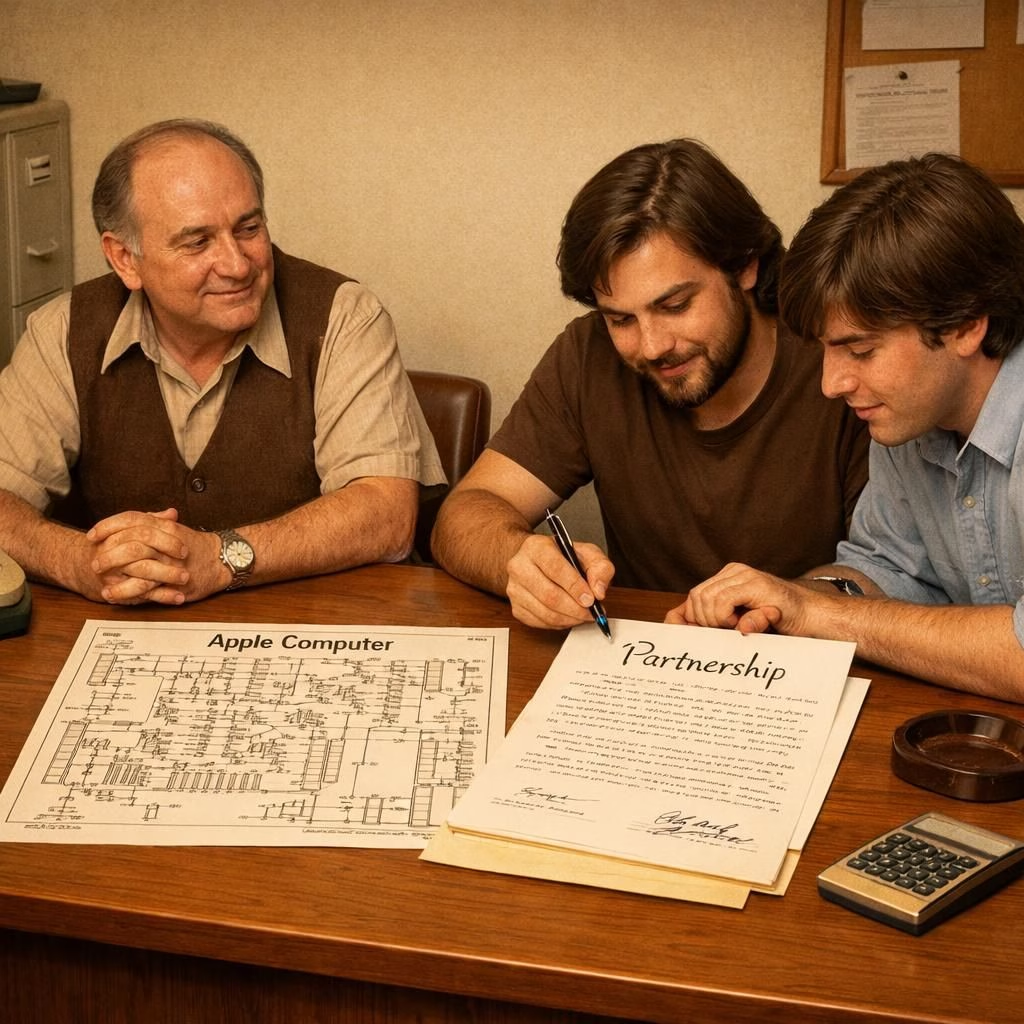
Apple began with a bold, imperfect trio: Steve Jobs, Steve Wozniak, and Ronald Wayne.
Apple Origins: Ronald Wayne and the early risk game
The company launched as a partnership in the mid-70s, which meant personal liability for debts. Ronald Wayne carried the most exposure because he had assets to protect. He joined to provide balance after all the youthful exuberance. At 41, he stood out against Jobs (21) and Wozniak (25). Ronald Wayne drafted Apple’s first partnership agreement and sketched the original logo in a moment of creative seriousness.
Ronald Wayne exited after 12 days. He sold his 10% stake for $800 to cover his initial work. A year later, Apple incorporated, and he received $1,770 as part of that process, boosting his total payout to $2,570. If he had stayed, his 10% stake would be worth roughly $377 billion today, a hypothetical scenario that highlights timing and risk management.
Ronald Wayne also missed a second lucrative opportunity: he sold the original Apple partnership document for $500 in the 1990s. The same document later sold at auction for over $1.6 million and then a subsequent sale brought in around $2.5 million. The numbers become a parable about documents, timing, and luck in Silicon Valley’s early chapters.
Ronald Wayne‘s decision to exit was not a lack of faith in the product. It was a clear choice to protect his personal assets and avoid personal bankruptcy if the venture faltered. The older founder’s priority was security, not risk. He believed in the idea but recognized real-world liabilities. His exit prevented a potential meltdown that could have discouraged early investors and stunted momentum. The Apple story might look very different if Wayne had stayed; perhaps the path would have looked more conservative or more chaotic.
From a startup point of view, Ronald Wayne’s move is a case study in risk assessment. He protected his personal fortune and allowed Jobs and Wozniak to push the product forward with a clearer debt structure and investor framework. In hindsight, the balance of risk and security shaped Apple’s culture. The pivot toward a corporate structure after incorporation helped attract further capital and talent without threatening Wayne’s earlier position.
For Apple, Ronald Wayne’s exit helped set a stage where ambitious engineers could focus on product while business rules slowly got tuned. The trio’s early dynamics showed that a founder’s value comes in many forms—technical genius, market sense, and the courage to step back when the numbers don’t add up.
Ronald Wayne: The cautious co-founder who kept Apple safe
Ronald Wayne’s decision to exit was not a lack of faith in the product. It was a clear choice to protect his personal assets and avoid personal bankruptcy if the venture faltered. The older founder’s priority was security, not risk. He believed in the idea but recognized real-world liabilities. His exit prevented a potential meltdown that could have discouraged early investors and stunted momentum. The Apple story might look very different if Wayne had stayed; perhaps the path would have looked more conservative or more chaotic.
From a startup perspective, Ronald Wayne’s move offers timeless lessons. He safeguarded his fortune and left room for Jobs and Wozniak to steer toward a scalable, capital-friendly structure. In 2026, that balance remains essential: protect what you must, then push with clarity. Ronald Wayne’s choice reminds founders to align personal risk with company ambition, even if the math rewards bold action later on.
The narrative around Apple remains a powerful branding lesson. The early partnership documents, logos, and agreements became artifacts that fans and investors remember. The Ronald Wayne exit is part of that legend, used to illustrate the cost of risk and the price of opportunity. It shows that a founder can matter without holding the largest share, shaping culture and future strategy.
The corporate arc from partnership to corporation gave Apple a more robust platform. It allowed the company to issue stock, attract venture capital, and hire talent, which would have been difficult with a three-way personal liability. Ronald Wayne’s departure created a cleaner cap table for Jobs and Wozniak to maneuver and iterate. The early misalignment turned into a momentum boost for the two younger founders.
Final thoughts on this origin story: a balanced narrative helps today’s teams think about risk, equity, and timing without glorifying reckless bets. Ronald Wayne’s choice is a reminder that prudent steps can coexist with bold dreams, and that history remembers the decisions that kept a fledgling idea alive long enough to shape an industry.
What do you think about Ronald Wayne’s decision? Share your thoughts in the comments below.
Special thanks to the original article for the inspiration and the foundational material. Read the original here: Original article.
Key takeaways
- Risk and early ownership shaped Apple’s culture as it grew from a small partnership to a major corporation.
- The decision to exit can preserve personal assets while enabling product-focused momentum.
- Founders contribute in different ways, from technical skill to prudent risk management.
FAQ
- Who was Ronald Wayne?
Ronald Wayne was an early co-founder who helped establish Apple’s initial business framework and contributed to its first partnership agreement and logo. He chose security and exited the venture after 12 days. - Why did Ronald Wayne leave Apple so quickly?
He faced the highest personal liability in a risky partnership structure and preferred to protect his assets, accepting a smaller payout than staying would have yielded. - What can startups learn from this origin story?
A cautious approach can coexist with bold innovation, balancing personal risk with the need to attract capital and scale responsibly.
References
- Times of India – Who was Apple co-founder whose job was to act as the adult in the room
- Britannica – Apple Inc.