

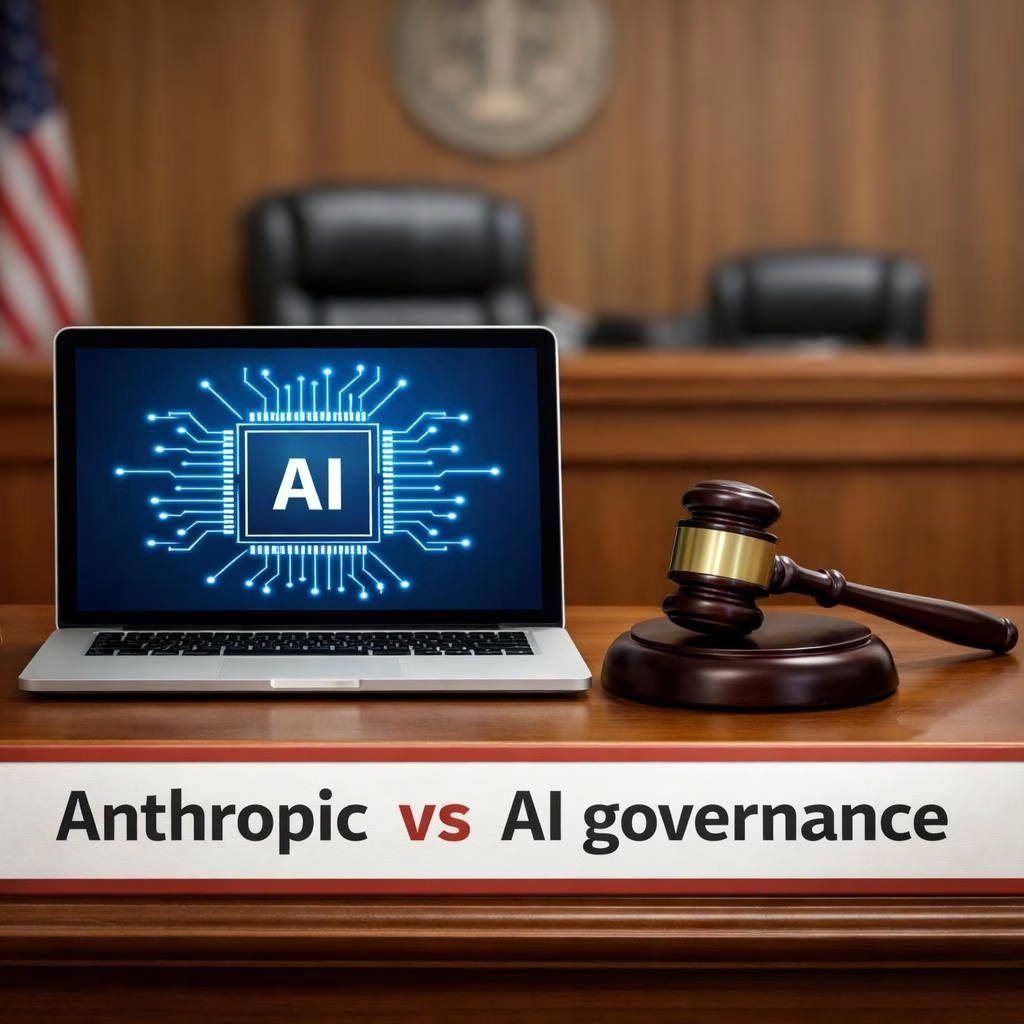
Anthropic and AI governance collide in a case that reads like a legal thriller, as the startup argues a national security blacklist threatens its rights and livelihood. The suit, filed in 2026, asks a court to pause what many see as an unprecedented power grab by the executive branch.
Anthropic and AI governance: The courtroom drama on tech policy
The Northern District of California hosts a case with high stakes and a dash of courtroom theater. Anthropic frames the dispute as a defense of constitutional rights and responsible science. The government argues for speed and flexibility in defense decisions. The tone stays serious, focused on safety and consequences for the industry.
AI governance in practice: Anthropic vs. the Pentagon and civil rights
The Pentagon asked Anthropic to remove hard limits on deploying its AI for fully autonomous weapons and for domestic surveillance of citizens. Anthropic refused, citing safety concerns and fundamental rights. It argues that autonomy without safeguards is dangerous and that mass surveillance would threaten civil liberties. Negotiations broke down, and Defense Secretary Pete Hegseth designated Anthropic a national-security risk, prompting a political directive to wind down existing contracts.
Stakes that feel like a cliffhanger: contracts, money, and credibility
Contracts drive funding, research, and deployment in this space. The government is a major buyer, and a pause or cancellation can ripple through budgets and programs. Anthropic warns that current and future contracts with the government and private partners are at risk, potentially affecting near-term revenue and investor confidence. The company says attacks on its credibility also threaten long-term safety initiatives. The defense posture emphasizes flexibility for lawful AI uses, even when that flexibility draws scrutiny.
The policy backdrop: Presidential Directives, Secretarial Orders, and the wider signal
Presidential Directives, Secretarial Orders, and follow-up letters have framed the political and legal debate. Anthropic’s complaint describes these steps as sweeping and chilling for AI developers. The company argues that law should guide defense decisions, not executive edict alone. The Pentagon counters that national security may demand nimble responses and broad discretion when deploying advanced AI. In this frame, AI governance debates question what level of control is prudent and lawful.
What this means for civil liberties and national security
The dispute highlights a core tension between liberty and security. Anthropic emphasizes safety, transparency, and accountability, while supporters of AI governance seek clear oversight and predictable rules. The broader conversation centers on balancing protection of rights with the need for rapid, responsible innovation. Decisions here affect developers, regulators, and the public in equal measure.
Practical implications for developers and policymakers
For developers, the takeaway is practical: document safety considerations and rights protections as part of product design and deployment reviews. For regulators, the path forward should emphasize transparent criteria, risk assessments, and ongoing oversight. The article argues for a collaborative approach that values both innovation and public safety. Robust governance can accompany more capable AI systems and build public trust.
A closing thought on accountability and the path forward
Guardrails can coexist with ambition. The industry should expect steady, reasonable oversight that preserves room for progress. Regulators can set fair, adaptable standards that encourage experimentation. Anthropic’s case reminds us that AI governance will shape technology and rights for years to come. Ongoing dialogue, testing, and refinement will be essential as the field evolves.
We invite readers to share their thoughts in the comments with constructive ideas for how AI governance can be practical, safe, and fair.