

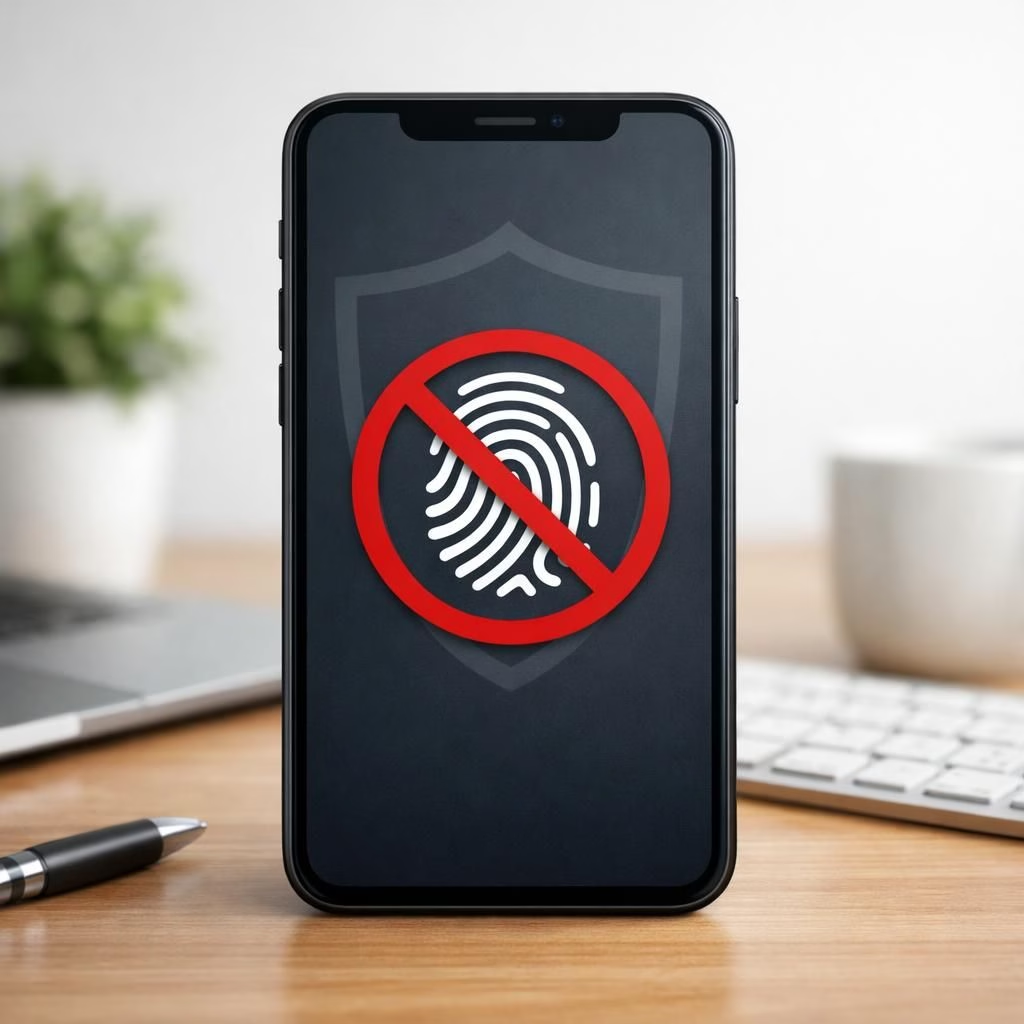
AndroidSecurity and BiometricLogin collide in 2026 as Find Hub for Android trims biometric login in certain flows. This isn’t a hissy fit against modern tech; it’s a pragmatic nudge toward safer defaults and clearer user choices. The goal is to encourage developers to re-think when biometrics should be trusted, and to invite users to expect more than automatic access. In practice, BiometricLogin learns to coexist with smarter fallbacks. The result is a more thoughtful, less reflexive approach to identity in everyday devices.
AndroidSecurity: What the shift means in practice
When AndroidSecurity updates roll out, the core question is simple: what is the real risk here? BiometricLogin isn’t banished; it’s placed in the right context with guardrails. A biometric prompt tied to a risky permission or an untrusted background app can be a weak link, so the system nudges users toward safer defaults. This isn’t a punishment for biometrics; it’s a reminder that protection works best when decisions are contextual, not automatic. Here are practical angles to consider from an AndroidSecurity perspective:
- Use context-aware prompts. If the app isn’t in the foreground, require a stronger factor beyond BiometricLogin.
- Favor hardware-backed storage when available. AndroidSecurity benefits from secure enclaves that keep biometric data away from the app layer.
- Provide clear fallbacks. If biometrics fail or aren’t available, offer PIN, pattern, or passkey options without friction.
- Limit surface area. Fewer prompts and shorter sign-in flows reduce the chance of social engineering or mis-clicks.
In these steps, AndroidSecurity is not about erasing convenience; it’s about aligning convenience with responsibility. BiometricLogin remains a valid option, but its usage is now more tightly scoped. The overarching message is simple: authentication should be a choice with informed consent, not a reflex built into every action. This is where AndroidSecurity shows maturity and practical smarts, and BiometricLogin learns to earn trust again through better design.
To illustrate, imagine an app that handles sensitive data. If that app can trigger BiometricLogin in a side channel or with minimal user awareness, the potential for compromise rises. AndroidSecurity guidelines push developers toward explicit consent, visible prompts, and consistent behavior across devices. The dialogue is not about dismantling biometrics; it’s about elevating the discipline behind biometric use. The result is a safer baseline that benefits users, developers, and the broader ecosystem.
BiometricLogin: balancing convenience and privacy
BiometricLogin remains a powerful convenience feature, but its privacy implications deserve careful attention. The shift in 2026 is a reminder that convenience can and should be coupled with transparency. For BiometricLogin to be trusted, users want to know when and why it is used, what data is captured, and where that data lives. In practice, that means clearer disclosures, consistent prompts, and robust privacy protections baked into the platform. BiometricLogin can still be the right fit for quick access to apps, but only when paired with clear context and user control.
Here are practical considerations that help BiometricLogin stay useful and responsible:
- Secure data pathways. Ensure biometric data never leaves the device and is never transmitted to remote servers where it could be exposed.
- Granular permissions. Allow users to enable biometric checks for specific apps or scenarios rather than forcing universal usage.
- Auditability. Offer simple logs or indicators showing when biometric authentication was used, which helps users understand risk exposure.
- Graceful degradation. Always provide reliable fallbacks—PINs, passkeys, or trusted devices—so users aren’t locked out if biometrics fail.
From a product perspective, BiometricLogin shines when it respects user intent. If a user aims to protect banking data or confidential documents, BiometricLogin can be the strongest link—provided the UX clearly communicates the trade-offs and the security boundaries. The result is a healthier relationship between convenience and privacy, where BiometricLogin remains a trusted tool rather than a silent default.
In real-world terms, AndroidSecurity and BiometricLogin work best when they are part of a layered defense. A device that supports secure enclaves, a thoughtfully designed app prompting the user at appropriate moments, and a policy that favors privacy-preserving defaults all contribute to a smarter authentication story. The synergy between AndroidSecurity and BiometricLogin is not about choosing one over the other; it’s about orchestrating both for safer, smoother experiences across the digital landscape.
As with any evolving technology, the best outcomes come from open dialogue. If you’re an end user, watch how often biometric prompts appear and consider whether each prompt is truly necessary. If you’re a developer or product lead, design prompts with intent, enable meaningful fallbacks, and document your decisions clearly. The goal is a respectful balance: convenient access when appropriate, with robust safeguards and transparent privacy safeguards for BiometricLogin usage.
Source: Find Hub for Android removes biometric login. A nod to 9to5Google for the original material.
AndroidSecurity prompts and controls
Implement prompts that appear only when risk is present and when users expect action. Align prompts with the current app context, and keep sensitive operations behind explicit user intent rather than automatic approval.
BiometricLogin UX considerations
Design clear, privacy-forward flows for BiometricLogin: show what data is used, when it is stored, and how users can opt out or switch to alternatives without friction.
Practical steps for developers
- Audit where biomarkers prompt authentication and remove prompts that have low risk context.
- Prefer hardware-backed keys and biometrics only for high-sensitivity actions.
- Offer clear, explicit consent for biometric actions and document fallback paths.
- Provide simple, user-visible logs or indicators showing authentication events.
Related reads
- Infosys and MIT Technology Review Insights on psychological safety in AI
- YouTube Recap insights for 2025
- IBL News: technology and entertainment insights
External sources
- Android BiometricPrompt and prompts guidance
- NIST Digital Identity Guidelines (SP 800-63-3)
- EFF: Biometrics and privacy
References
Original article: Find Hub for Android removes biometric login. A big thank you to 9to5Google for the original material.