

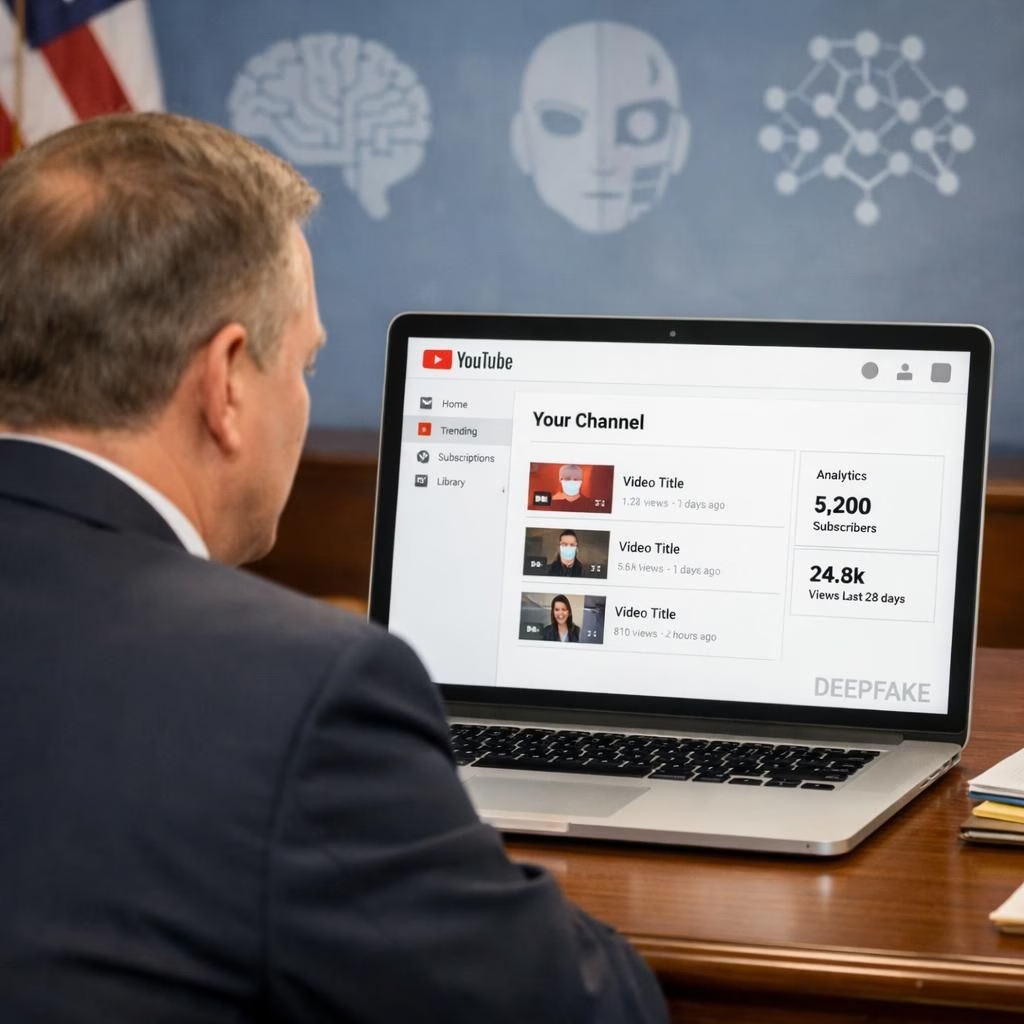
AI and YouTube finally join forces in a hopeful pilot. It helps high profile figures guard their likeness against sneaky AI deepfakes. The program targets government officials, political candidates, and journalists who deserve a smarter tool. Instead of waiting for fans to flag clips, YouTube‘s plan offers a proactive toolkit. It hands control to those who matter, with a user friendly dashboard and clear privacy promises. The aim is practical protection, not scare tactics. Welcome to an era where safety meets sensible humor and real world results.
The pilot, rolling out in 2026, blends human review with machine signals from YouTube‘s AI. Eligible users verify their identity with a video selfie and a government ID, then gain access to a dashboard that highlights clips where YouTube‘s AI detected a face or voice. From there they can review the footage and request takedowns for unauthorized uses. YouTube emphasizes that it is proactive but not automatic, and that exceptions cover parody, satire, and content in the public interest. Privacy matters: IDs and selfies are strictly for verification and will not feed into training Google’s models.
AI safeguards on YouTube
In practice the system surfaces potential clips for review, reduces anxiety around random deepfake uploads, and gives people a clear path to action. YouTube‘s approach keeps a barrier between detection and takedown, avoiding the trap of automatic deletion that could snatch legitimate coverage. The dashboard shows flagged clips, the detected likeness, and the option to request a takedown if the use is unauthorised. It is a balance between security and freedom of expression, with safeguards to prevent abuse.
Deepfakes reality and public interest on YouTube
The article notes that not all deepfakes deserve the platform’s wrath. Parody and satire keep their own space, and public interest content remains under a separate lens. This approach recognizes that a joke about a public figure still informs debate in a democracy. For officials and journalists, this means a smarter check rather than a blanket ban. YouTube‘s policy memo frames this as a practical compromise in 2026, a year of accelerating AI, not a year of panic.
Let us talk privacy. The company says IDs and video selfies are used only to verify identity and will not be used to train AI models. The aim is to reassure users who worry about data leakage or misused biometrics. This is not a perfect shield, but it shows a credible commitment to privacy while enabling real recourse against harm. As AI video quality improves, critics feared a flood of impersonations. The pilot is designed to curb harm without stifling legitimate reporting or commentary.
Practical takeaways for officials, creators, and watchers
For officials and candidates the takeaway is simple: keep official updates civic and calm, but know there is a safety net on YouTube. For journalists, the tool reduces risk while preserving the value of source based reporting. For audiences, the policy signals that YouTube can innovate with both tech and humanity. The balance is not perfect, but it is better than a regime of blind optimism or pure policing. The 2026 landscape calls for vigilance, but also for humor and patience as tools improve.
- Officials and candidates: Use the dashboard to monitor uses of your likeness and file takedown requests when appropriate. Respond thoughtfully to any flagged content. YouTube aims to reduce risk without stifling legitimate updates.
- Journalists: Leverage the tool to verify clips tied to your reporting while maintaining source integrity. Watch for misused footage and provide transparent context to your audience. YouTube supports accountability without suppressing important debate.
- Audiences: Stay informed about how platforms handle deepfakes and respect the balance between safety and free expression. The channel offers practical paths to challenge unauthorized uses on YouTube.
Two closing notes: never rely on a single signal, and remember that privacy policy evolves in response to user feedback. If you believe your likeness has been used without consent, you now have a clearer path to request action. If you are a public figure, you can opt into the pilot by verification, and you gain a practical dashboard to monitor the use of your image or voice. The result is a more transparent, tractable fight against AI misuse.
Original article: New York Times coverage. Thank you to The New York Times for coverage that inspired this rewrite and for the material used.
External resources
For readers seeking broader context on AI deepfakes and platform governance, see:
- New York Times coverage on YouTube deepfake protections
- YouTube safety and deepfake guidelines (official)
- NIST resources on deepfake detection and evaluation