

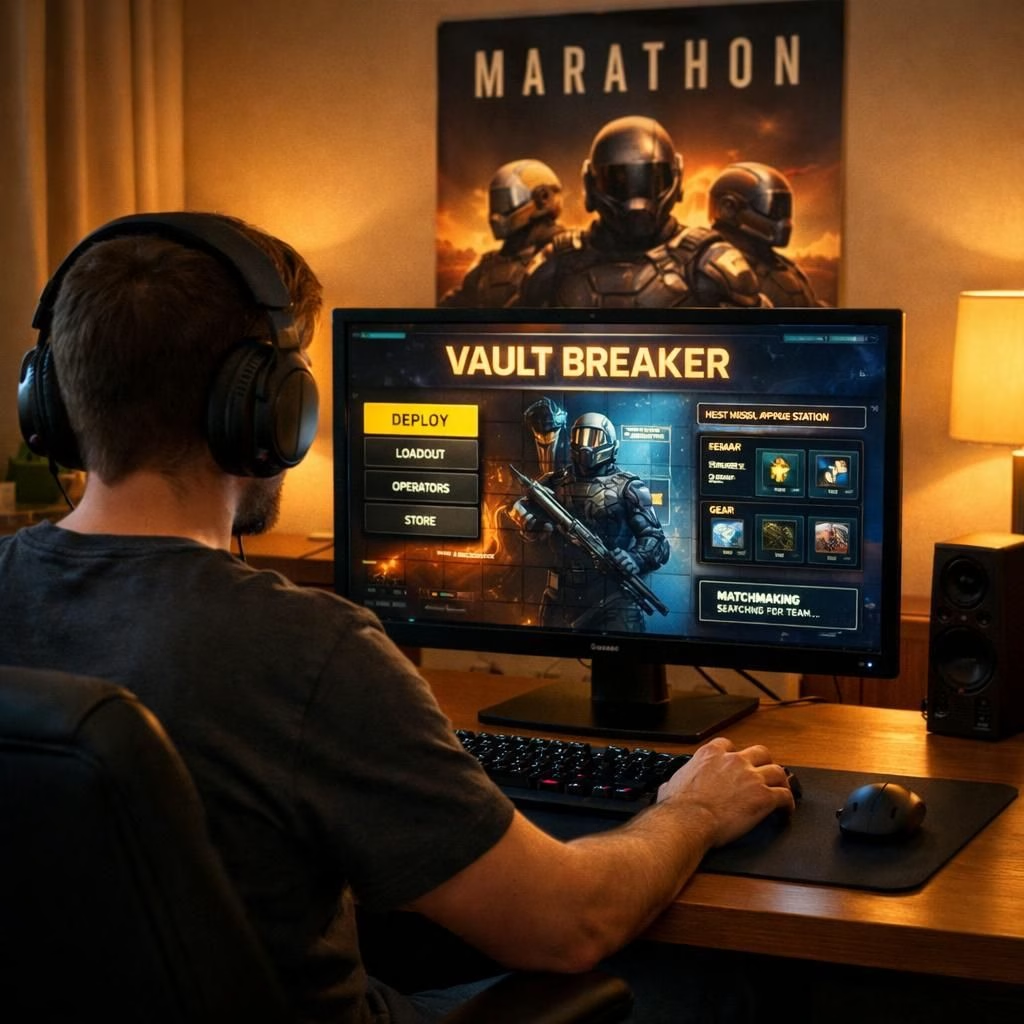
Marathon PvE fans woke up to a fresh update today: Vault Breaker is live as a temporary roguelike mode, and the patch notes promise balance tweaks that aim to keep fights fair and loot interesting. In this buzzing moment, Marathon meets PvE with a measured optimism: the core Marathon identity remains intact while the PvE curve gets a gentle nudge toward replayability. The result is a cheerful invitation to experiment, learn, and laugh a little at unexpected spawns. If you love long campaigns and tight gunplay in equal measure, this combo should feel familiar yet fresh, like a familiar hoodie that somehow gained pockets for better loot tracking.
Marathon PvE Vault Breaker Preview
The Vault Breaker mode lands as a temporary, bite-sized PvE roguelike twist on the classic Marathon framework. Expect modular floors, procedurally generated encounters, and a focus on quick, repeatable loops rather than a single, epic sprint. Players will notice that enemy patterns mix familiar Marines and alien threats with new predicates that scale in intensity as you descend. This is not a permanent replacement for the main PvE lineup, but a compact testing ground that honors the Marathon tradition while inviting aggressive experimentation. The balance team has tuned weapon reward pacing, run cooldowns, and loot fragmentation to encourage careful risk-taking rather than blind bravado. In short: you’ll see the same satisfying gunplay, but presented in bite-sized cycles that reward learning and adaptation.
Two central ideas anchor Vault Breaker: risk versus reward and team synergy. Solo runs can feel punishing when the roguelike tempo accelerates, but the reward stream—better gear, sharper bonuses, and occasional experimental mods—rewards clever play. For teams, the mode emphasizes communication, role clarity, and rotation management. If you’ve ever wished for a more bite-sized yet sharp PvE experience within the Marathon universe, Vault Breaker delivers that ambition with a wink and a nod to the game’s enduring lore.
Vault Breaker PvE Mode Mechanics
The PvE mechanics in Vault Breaker lean into the roguelike vibe without veering into confusing complexity. Each run presents a fresh layout with multiple corridors and optional hazards. Players collect a curated pool of artifacts and temporary buffs that refresh between attempts, so no two runs feel exactly alike. The mode rewards map awareness and pace control. Expect evolving enemy compositions that require you to adjust loadouts on the fly rather than relying on a single, overpowered setup. The patch also introduces refined spawn logic to keep encounters engaging rather than overwhelming, which helps keep the pace steady for both newcomers and veterans of the Marathon series.
From a technical standpoint, Vault Breaker uses a modular progression system. Each floor tier unlocks new access points and loot pools, while a soft difficulty curve nudges players toward smarter positioning and better resource management. The result is a mode that is approachable on first try but rewarding for players who invest time to learn the patterns and routes. The tuning process emphasized consistency across platforms, ensuring keyboard-and-mouse players and controller users share a similar risk-reward framework. This cross-input fairness is a small, meaningful win in a game that thrives on precision and timing.
Marathon PvE Changes in 2026
Beyond Vault Breaker, the 1.1.5 patch and related balance tweaks aim to smooth the PvE experience without sacrificing the signature Marathon feel. Key changes include adjustments to enemy health scaling, weapon recoil, and cooldown windows to reduce “one-shot wonder” scenarios while preserving meaningful challenge. The intent is to keep the action fast-paced, the decision points tight, and the pacing sustainable across long sessions. Players who enjoy cooperative play will notice subtle improvements to team-wide cooldown sharing and revival timing, which helps groups stay in the fight longer without feeling forced into retreat. All these tweaks are designed to keep the game accessible to newer players while still offering depth for long-time fans who crave tactical nuance. The overarching message is clear: Marathon remains the stage, PvE adds new choreography, and the update seeks balance that respects both crowds.
For those who enjoy a careful post-game analysis, Vault Breaker’s design invites quick post-run reviews and better meta decisions. The encounter pacing encourages rotation of roles, weapon choices, and map-reading skills. A well-executed Vault Breaker run often hinges on team communication, awareness of resource pools, and the ability to pivot when a new enemy type shows up on a corridor you hadn’t expected. If you’re chasing a clean run, you’ll want to map each floor’s hazard layout and remember which artifacts amplify your current build without overcommitting to a single strategy.
In practice, this update is also a gentle reminder that live service games improve when players participate. Feedback channels remain open for reports on loot balance, enemy variety, and UI clarity. The development team has signaled a willingness to iterate on Vault Breaker based on how the community experiences it in the wild. The tone here is pragmatic optimism: a temporary mode that honors the series’ heritage while testing a few new ideas that could inform future PvE directions. This is the kind of careful experimentation that keeps Marathon vibrant without turning it into a sandbox with too many moving parts.
Practical steps to maximize Vault Breaker
- Coordinate with your squad using quick callouts and clear role assignments.
- Call out when you’re using a temporary buff so teammates adapt their approach.
- Prioritize loot that scales with your current progression and map your route before you start.
- Practice a few reliable routes; avoid chasing a single big reward on unfamiliar layouts.
- Review each run together to identify artifacts that synergize with your build.
Tips for making the most of Vault Breaker: communicate clearly with your squad, call out when you’re using a temporary buff, and prioritize loot that scales with your current progression. Don’t chase the biggest reward on a map you haven’t mapped yet; focus on mastering a few reliable routes and learn from each failed attempt. The more you test and share, the more likely the mode will land as a meaningful addition to the Marathon PvE catalog rather than a one-off sideshow.
As with any new mode, expectations should remain tempered. Vault Breaker is designed as a bridge—a way to explore new rhythms while the main PvE arc continues to evolve. If you’ve grown fond of the Marathon universe’s pacing, you’ll appreciate how Vault Breaker preserves that core experience while injecting a fresh roguelike tempo that demands adaptability and teamwork. It’s a balanced experiment that treats players as intelligent partners in the game’s ongoing evolution.
We invite you to join the discussion and share your experiences with Vault Breaker. How did your runs go? Which artifacts proved most impactful for your playstyle? Which routes felt the most intuitive, and where did you stumble? Your thoughts help shape the balance and future updates, especially as we navigate 2026 together as a community of Marathon fans and PvE enthusiasts.
Original Forbes coverage provided early context for this mid-season moment and helped spark a deeper dive into Vault Breaker. If you’d like to read the source material, you can explore Forbes’s coverage linked below as a courtesy and a thank-you to the original material producers.
Original article reference: Forbes — a thank-you for the initial reporting that inspired this expanded breakdown.
Share your thoughts in the comments below to join the conversation about Vault Breaker, PvE, and the evolving landscape. Your feedback helps shape future patches, refinements, and strategic tips for players at all levels.
References
- Forbes – Original article
- Bungie – Official Marathon update coverage
- Eurogamer – Marathon Vault Breaker coverage
- Massively Overpowered – Vault Breaker analysis