

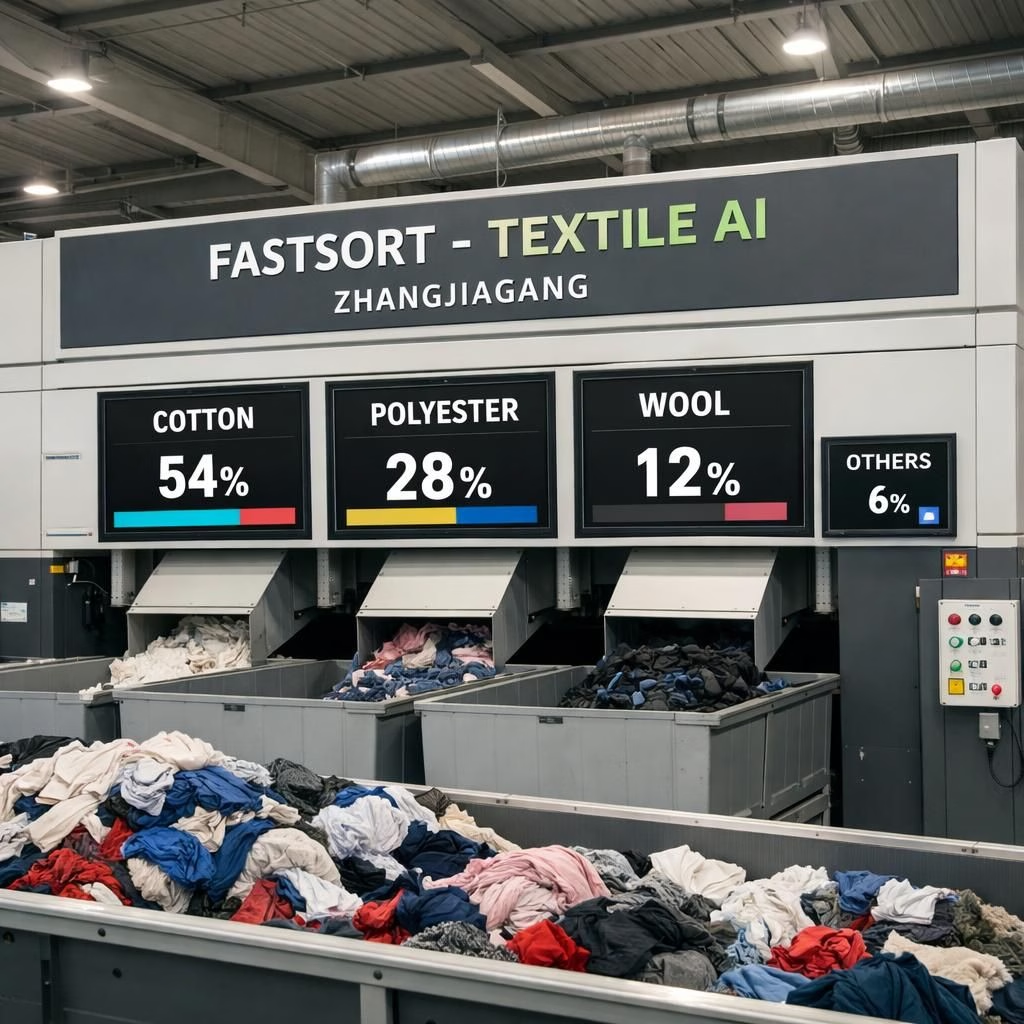
In Zhangjiagang, Textiles and AI finally share a robust handshake courtesy of the Fastsort-Textile machine from DataBeyond. This AI-powered recycler sorts Textiles waste by composition, letting machines do the heavy lifting once and for all. Time magazine named it one of the Best Inventions of 2025, a public approval that makes the skeptics blink and the stylists nod. By 2026, the technology is moving from pilot halls to more compact facilities, promising cleaner cycles and less landfill chatter. The project is practical, not a sci‑fi daydream, and it invites a broader conversation about our wardrobes and waste streams.
AI in Textiles: Sorting by Composition
The core is a trained AI model paired with an infrared and optical scanner. The AI reads fiber signatures, dyes, and blends to separate streams, and Textiles remain a focus as the system grows. It categorizes into cotton, polyester, viscose, nylon blends, and coatings. The system minimizes cross-contamination, a common issue in manual sorting. The machine processes about two tons per hour, a rate that dwarfs most human crews and reduces mistakes. DataBeyond built a feedback loop so the model learns from misclassifications and constantly improves. In 2026, early pilots showed a steady rise in recyclable fractions and a drop in landfill disposal.
Textiles meet AI: Smart Sorting Story
Manufacturers will tell you that consistency matters. Here, AI brings consistency to chaotic Textiles streams. It scans every bale, logs results, and updates its knowledge map. This means fewer surprises at the bale end, where variations can baffle traditional sorters. Textiles, with their blends, coatings, and finishes, pose a challenge. The AI handles it by weighing, pairing, and cross-referencing with thousands of known signatures. Each batch becomes a little more predictable, which helps downstream processing and material recovery. The synergy of AI and Textiles makes the recycling line smarter, not merely faster.
Dark factories and global impact
The idea of a dark factory becomes practical here, as AI and robotics run the line with minimal human on-site supervision. We see a workflow that favors uptime and repeatability. For Textiles, the sorting outlet decides which fiber can re-enter production and which ends up in a reprocessing stream. The system reduces errors and speeds up downstream processing. In 2026, more plants will prototype these lines, and the cost math will start to favor automation as volumes rise. The global impact grows when more regions adopt this approach and invest in compatible infrastructure. AI-driven classification lowers the error rate, which means cleaner input for fabric recycling and, ultimately, less landfill pressure for NGOs and cities alike.
Practical implications for facilities and policy
Facility operators gain a reliable ally in AI, which scales with demand. The two-ton-per-hour rate means smaller facilities can hit recycling targets without hiring dozens of sorters. Policy makers can incentivize adoption through grants and standards that favor automated lines. For the Textiles industry, which swims in blends and finishes, AI-guided sorting offers a route to consistency and better yield. ESG reporting becomes more credible when a plant can cite exact fiber recovery data. The combination of AI and Textiles recycling becomes not only practical but also noticeably efficient. In 2026 and beyond, the cost of automation continues to fall as more entrants refine the technology.
What to watch for in 2026 and beyond
Expect the AI model to expand its library of signatures, including new blends and coatings. Expect suppliers to offer modular scanner packages that fit different plant footprints. Expect more countries to explore autonomous sorting lines that reduce exposure to hazardous materials and improve worker safety through automation. The AI-Textiles loop will likely intersect with other recycling streams, from apparel to home Textiles, amplifying the environmental gains. The pace may be brisk, but the gains for Textiles and AI are worth celebrating. It’s not just about speed; it’s about accuracy, repeatability, and a cleaner planet in 2026 and well into the future.
What do you think about AI and Textiles taking center stage in recycling? Share your thoughts in the comments below. Your insights help shape a practical, humorous, and hopeful conversation about our wardrobes and waste streams.
Original article attribution: Thank you to DataBeyond for the concept and to Time Magazine for the recognition. Original source references: Time Best Inventions 2025. Special thanks for the inspiration and base material.
References
- Time Best Inventions 2025
- EPA: Textile reuse and recycling
- Ellen MacArthur Foundation
- Original source linkback: DevDiscourse: Revolutionizing recycling AI’s impact on textile waste