

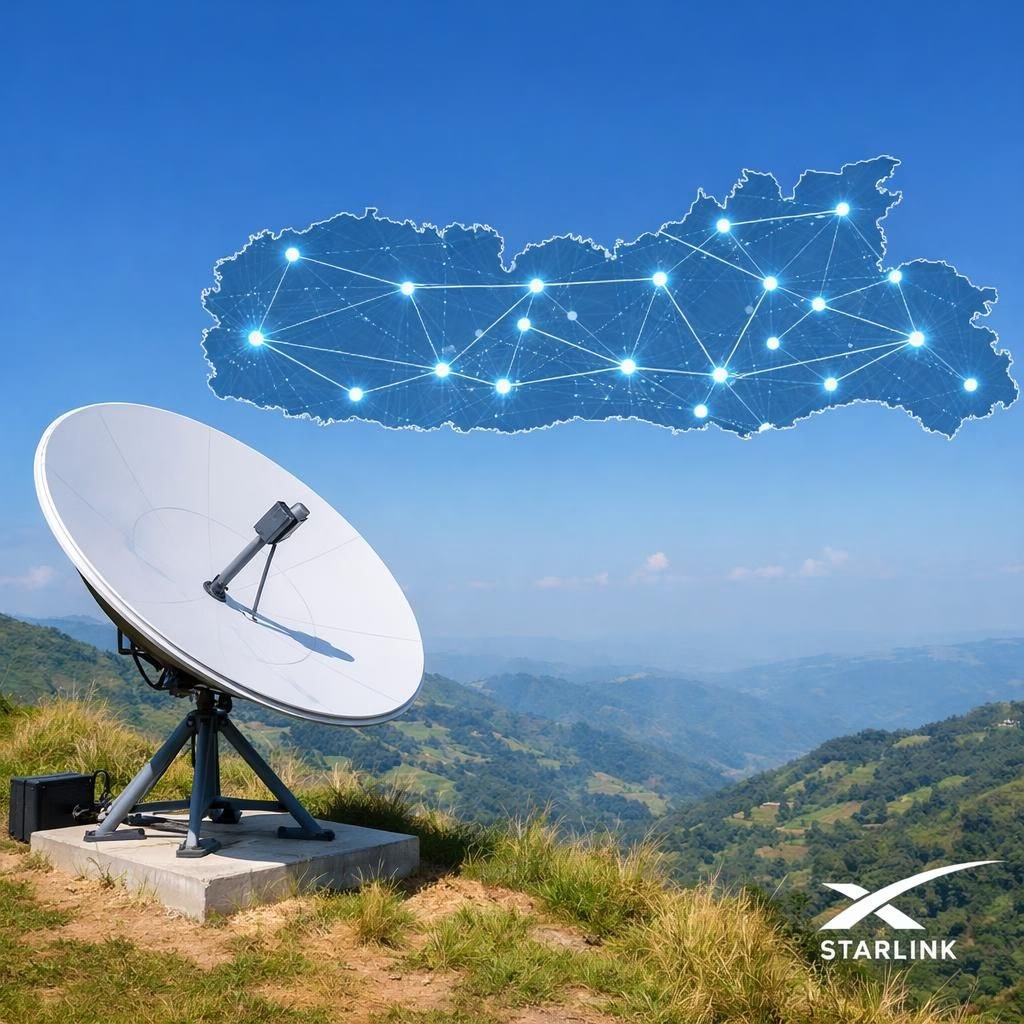
In a move that blends futuristic ambition with practical relief, Starlink and the state government of Meghalaya have signed an agreement to deliver high-speed internet to remote corners of the state. The rugged terrain has long challenged connectivity, but satellite-based technology could bypass ground obstacles. The collaboration aims to support education, healthcare, security, and disaster response with reliable, real-time links. This partnership signals a pragmatic step toward digital inclusion that meets people where they live—on hills, in monsoon fog, and along winding roads—where satellites can reach beyond ground networks. With this pilot, Meghalaya could gain a more resilient digital classroom and public-service ecosystem that doesn’t stall during heavy rains.
Starlink-powered connectivity in Meghalaya: a hopeful satellite handshake
The agreement envisions a pilot deployment with Starlink’s Gen1 constellation delivering broadband to rural schools, clinics, and small businesses. The government’s team will run the pilot to gauge coverage, speed, and resilience, while Starlink handles user terminals and service management. The approach mirrors past collaborations, including Maharashtra’s experiments and UIDAI partnerships, signaling a willingness to bring space-age infrastructure down to ground level. In India, regulators have shown interest, and IN-SPACe has granted a five-year licence allowing Starlink Satellite Communications to use capacity over Indian airspace, subject to security and telecom norms. The licence sets the stage for service access, but the last mile still depends on spectrum pricing by TRAI and DoT allocations. A Mumbai demo last year demonstrated compliance with security and technical conditions, suggesting a cautious but confident rollout plan.
Meghalaya’s digital journey with Starlink India
Meghalaya‘s rugged topography has long challenged reliable internet, leaving many communities offline during monsoons. The Starlink India partnership aims to flip that script by delivering satellite connectivity to district hubs, schools, and clinics. The potential benefits are tangible: remote medical consultations, online classrooms, timely disaster alerts, and a more vibrant local economy. However, the plan comes with caveats: pricing debates, spectrum allocations, and a regulatory timetable that may stretch beyond a single pilot. The Mumbai demo showed the service can meet security and technical standards, while Bengaluru hiring indicates Starlink’s intent to build a local team. The big picture is a gradual climb toward a resilient digital economy, with Starlink serving as the visible rung on the ladder.
- Regulatory steps: TRAI pricing and DoT spectrum allocation
- Pricing details: official plans and hardware costs will be announced after final approvals
- Local capacity: workforce expansion and partnerships with state institutions
The earlier pricing page on Starlink’s India site last year appeared briefly and caused confusion, described by the company as dummy data from a technical glitch. Official plans will emerge after government approvals, with a consumer-friendly approach expected to follow. In Meghalaya, communities will monitor service quality and responsiveness as pilots roll out.
Original article: OM Gupta’s original piece on Meghalaya-Starlink collaboration (special thanks).
Thank you for the original source material; if you have insights or questions, please share your thoughts in the comments.
FAQ: Starlink in Meghalaya
- How would Starlink work in the hilly terrain of Meghalaya? Satellite-based internet uses low-Earth orbit satellites to beam broadband directly to user terminals, bypassing damaged ground cables in difficult landscapes.
- When could residents start using Starlink services in practice? The pilot is underway, with national regulatory clearances still needed before a broader rollout; final timing will depend on spectrum pricing and DoT allocations.
- Will pricing be affordable for schools and clinics in Meghalaya? Officials have said formal plan details will be announced after approvals, balancing coverage goals with consumer-friendly pricing.
- What regulatory steps remain? Trai pricing decisions and spectrum allocations by DoT will determine how quickly the service scales.
Bottom line: the Starlink partnership represents a calibrated, long-term push to bridge digital gaps in challenging terrain. For residents of Meghalaya, the proof will be in reliable classroom connectivity, healthcare access, and faster information flows. Stay tuned for official plan details as regulators finalize spectrum and pricing.
External sources
- Starlink official site
- TRAI – Telecom Regulatory Authority of India
- Department of Telecommunications (DoT)
- Reuters: Starlink satellite safety and plans