

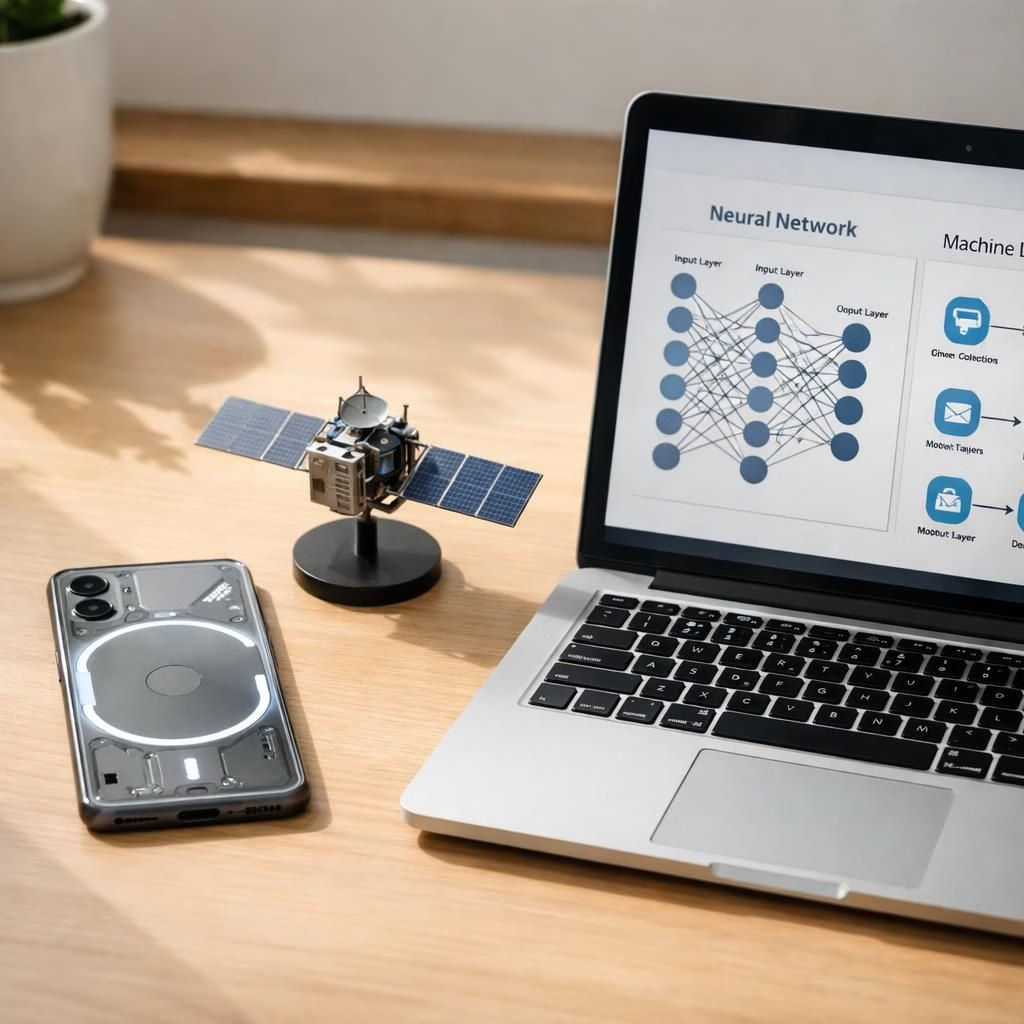
Welcome to the AI Space round-up for 2026, a breezy, optimistic tour through how AI is reshaping devices, software, and orbital assets. The aim is to celebrate progress without turning every gadget into a cautionary tale. From the Nothing Phone (4a) Pro’s refined premium design to Space startups and orbital computing, the pace is dizzying but delightful.
AI Space Spotlight: Nothing Phone Pro and mid-range premium
The Nothing Phone (4a) Pro earns praise as a strong mid-range option. It trades the company’s familiar transparent back for an aluminum finish with a tiny display window. The result feels premium and less shouty, even if the phone remains on the heavier side. Wireless charging remains absent, a choice some customers will embrace and others will miss. The 6.7-inch display is sharp and bright, the speakers deliver surprisingly deep sound, and the 4,800 mAh battery plus 50W USB-PD charging makes overnight charging optional. Under the hood, a Snapdragon 7 Gen 4 paired with UFS 3.1 keeps day-to-day tasks smooth, with occasional hiccups in demanding apps. Nothing OS 4.1 feels clean, though Glyph Matrix usage is still light. In short, the package blends design poise with practical performance for mid-range buyers who crave a premium feel.
Space startups and manufacturers are exploring premium finishes for mid-range devices, signaling a broader shift toward premium feel without flagship prices.
AI Space Spotlight: Meta, Nvidia, and orbital AI futures
Meta rolls out more advanced AI to handle content enforcement while still keeping humans in the loop for appeals. The AI can tackle repetitive tasks and adapt to evolving tactics by adversaries like illicit drug sales and scams. Early tests show the systems detect twice as much violating adult sexual solicitation as human reviewers and cut error rates by more than 60%. They also better identify impersonation accounts of celebrities and help prevent account takeovers by flagging new logins, password changes, and profile edits. Meta estimates the AI can block about 5,000 scam attempts daily. A new 24/7 Meta AI support assistant launches across Facebook and Instagram, while experts design, train, oversee, and evaluate the systems. Final decisions remain with people for appeals and law-enforcement reports.
NVIDIA is pushing AI deeper into entertainment and Space computing by debuting DLSS 5, a lighting-focused upgrade that works with current GPUs. It aims to deliver photoreal lighting without overhauling geometry, and it promises compatibility with engines that mix raster, RT, and path-traced rendering. The top-tier Vision Pro and other devices will see higher resolutions at 90 FPS and beyond in select modes. The Vera Rubin platform, together with IGX Thor and Jetson Orin, signals a Space-first AI stack that moves inference closer to orbit. In practice, orbital AI workloads could run on edge hardware with lower energy footprints while processing imagery and geospatial data in real time. The result: Space computing becomes more practical and more affordable for governments and researchers. DLSS 5 provides a concrete example of how AI-accelerated lighting can elevate realism without a hardware overhaul.
Space startups and regulators are pushing toward orbit-ready compute, as governments and private teams seek faster data pathways and resilient networks. The reporting also notes iOS 26.4 RC features and governance measures sweeping across big tech, hinting that the next months will bring smoother enforcement and safer user experiences in both the digital and orbital realms.
On the ground, Tesla faces expanded NHTSA scrutiny over FSD degradation detection, while Horizon Worlds shifts to mobile-first VR. The regulator’s probe covers millions of vehicles and highlights how subtle visibility changes can challenge automated perception. Meta’s shift to mobile-first VR mirrors a broader platform balancing act to keep users engaged across devices without losing immersive appeal.
SpaceX Starlink missions and orbital AI workflows continue to draw capital toward Space computing. Investors seek orbit-ready compute and edge AI that can weather the rigors of space while delivering timely, geospatially aware insights back to Earth. The mix of satellites, AI chips, and ground stations sketches a future where data moves faster than light across the globe and beyond.
We invite readers to share their thoughts in the comments below. Your insights help shape these tech arcs with a balanced, practical tone.
Special thanks to the original article for inspiration and material: Technology News Roundup (March 19, 2026). Thank you for the comprehensive coverage and thoughtful material.
Practical takeaways
- When evaluating mid-range devices, look for a premium build, decent battery life, and a stable software experience rather than chasing flagship features.
- Keep an eye on how AI tools are deployed in everyday apps, and note how space-enabled AI is shaping data processing near satellites and ground stations.
- For readers interested in orbit-ready compute, track how hardware pairs with edge AI to deliver geospatial insights in real time.
FAQ
- What defines a good mid-range option today? A balanced mix of solid hardware, clean software, reliable battery life, and design that feels premium without premium prices.
- What is orbital AI computing? AI workloads run close to or on space-based hardware, reducing latency and enabling real-time processing of imagery and sensor data in orbit.
- Why are Space-related AI topics important? They illustrate how AI scales beyond devices to aerospace and Earth monitoring, shaping policy, regulation, and research.
- Where can I learn more about the latest AI tooling? Reputable tech outlets and official vendor pages (e.g., NVIDIA DLSS 5) offer detailed technical briefs and use-case analyses.