

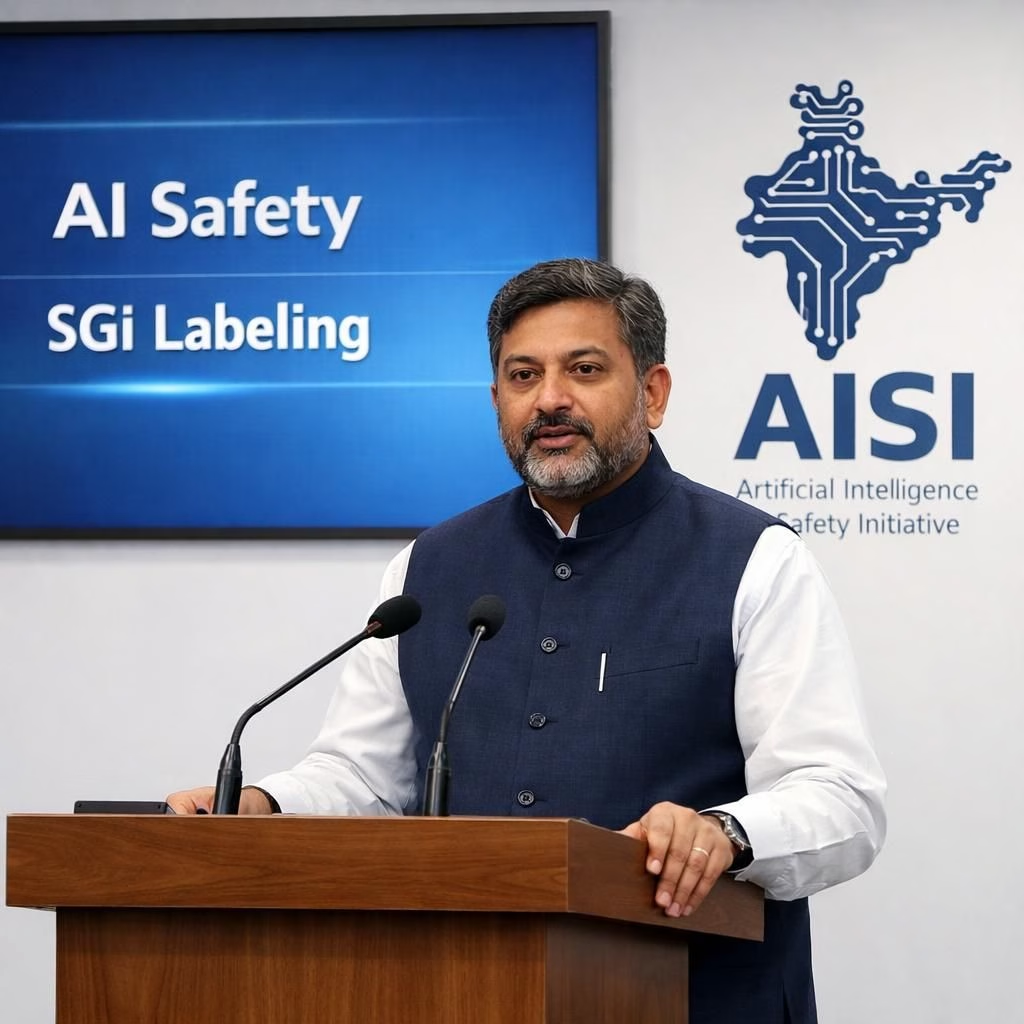
AI safety and the techno-legal approach are taking center stage at the IndiaAI Impact Summit 2026 as India maps a pragmatic path for artificial intelligence. IT minister Ashwini Vaishnaw notes a broad global consensus: AI should be used for good, and the harms must be contained. This is not a slogan; it is a blueprint that pairs policy with technology so rules stay informed by real capabilities and tech can comply with sensible safeguards. India is building Indigenous AI through the IndiaAI Safety Institute (AISI) and collaborations with universities, labs, and industry partners to create resilient, locally relevant solutions.
AI safety in practice: Vaishnaw’s techno-legal push
Vaishnaw argues the answer is not just passing a law but building a practical, on-the-ground toolkit that blends techno-legal and AI safety considerations. He points to AISI and ongoing collaborations with academia to craft technical safeguards that reduce deepfake risks, rather than waiting for a perfect statute. The mission of AISI is to develop indigenous, secure AI frameworks that align with India’s diverse tech stack and social context. Expect detector models, robust data practices, secure training pipelines, and transparent content flows as core elements. The pairing of AI safety with a dynamic regulatory toolkit aims to keep innovation thriving while ensuring accountability.
Techno-legal roots: AISI and academia shaping safe AI
Vaishnaw emphasizes ongoing dialogue with industry and academia to codify practical safeguards. Partnerships bring together researchers, data scientists, and policy experts to build frameworks that can withstand deepfake pressure and misuse. He calls for stronger governance over deepfakes, arguing that urgency today saves trouble tomorrow. This collaboration model aims to be repeatable across sectors—from healthcare to finance—where techno-legal safety and ethics must travel together. This backbone makes safety tangible, not abstract, and supports a healthy, innovation-friendly ecosystem.
AI safety labeling and SGI under IT rules 2026
The government moved decisively by amending India’s IT Intermediary Guidelines and the Digital Media Ethics Code through the IT Rules 2026. The changes require clear labeling of all synthetically generated information (SGI) and mandate automated verification tools on platforms. The rules take effect from February 20, 2026, and apply to major platforms such as YouTube, Meta-owned Instagram, Facebook, and X (formerly Twitter). The aim is straightforward: equip users with honest signals about content provenance so a deepfake or synthetic clip is easy to spot. Platforms must verify content format, source, and intent before it goes live. This is not censorship; it is clarity, risk reduction, and a safer online experience for users.
AI safety at the platform level: labeling, verification, and age-sensitive access
Examples from the rules illustrate the level of rigor expected: SGI labeling must be prominent, and automated checks should assess legitimacy. The framework also contemplates age-based differentiation to shield students and younger users while preserving access to critical information. The aim is balanced access: smarter controls for sensitive material and clearer signals for all users. This is where AI safety meets practical policy, ensuring platforms act responsibly while maintaining user trust.
Beyond the tech and policy details, Vaishnaw frames this shift as part of a broader journey toward Indigenous AI capabilities. He highlights domestic innovation ecosystems that reduce reliance on external tech stacks while maintaining high security and ethical standards. The emphasis on AISI and indigenous collaboration helps India chart a path that is both secure and scalable, with a blueprint that can inform neighbors and global partners alike. The emphasis on practical safety, not lofty ideals alone, keeps this effort grounded and deliverable.
For policymakers, tech teams, startups, and platform operators, the core takeaway is simple and actionable. Start with a risk-based approach: map misuse scenarios, identify critical safeguards, and test those safeguards in controlled environments. Build transparent labeling into the product flow so users understand when they are engaging with synthetic content. Invest in automated verification pipelines that cross-check content provenance, source credibility, and context before anything goes live. Keep the dialogue open with academia and industry to iterate quickly on safety models and governance rules. This is how AI safety and techno-legal compliance become a competitive advantage rather than a bureaucratic burden.
As India mobilizes its domestic AI safety agenda, the global conversation gains practical substance. Vaishnaw’s emphasis on a techno-legal toolkit supports a future where AI safety is a feature, not a constraint—one that makes products safer, trustworthy, and adaptable to a fast-changing world. The India stance blends precaution with ambition, aiming to nurture a thriving AI sector that respects privacy, fairness, and transparency while delivering real value to citizens and businesses alike.
Original source material: Times of India coverage can be read here.
We invite readers to share their thoughts in the comments below. Your insights can help shape practical steps for AI safety and techno-legal policy in 2026 and beyond.
References
- Times of India — Not just rules, techno-legal approach to curb AI harms
- OECD AI Principles
- MeitY — Government of India
- UN on artificial intelligence