

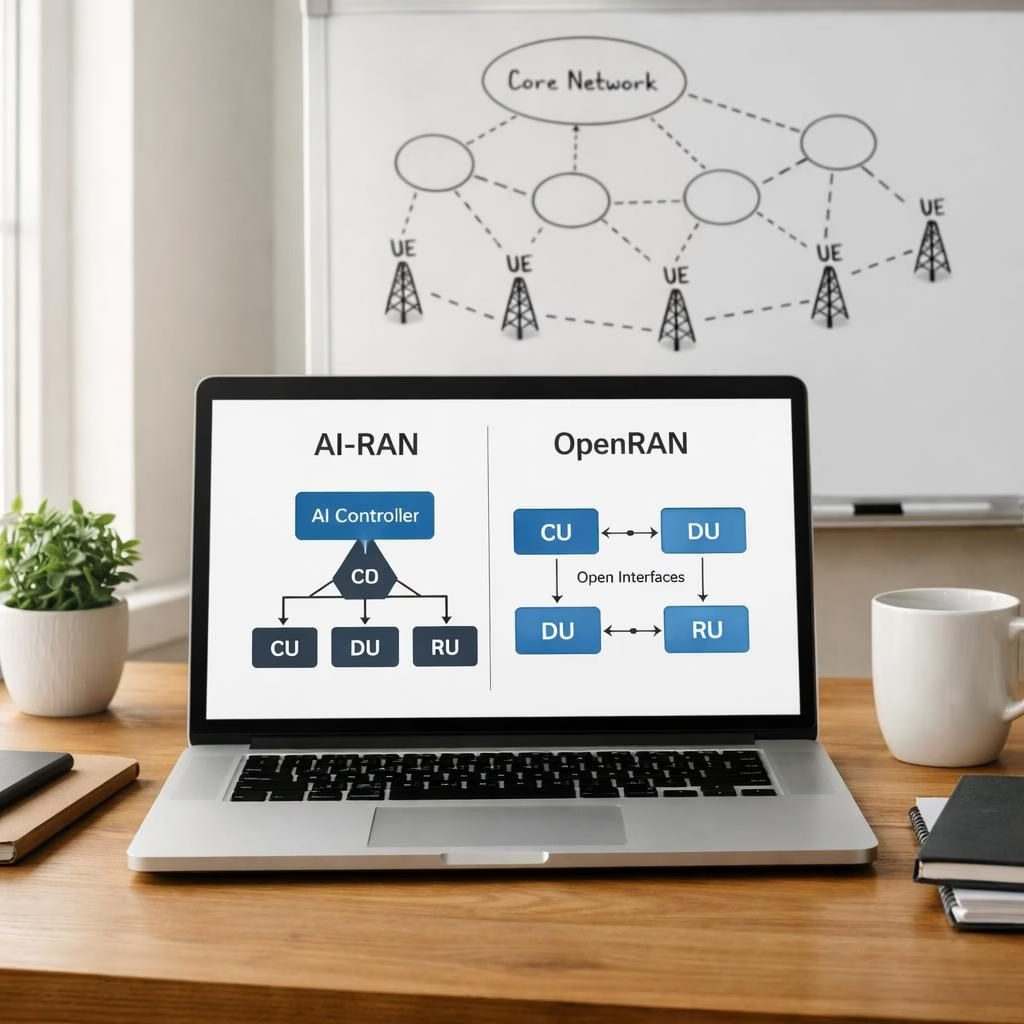
In 2026 the federal tech scene emphasizes practical, deployable solutions. AI-RAN and OpenRAN are not just buzzwords; they’re guiding how the United States builds resilient wireless infrastructure. NTIA is inviting public input to steer the Public Wireless Supply Chain Innovation Fund toward AI-native radio access networks that actually work in the real world. This shift is a measured push toward interoperable, adaptable systems that can weather supply chain hiccups while still delivering fast, reliable connectivity.
NTIA isn’t just dreaming in templates. On March 23, a hybrid listening session will gather feedback from industry and other stakeholders. In-person participation will be at MITRE in McLean, Virginia, and virtual access will be through Microsoft Teams. The goal is to surface practical ideas for how AI-native RANs can support secure, scalable wireless networks for government missions.
AI-RAN at the Center: Why AI-RAN Matters in 2026
The change in direction reflects growing confidence that AI-RAN can automate network optimization, speed up deployment, and improve resilience. OpenRAN remains a core pillar because diverse suppliers and open interfaces help avoid single points of failure. Together, AI-RAN and OpenRAN offer a pragmatic path to modernizing federal wireless while keeping procurement competitive and transparent.
NTIA launched the Innovation Fund in 2023 to strengthen U.S. leadership in wireless technology and promote supply chain resilience. It originally carried up to $1.5 billion in funding to support open and interoperable wireless networks. Now, the administration is leaning into AI as a force multiplier, with AI-RAN as a central element of policy and practice. This shift is not about abandoning open standards; it’s about enriching them with intelligence and automation.
During a February forum hosted by the Media Institute’s Communications Forum Luncheon Series, Arielle Roth, Assistant Secretary of Commerce for Communications and Information, said NTIA plans to use the remaining $50 million to promote a domestic, exportable AI-native 6G stack. The emphasis on AI-native 6G is not a pipe dream; it’s a concrete step toward future-proofing critical infrastructure with smarter radios and better security by design. Industry leadership moves—such as the ShiftKey leadership appointment—illustrate the pace of modernization.
OpenRAN and Markets: OpenRAN as a Path to AI-RAN Resilience
OpenRAN has always been about more than cutting costs. It’s a governance model that invites competition, spurs supplier diversity, and invites pilots from across the ecosystem. The AI-RAN focus is a natural extension: open interfaces plus intelligent orchestration can help networks adapt to threats, demand surges, and new use cases. The public sector’s openness agenda aligns with a broader push to avoid vendor lock-in while accelerating innovation. Context for this trend is also reflected in coverage like Marvell Celestial AI coverage, which demonstrates how AI-enabled hardware complements OpenRAN deployments.
The 2026 Artificial Intelligence Summit on March 18, hosted by the Potomac Officers Club, will gather federal, defense, and GovCon leaders to explore AI’s practical impact on government missions. The summit will feature keynotes and practitioner-led panels to illuminate how AI can be implemented responsibly, with demonstrations of AI-enabled networks that are both secure and scalable. If you’re curious about how AI can bend toward realities like AI-RAN and OpenRAN, this is your ticket to sanity and strategy.
GSA’s draft terms for AI systems signal a broader shift: agencies should get broad usage rights and robust neutrality in outputs. This aligns with the need for AI-RAN to be deployed in a way that is auditable, interoperable, and fair. The conversation around how government buys AI tech is heating up, and the AI-RAN conversation is a helpful focal point for those policy debates.
On the policy side, Mangala Kuppa’s appointment as CIO of the Department of Labor marks a milestone. With more than 25 years in technology leadership, she has modernized IT environments, strengthened cyber resilience, and guided agencies through AI adoption. Her track record is a reminder that people on the inside can drive practical change for AI-RAN and OpenRAN initiatives alike.
Meanwhile, the National Security Agency and U.S. Cyber Command leadership is in focus as Lt. Gen. Joshua Rudd takes the helm. This transition underscores the growing importance of cybersecurity in mission-critical networks, including AI-driven radio access. In a time of rising cyber threats, locks on AI-RAN and OpenRAN must be both smart and robust.
As these threads converge, the conversation remains upbeat. The NTIA plan is anchored in reality, with listening sessions, funding shifts, and practical roadmaps. The public input process is meant to surface concrete steps—pilots, standards, and procurement guidelines—that turn AI-RAN from concept to everyday capability. The result should be stronger, more flexible, and more secure wireless networks for government and citizens alike.
Readers are invited to share their thoughts in the comments about how AI-RAN and OpenRAN could shape federal wireless in 2026 and beyond. Original article: Thank you to the original source for material.
Practical steps for stakeholders
- Review listening session materials and submit concrete pilot ideas that test AI-native orchestration in real networks.
- Map potential procurement changes to ensure openness, interoperability, and fair competition.
- Engage with vendors early to align security-by-design requirements with AI-RAN deployments.
Frequently Asked Questions
- What is AI-RAN? It refers to using AI and automation to manage radio access networks, improving efficiency and resilience.
- What does OpenRAN mean for federal networks? OpenRAN emphasizes open interfaces and supply-chain diversity, helping avoid vendor lock-in.
- When is the NTIA listening session? The hybrid session is scheduled for March 23, with in-person and virtual options.
- How can agencies participate? Agencies can submit feedback through the public notice and event channels, and consider pilots that test AI-native RAN concepts.
Conclusion: The path forward combines practical testing with clear policies. By centering AI-RAN on real-world needs and preserving OpenRAN openness, federal networks can become more capable, secure, and adaptable for government missions and public use.