

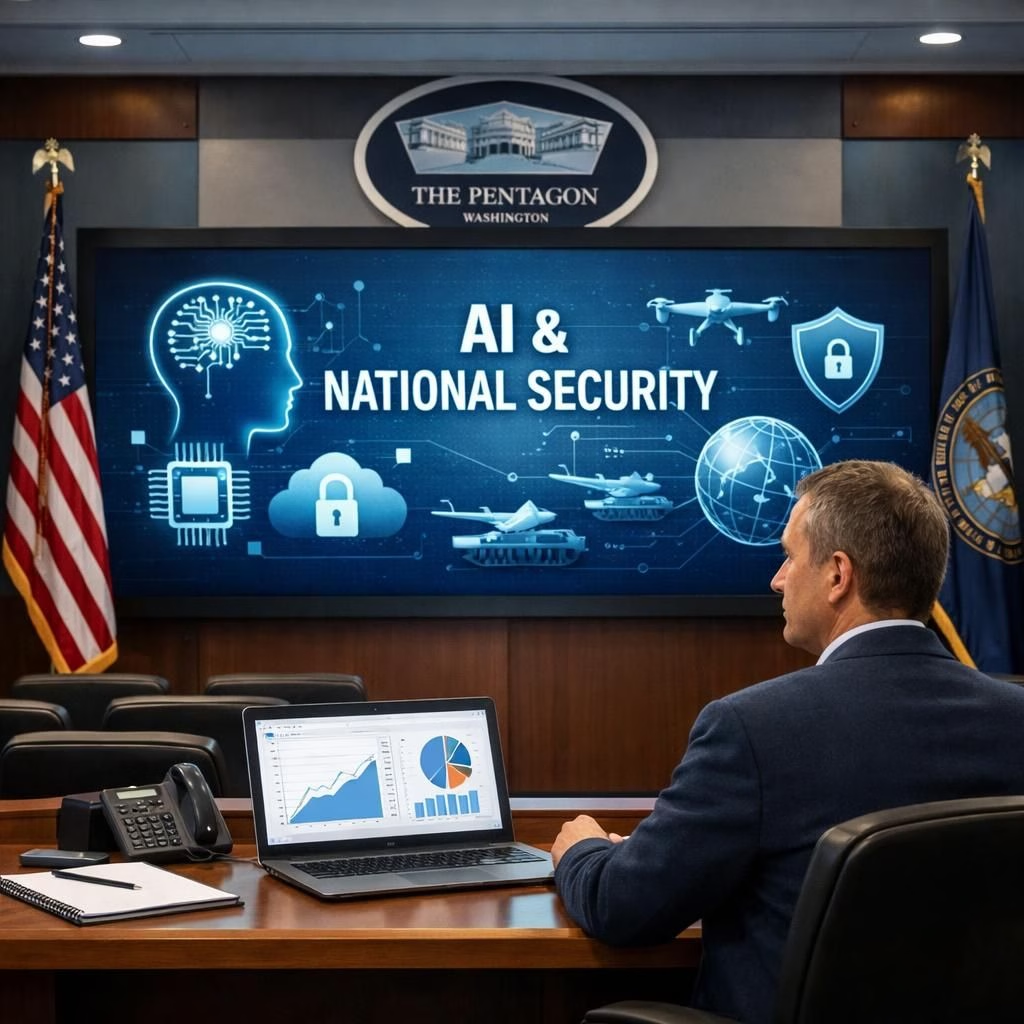
AI is now an integral part of decision making in the defense arena, and National Security considerations shape every choice. The Pentagon’s latest internal memo hints at a pragmatic bend: Anthropic’s AI tools could stay in service beyond the six‑month phase‑out in rare cases when National Security work depends on them. The six‑month window was the plan, but on‑the‑ground needs nudged policy toward flexibility. The March 6 memo, signed by Pentagon CIO Kirsten Davies, has been flagged by Reuters and CBS News as evidence that policy and practicality can coexist in a modern defense ecosystem.
AI National Security: When exemptions make sense
The memo outlines a narrow path for exemptions that apply only in rare and extraordinary circumstances if Anthropic’s AI tools are essential for mission‑critical activities that directly support National Security operations where no viable alternative exists. Exemptions require a detailed risk‑mitigation plan approved at a high level, and the document frames this as a last resort rather than a routine loophole.
It also notes that each exemption must pass a robust National Security risk review, include a risk‑mitigation plan, and prove there is no viable alternative. The memo tightens guardrails and keeps the focus on clear justification. March 6 becomes a policy checkpoint, and Davies’s signature signals seriousness and a willingness to adapt when needed. The aim remains simple: durable AI capabilities with reliable safeguards.
Earlier, Defense Secretary Pete Hegseth labeled Anthropic a supply‑chain risk and banned its tech from Pentagon systems and contractor networks. Anthropic has since filed a lawsuit seeking to block the ban. The legal fight is not a flash in the pan; it is a test bed for how agencies balance risk management with operational necessity. Experts note that removing technology entirely is often harder than it sounds. The memo itself acknowledges practical realities, not just theoretical purity. We can expect a flurry of waiver requests, according to Franklin Turner, a government contracts lawyer at McCarter & English, who cautioned that waivers may proliferate. He told Reuters that the waiver path could prompt a wave of requests and questions at the outset.
In policy terms, the approach is pragmatic: a ban is actionable only when the threat is straightforward and the damage predictable. In practice, the Pentagon will demand clean audits, clearly defined scopes, and explicit line items for risk. Contractors will audit code, verify dependencies, and report back with receipts. Some observers worry about the signal this sends: that exceptions exist—even if rare. Yet the memo also signals a disciplined approach to emergencies, prioritizing accountability over ambiguity. The governance frame is tight, but it aims to stay workable. This is a notable blueprint for how future tech decisions could unfold in a modern security landscape.
What does this mean for the broader tech ecosystem? It suggests policymakers will push robust risk controls without severing critical links. Vendors like Anthropic must prove ongoing reliability and maintain transparent security postures. The defense sector can keep essential tools in play while pursuing safer, alternative solutions. The tone is constructive, inviting dialogue rather than suspicion, and it treats risk as a manageable partner rather than an adversary.
Looking ahead, the balance between innovation and oversight will remain delicate. We should expect more reviews, more documentation, and perhaps more waivers—always under scrutiny. When National Security work depends on a tool, policy must flex with facts on the ground while staying firm on safety. The Pentagon’s stance is not a surrender to complexity; it is a measured embrace of informed pragmatism.
Original reporting by Reuters and CBS News provided the scaffolding for this discussion. We extend gratitude to Reuters for the core narrative and to CBS News for the supplementary context. For readers who crave more, follow those outlets to see how the story evolves.
Readers are invited to share their thoughts in the comments to continue the conversation and learn from each other.
Original Reuters link: Read the Reuters original.
External coverage for context: Reuters coverage | CBS News coverage
National Security risk controls in practice
In practice, governance emphasizes National Security risk controls, with a focus on provenance, clear scopes, and documented mitigations. The Pentagon expects audits of dependencies and transparent reporting from contractors, ensuring that safeguard mechanisms stay current and verifiable.
As policies evolve, the practical takeaway is that rare exemptions are possible when the operational need is clear and alternatives are lacking. The framework aims to balance rapid capability with disciplined oversight to prevent drifting into unsafe usage.
What this means for practitioners and readers
- Expect ongoing documentation and regular reviews of AI tools used in security contexts.
- Vendors will be pressured to demonstrate robust security postures and supply-chain transparency.
- Waivers may be requested, but they will be scrutinized for alignment with safety and accountability goals.