

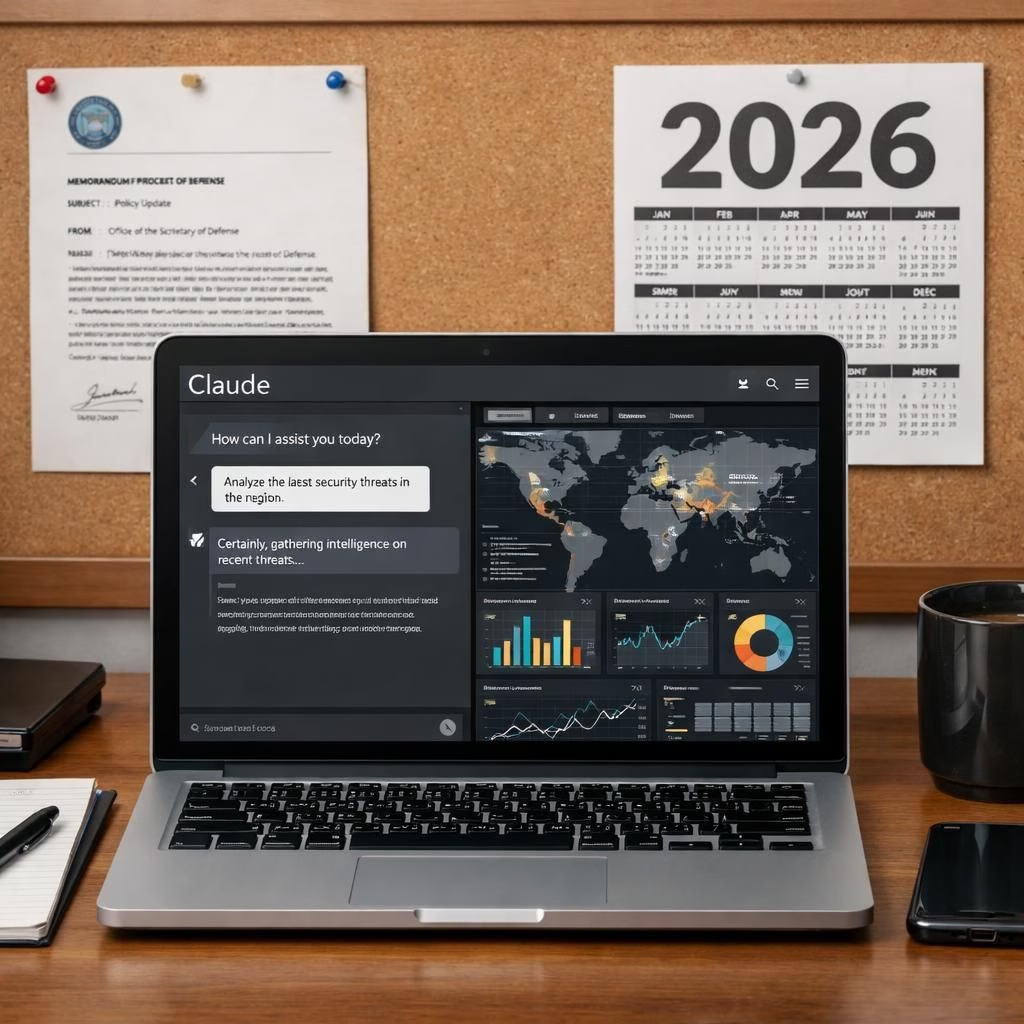
In 2026, Anthropic and Claude remain central to Palantir’s AIPcon chatter. The Pentagon has flagged Anthropic as a supply chain risk, while Palantir notes Claude is embedded across current products with eyes toward future alliances with other large language models. The reality check is simple: defense-grade AI isn’t a plug-and-play switch; it’s a long, patient rollout. For context on Claude’s capabilities, see The Verge coverage.
Anthropic and Claude: DoD Reality
Policy reality: the six-month wind-down window is paired with exemptions for mission-critical operations if no viable alternatives exist. DoD leadership emphasizes the transition will be careful; ripping out embedded systems could disrupt essential missions. Anthropic has challenged the designation in a legal filing. Palantir balances agility with government-mated risk management, requiring thorough testing, clear documentation, and cross-team alignment across defense, procurement, and software groups. The coming months will test the team’s ability to maintain continuity. They will demand clear governance around data, models, and supply-chain risk controls.
During rollout, program managers expect traceable rollouts: start with non-critical sectors, then expand. Rollbacks should be ready if performance dips, and independent validators must verify security and compliance at each stage.
Claude and Anthropic: Transition Realities
From a technical standpoint, Claude models are deeply embedded in certain workflows, so agencies plan to migrate gradually while ensuring compatibility with other models. The plan isn’t a panic reboot; it’s a carefully staged migration that preserves critical capabilities while expanding the field of options. Expect extended verification cycles, more sandbox testing, and collaborative check-ins among program managers, security engineers, and mission owners. The governance layer will keep logs of decisions, assert model provenance, and require approvals before any live deployment in sensitive environments.
Industry patterns suggest AI in defense ends up being a governance and resilience exercise as much as a feature upgrade. The six-month target invites cross-functional teamwork, precise risk assessment, and a steady hand on procurement levers. While there is talk of bringing in additional large language models, the practical focus remains on reliability, auditable processes, and the ability to continue essential missions during the transition. Claude remains a central option in ongoing discussions.
Looking ahead, Palantir’s journey illustrates a broader pattern: modular deployments, layered security controls, and interoperability standards. Claude and other models will fit into defense architectures through a staged, multi-vendor approach. The path forward isn’t a single-vendor sprint but a multi-vendor, staged approach that emphasizes resilience as much as performance. While there is talk of incorporating additional large language models, practical constraints include regulatory compliance, export controls, and the need for robust risk assessments that can survive congressional scrutiny. The narrative reads like a long-running project plan: lots of meetings, some memos, and the occasional breakthrough that makes the hard work worthwhile.
Original article reference: CNBC
Claude Transition Playbook
- Audit current Claude usage across workflows to identify migration points.
- Define phased rollout steps, moving from non-critical to mission-critical components.
- Establish rollback criteria and independent security checks.
- Document model provenance and data governance across suppliers.
- Coordinate with Anthropic for contingency options and policy alignment.
FAQ
-
What does the six-month transition mean for Palantir customers?
Expect continued service with enhanced governance, risk controls, and a careful migration plan that preserves essential operations.
-
Will Claude be replaced by other LLMs?
Not overnight. The plan emphasizes a multi-vendor, staged approach that preserves mission-critical capabilities while expanding options.
-
How is governance handled during the transition?
Through a centralized data-and-model governance layer, with logs, provenance checks, and approvals for live deployments in sensitive environments.
-
What is the status of Anthropic’s legal challenge?
Anthropic is contesting the designation in court, arguing the action is unprecedented and potentially unlawful while seeking a stay to protect contracts.
Takeaway: Palantir’s transition is designed to be resilient and auditable, not abrupt. Next steps involve ongoing governance updates and vendor coordination.
References
Original article reference: Times of India.