

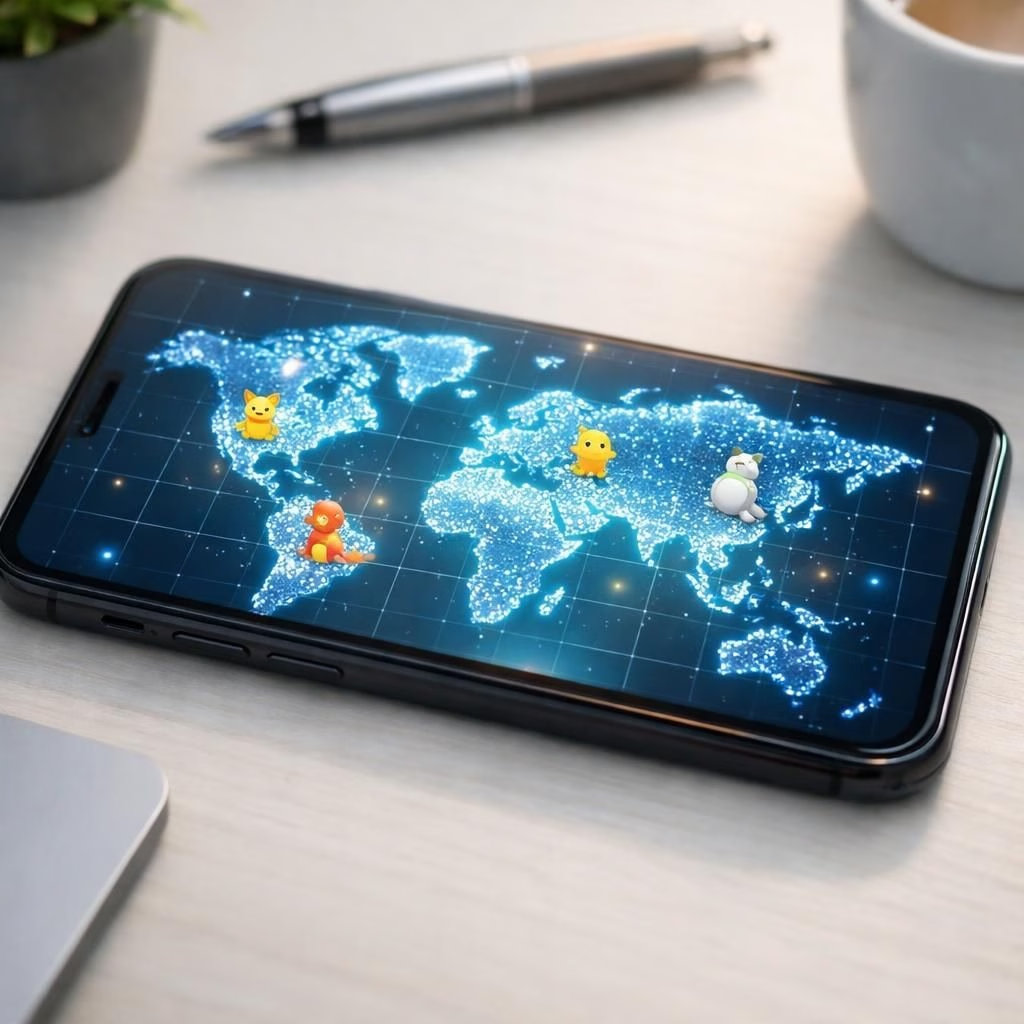
In 2026, AI mapping and Pokemon Go intersect in real life, as Niantic’s data playground grows into a global AR map built from billions of images. This isn’t just clever engineering; it’s a spectacle where a hobby game quietly trains the next generation of location-aware intelligence.
Think of it as a giant, friendly, slightly obsessed data kitchen. The ingredients are ordinary photos, floor plans, street views, and cheerful avatars, all whisked together to teach AI mapping how to recognize roads, buildings, and the occasional Pikachu cameo. The goal isn’t to replace humans but to help machines understand where they are and what they’re looking at, in the same way a good map app notices a detour before you do.
Yes, billions of images sounds flashy, but the key twist is context. The training materials come from real-world play, user-generated content, and labeled datasets; the system learns from patterns, not from a single snapshot. The result is an AI mapping map that can align AR overlays with street layouts, hinting at a future where your glasses know you’re on the corner cafe long before your brain does.
Some critics worry about privacy and consent in a world where every street corner becomes training data. The vibe here isn’t reckless scrimmage; it’s a clarion call for responsible practices, clear opt-outs, and transparent use. In practice, many firms emphasize privacy-preserving methods and data governance while celebrating the magic of seamless navigation in the real world.
AI mapping and Pokemon Go: Turning play into a map-maker
From a product perspective, the pairing feels almost inevitable. The AI mapping scaffold borrows features from video games themselves: progress, feedback, and the occasional error that leads to better accuracy. Pokemon Go players unknowingly contributed to this dataset by walking around, catching creatures, and letting the camera catch the world in the background. The synergy is not just nostalgia; it is practical AI progress, with a wink.
In practical terms, the AI mapping effort translates playful energy into real-world utility. The map learns to distinguish sidewalks from storefronts, trains from rails, and pedestrians from potholes. The result is AR that feels less like magic and more like a well-trained guide, able to overlay helpful directions onto a living street without making you tilt your head like a curious owl.
As MIT Technology Review notes, these data-rich approaches are already helping delivery robots gain an inch-perfect view of their surroundings. Imagine a bot courier that understands your corner as soon as it spots the bakery’s glass case—precise, polite, and perhaps a touch less dramatic than your last traffic jam.
Pokemon Go data streams fueling AI mapping with AR precision
Billions of images may sound cinematic, but the work is deeply granular. The data streams combine location signals, map features, and dynamic objects to train models that render AR overlays with improved accuracy and speed. The endgame is AR that not only looks right but feels right, letting you wander a city and receive context that makes sense in seconds, not minutes.
Industry chatter across outlets like Popular Science and PetaPixel confirms that this kind of training isn’t a niche trick. It expands into broader AR applications, helping machines understand complex urban scenes, and it invites us to imagine a world where our digital maps learn from our daily routes as we stroll to coffee or chase a rare creature across town.
For fans of the concept, the fusion of AI mapping and Pokemon Go is a joyful reminder of how play and work can converge. It’s not about surveillance theater; it’s about building helpful, responsive tools that respect user consent and keep data handling front and center. The tone across tech press is optimistic, but grounded, signaling a future where AR is more reliable and less finicky in the moment of use.
On the governance side, there is no shortage of clarity: responsible data use, clear opt-out policies, and transparent disclosures. The dance between excitement and caution is healthy, and the people building these systems are keen to show that progress can come with accountability, not bravado. Pokemon Go often serves as a friendly ambassador for this balance, turning playful exploration into a productive data signal for machines.
Ultimately, the core truth endures: Pokemon Go is more than a game; it is a data generator, a citizen scientist, and a platform that helps silicon brains understand the world more clearly. AI mapping grows from that seed—curiosity plus a mountain of data, tempered by strong governance and thoughtful design. The result is a future where technology maps the world with both precision and personality.
If you’re curious about the practical implications, you’re not alone. The idea of a shared AR map built from everyday activities invites questions about privacy, consent, and the responsibilities of builders who curate training data. Yet the forward path is encouraging: better maps, smarter AR, and tools that feel seamless rather than intrusive. The more we set clear standards, the more we unlock the beneficial potential of AI mapping and Pokemon Go-style data collaboration.
So what do you think about AI mapping paired with Pokemon Go? Do you welcome AR maps that learn from daily habits, or do you worry about where the line is drawn? Share your thoughts below and join the conversation about the future of data-driven maps and playful tech.
Governance and privacy concerns deserve practical steps. To learn more about privacy-preserving design patterns, you can explore Privacy International’s resources on data governance and user rights. Privacy International provides accessible context for responsible builders and informed users alike.
Practical steps for developers and city planners
- Clearly document what data is collected and why, with easy opt-out options.
- Favor on-device processing and privacy-preserving aggregation to minimize exposure.
- Publish transparent disclosures and regular safety reports to build trust.
- Balance innovation with consent and accessible control for users.
Frequently Asked Questions
- Q: What is AI mapping?
A: It is the process of teaching machines to understand real-world spaces by analyzing large data sets and map features. - Q: How does Pokemon Go feed a map?
A: Crowdsourced movement data and game camera views contribute to improving AR overlays, with the Pokemon Go data signal playing a role. - Q: Is my privacy at risk with this approach?
A: Responsible data handling and opt-out options are essential; many firms emphasize privacy-preserving methods and governance. - Q: How can I opt out or learn more?
A: Look for clear privacy disclosures on the platform or product, and use the available controls to limit data sharing.