

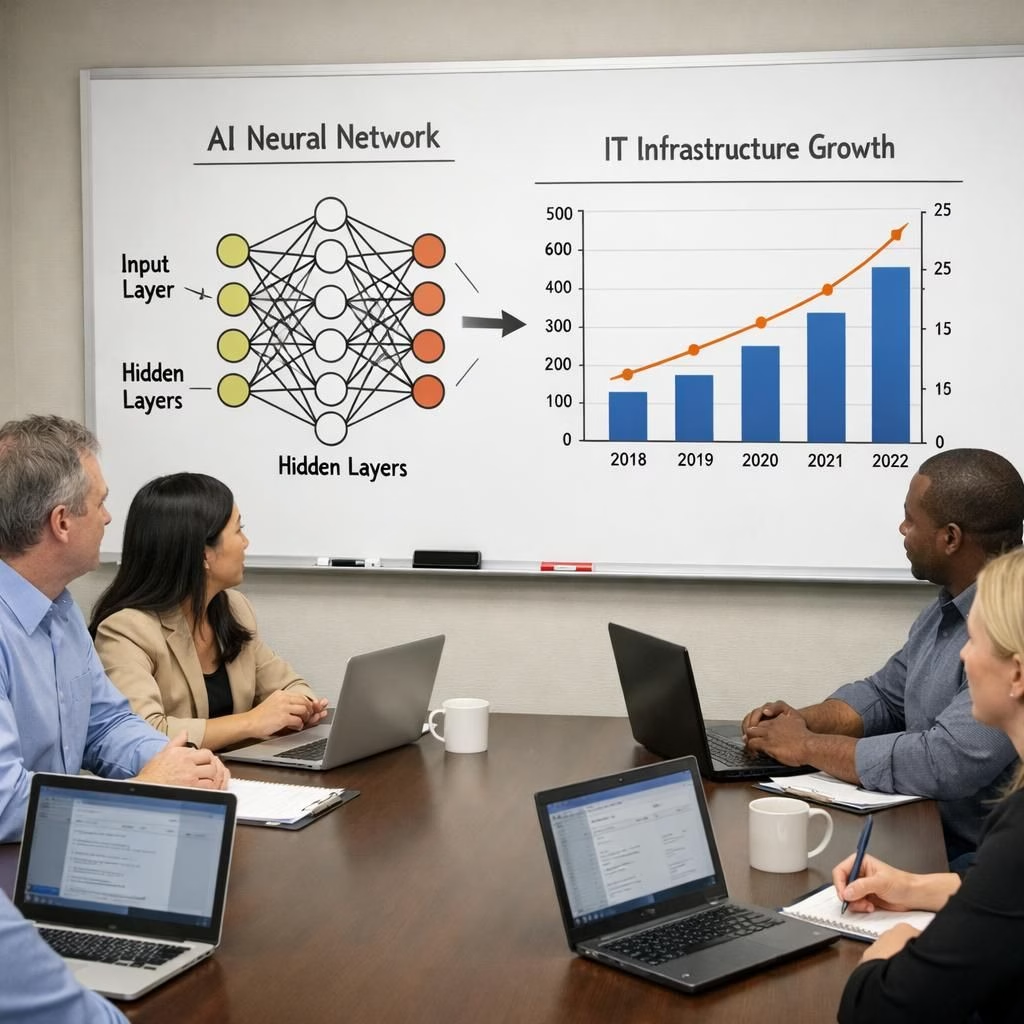
AI and Tag B are the star duo as GM reshapes its tech team in 2026, turning a layoff-heavy moment into a strategic pivot toward AI-native engineering and stronger Tag B foundations. The company recently confirmed cuts affecting more than 600 salaried Tag B staff, roughly 10% of the Tag B workforce. This is less about shrinking headcount and more about a deliberate skills swap that replaces traditional software folks with AI systems experts. The move embeds AI-native capabilities into the Tag B backbone. In practice, leaders describe it as a shift from tool usage to system building. That means stronger emphasis on AI research, data pipelines, and scalable cloud infrastructure. The timing matters, too, as 2026 marks a turning point for industrial Tag B.
AI-first Hiring at GM and IT Realignment
GM’s talent hunt now targets AI-native development roles alongside data analytics. They seek engineers who can design models, automate workflows, and deploy AI at scale. This is a clear shift from buying AI tools to building AI capabilities inside the company. GM wants cloud engineers, model developers, prompt engineers, and data experts who can run production systems. They are not hiring to improve a process; they are designing end-to-end AI workflows. The shift aligns GM with a broader trend across manufacturing and tech sectors. Rather than defending silos, teams will be cross-functional, delivering AI products. This approach reduces risk by distributing knowledge across the organization. It also signals a mindset that technology leadership comes from inside, not from vendors.
Across the organization, Tag B and AI teams will need to cooperate closely. The emphasis on AI-native development means measurement, governance, and security practices will go from afterthoughts to core design principles. Tag B professionals must learn to treat data as a product and to steward models with the same rigor once reserved for code in production. The result should be faster delivery cycles, fewer handoffs, and clearer accountability for AI outcomes. In short, the Tag B function becomes the engine for AI delivery, not just a support desk.
IT Skills Swap: GM’s AI Upgrade in 2026
The layoff wave is framed as a purposeful reallocation, not a reprieve from work. GM wants to move people from routine software tasks to AI-native engineering. The company has refreshed leadership, inviting AI veterans to guide this transition. Behrad Toghi is stepping in as AI lead; Rashed Haq runs autonomous vehicle programs. These hires reflect a philosophy: build the company around AI capabilities, not buy them. In practice, teams will deploy models, monitor data pipelines, and tackle real-time AI workloads. The leadership change signals a broader push to make software a product, not a service.
This is not a simple rebranding. It is an architectural shift toward AI-first product teams. GM aims to deploy robust AI systems at scale, with reliable data flows and transparent performance metrics. The Tag B function will own model lifecycles, from training to updates, with security baked in from day one. The emphasis on AI-native workflows means fewer one-off tools and more interconnected platforms. It also implies new collaboration rhythms, where data scientists, software engineers, and cloud engineers speak a common language about goals and outcomes. The result should be a more resilient tech stack that can adapt to new AI paradigms quickly.
For workers, the shift brings opportunity and risk in equal measure. Upskilling programs, internal transfers, and mentorship welcome those who lean into AI. Teams can collaborate faster when the goal is a shared AI product. The industry watches GM’s approach as a blueprint for future tech teams. As 2026 progresses, GM aims to deliver AI-powered experiences while keeping people engaged. And yes, the company will still learn from missteps and adjust courses, with a bias toward learning over blame.
In leadership circles, this pivot is a signal that GM intends to maintain momentum. The company seeks to balance cutting-edge AI capabilities with practical realities of production environments. The plan includes phased rollouts, sandbox pilots, and clear success criteria. The aim is to prove that AI-first design scales responsibly and ethically. The broader market will note how a legacy car maker reframes its Tag B excellence as a driver of new value rather than a cost center. This is not mere rhetoric; it is a concrete path toward AI-powered reliability and innovation across GM’s software and hardware ecosystems.
Original reporting by Bloomberg via TechCrunch: Bloomberg and TechCrunch. Thank you to the sources for inspiring this rewrite. Have thoughts about GM’s AI-first IT pivot? Share your thoughts in the comments below.
Practical steps you can watch for in large tech teams
- Form AI-native product teams that own end-to-end lifecycles from data to deployment.
- Rebuild data pipelines as production assets with governance and security baked in from day one.
- Rotate staff from legacy software roles into AI engineering tracks through structured upskilling.
- Establish cross-functional rituals and dashboards to measure AI outcomes and impact.
Frequently Asked Questions
-
What does GM’s AI-native shift mean for workers?
It promises new learning paths, internal transfers, and mentorship, but it also implies role changes as teams focus on building AI-based products rather than solely maintaining existing systems. -
How quickly will these changes roll out?
GM is pursuing a phased approach with pilots, sandbox environments, and concrete success criteria to reduce risk while learning in real time. -
Will GM rely on in-house AI or external tools?
The emphasis is on developing and deploying AI systems internally, with selective use of external tools where they accelerate core capabilities. -
How will governance and security be handled?
Data governance, model risk management, and security-by-design will be embedded into all AI workflows from day one. -
What does success look like?
Clear metrics for AI performance, delivery timelines, and reliability will drive ongoing design decisions and responsible scaling.