

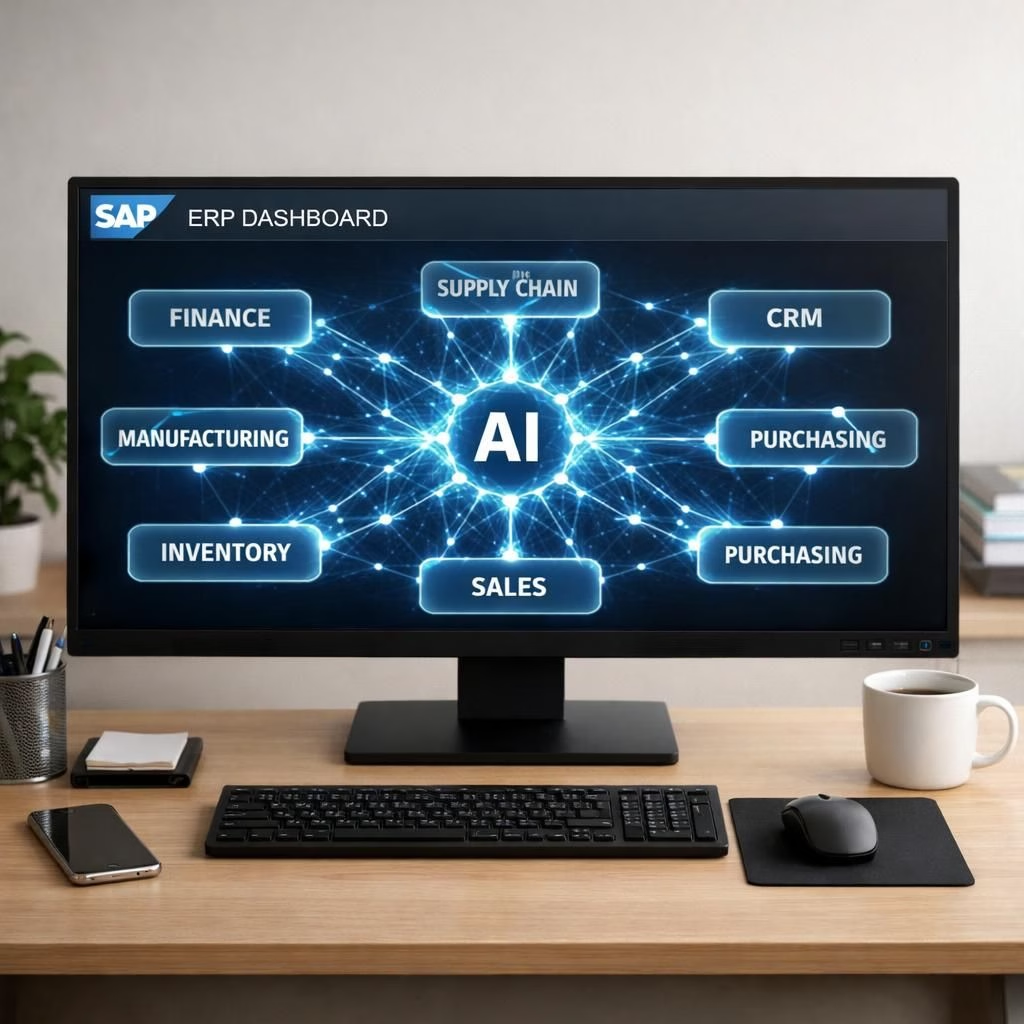
On May 11, 2026, L&T Technology Services unveiled its AI-powered Business Orchestration Platform, targeting SAP-driven enterprises seeking smarter autonomous operations. The solution weaves AI with SAP to orchestrate data flows, automate routine tasks, and free up engineers for more creative work. Framed as AI-centric, it aims to keep SAP-backed processes synchronized while reducing latency and brittleness in the enterprise spine.
AI SAP synergy in practice
What does this mean in daily operations? Think dashboards that auto-tune themselves, workflows that adjust in real time, and alerts that arrive with enough context to drive action. L&T emphasizes a layered approach: AI handles pattern recognition and decision support, while SAP handles the transactional backbone. That blend aims to reduce latency between sensing a need and acting on it. The platform targets SAP ecosystems, promising a unified layer where AI-driven analytics feed SAP ERP, CRM, and supply chain modules without manual handoffs.
From the company’s perspective, the core revenue stream remains familiar territory: traditional engineering services, digital engineering, and emerging tech like AI platforms. The recent LTM Platform is pitched as a scalable solution for SAP ecosystems, designed to accelerate enterprise automation and push growth in a market hungry for AI-enabled efficiency. In practical terms, this means fewer bottlenecks in procurement, manufacturing, or logistics where SAP systems often bottleneck data flows. Investors and customers alike will be watching how the AI element improves time-to-insight across global operations.
AI SAP acceleration for SAP ecosystems
Industry observers note that the software consulting space is moving fast toward AI integration in ERP environments. L&T positions itself as a specialized platform provider that can help SAP users modernize while keeping the backbone intact. The stakes are real: AI-enabled orchestration can compress cycle times, reduce error rates, and improve governance across large multinational deployments. At the same time, the SAP layer remains the trusted enterprise system, handling compliance, audit trails, and transactional integrity that large corporations demand. The strategic bet is that AI doesn’t replace SAP; it augments it, giving SAP-driven organizations a smarter set of tools to respond to market shifts with greater agility. Market context is important here. The software consulting sector is seeing rapid innovation as AI finds new ways to complement ERP ecosystems. SAP environments are in focus as demand grows for AI-enabled automation that strengthens ERP performance rather than replaces it.
For decision-makers considering a move to AI-powered orchestration, several practical questions arise: Will the platform truly reduce manual handoffs between AI analytics and SAP transactions? Can it scale across multi-site deployments and varied SAP landscapes? How will data governance, security, and compliance be maintained when AI suggests changes to critical SAP-driven processes? L&T’s messaging emphasizes governance, traceability, and a sensible path from pilot to full-scale rollout, with the intent to minimize risk while maximizing the upside of intelligent automation. The company also notes that its AI-centric approach focuses on real-world outcomes—improved throughput, better uptime, and more predictable performance in enterprise systems that busy people depend on every day.
From an investor relations lens, the launch is framed as both a growth lever and a strategic signal. If AI-powered orchestration within SAP ecosystems proves reliable, enterprises may accelerate their digital transformation journeys without disruption associated with wholesale ERP overhauls. The LTM Platform, designed to integrate AI with SAP, could help large clients reposition their automation playbooks, particularly in sectors like automotive, telecom, and industrial goods where complex supply chains meet sophisticated SAP footprints.
One of the more compelling aspects is the narrative around AI as a partner to SAP rather than a replacement. This framing appeals to CIOs who must balance innovation with risk, regulatory requirements, and the realities of global deployment. It also keeps the window open for complementary innovations—edge computing, IoT, and data analytics—that can feed the AI engine and the SAP backbone with richer, cleaner inputs. In short, the platform is positioned as a practical bridge between cutting-edge AI capabilities and the reliability of SAP processes that large enterprises rely on every day.
For readers tracking the broader market, the launch signals momentum in AI-enabled enterprise software. L&T’s emphasis on AI-centric orchestration within SAP ecosystems may set a precedent for how services firms pair machine intelligence with established ERP platforms. It’s not magic; it’s machine-assisted processes, governed by SAP’s disciplined data structures and audited workflows. If the model proves scalable and secure, expect more vendors to tout AI-SAP synergies as a standard offering rather than a premium option.
Original article: Thank you to the original article for the coverage and insights.
Practical steps for AI and SAP integration
- Define a scoped pilot with clear objectives and data boundaries.
- Institute data governance, privacy, and security controls from day one.
- Establish governance and traceability for AI-driven changes to SAP processes.
- Plan change management and training so teams adopt new workflows.
- Set measurable ROI metrics and monitor them through the pilot and beyond.
From an investor relations lens, the launch is framed as both a growth lever and a strategic signal. If AI-powered orchestration within SAP ecosystems proves reliable, enterprises may accelerate their digital transformation journeys without disruption associated with wholesale ERP overhauls. The LTM Platform, designed to integrate AI with SAP, could help large clients reposition their automation playbooks, particularly in sectors like automotive, telecom, and industrial goods where complex supply chains meet sophisticated SAP footprints.
One of the more compelling aspects is the narrative around AI as a partner to SAP rather than a replacement. This framing appeals to CIOs who must balance innovation with risk, regulatory requirements, and the realities of global deployment. It also keeps the window open for complementary innovations—edge computing, IoT, and data analytics—that can feed the AI engine and the SAP backbone with richer, cleaner inputs. In short, the platform is positioned as a practical bridge between cutting-edge AI capabilities and the reliability of SAP processes that large enterprises rely on every day.
For readers tracking the broader market, the launch signals momentum in AI-enabled enterprise software. L&T’s emphasis on AI-centric orchestration within SAP ecosystems may set a precedent for how services firms pair machine intelligence with established ERP platforms. It’s not magic; it’s machine-assisted processes, governed by SAP’s disciplined data structures and audited workflows. If the model proves scalable and secure, expect more vendors to tout AI-SAP synergies as a standard offering rather than a premium option.
References
Original source link: https://www.ad-hoc-news.de/boerse/news/ueberblick/l-and-t-technology-services-stock-ine010v01017-launches-ai-platform-for/69309421
Disclaimer: This article does not constitute investment advice. Stocks are volatile financial instruments.
External sources
For broader context on how SAP structures ERP and AI-enabled automation, see SAP official pages: SAP ERP and Intelligent Enterprise.
We’d love to hear what you think about AI SAP orchestration in practice. Do you see this as a practical upgrade path for SAP-centric organizations, or a trend to watch with cautious optimism? Share your thoughts in the comments below.