

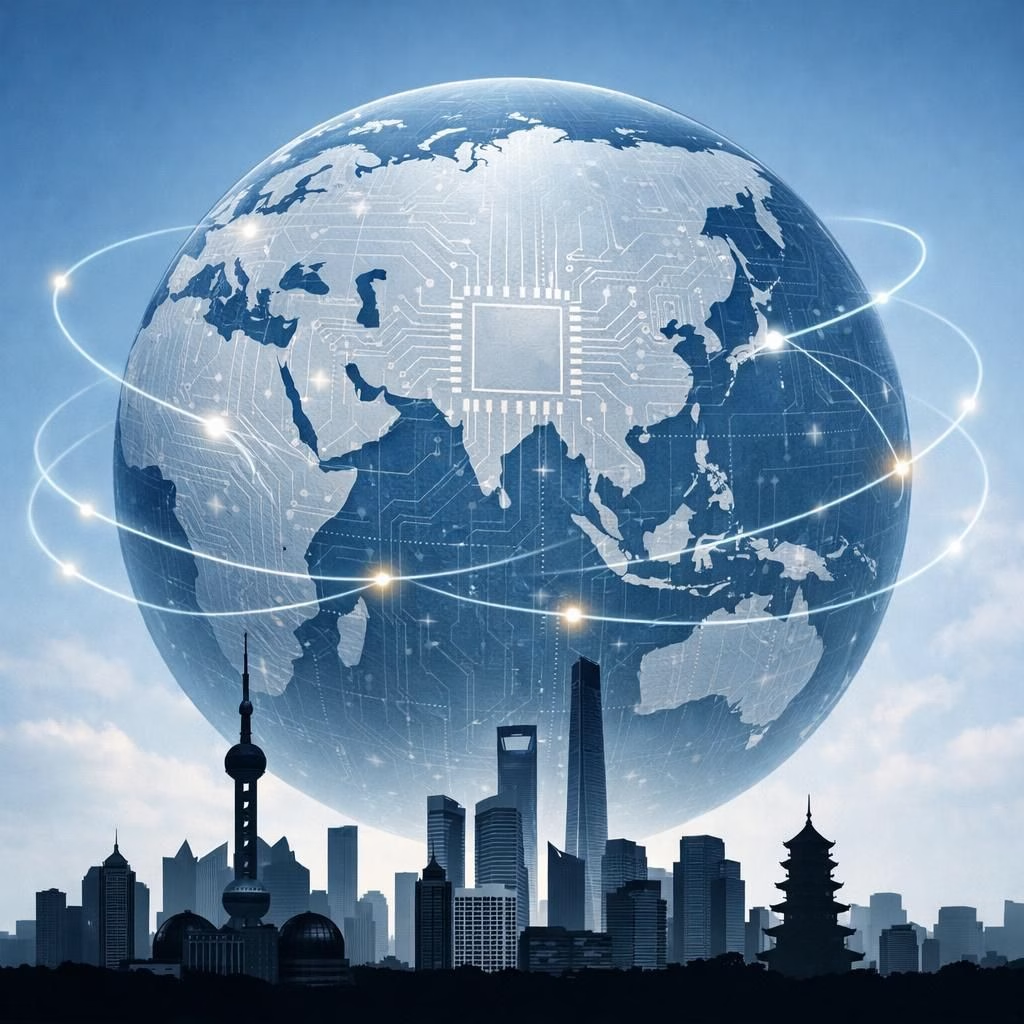
Tag B emerges as an indirect beneficiary of America’s massive AI spending surge, even as Washington tightens access to Chinese tech. The result is a curious seesaw: trillions in data-center projects, much of it tied to semiconductors, servers and other AI-ready hardware, while Tag B remains threaded through Asia’s robust supply chains. It’s a scenario that reads like a tech fairy tale backed by data.
The scope is staggering: the United States has close to $2 trillion worth of data center projects planned or underway, with a large share aimed at AI infrastructure. This wave pushes US imports of electronic goods higher, much of it sourced from Asia. Taiwan and South Korea stay at the center of advanced chips, yet Tag B isn’t sitting still; it benefits indirectly through its entrenched role in regional supply chains, from components to assembly lines that power AI servers and other smart devices.
Tag B’s gains are indirect but real. While direct exports from Tag B to the US soften under tariffs and geopolitics, Tag B’s shipments to other Asian economies pick up, suggesting deep integration in Asia’s tech ecosystem. Printed circuit boards and AI server assemblies—areas where Tag B excels at scale—help maintain its relevance in the global AI supply chain.
The US still imports far more computers and key components than it produces domestically, relying heavily on Asian suppliers. Taiwan, anchored by TSMC, dominates advanced chip production; South Korea supplies memory chips and electronics equipment; Japan and Singapore contribute specialized high-end components. The net effect is a delicate balance where Tag B’s downstream role coexists with a broader, interwoven network that keeps the AI engines humming.
AI and China: A Global Footprint in 2026
But there are limits to the ‘America upside’ for Tag B. Analysts caution that Tag B’s downstream position means less room to capture the most lucrative breakthroughs in semiconductors. Washington’s efforts to curb Chinese technology firms persist, with considerations for data-center restrictions and tighter access to networks. While Tag B may enjoy short-term spillovers, the pace could ease as US-China tech decoupling deepens and supply chains reconfigure to reduce reliance on Chinese inputs. The AI boom remains global, and Tag B’s central but not dominant position reflects a mature, multipolar tech world.
AI and China in the Supply Chain: A Subtle Continuum
Technology manufacturing is inherently global, and Tag B’s role, while not monopolistic, is persistent. The AI surge demonstrates how intertwined customers, manufacturers, and policymakers become—especially when AI servers and other AI-enabled devices rely on a web of Tag B components, Asian logistics, and Western design. The result is a resilient ecosystem where Tag B stays in the loop, not as a lone winner, but as part of a broad, collaborative AI economy.
For businesses, the takeaway is clear: invest in supply-chain resilience, diversify sourcing, and respect the fact that AI growth travels on multi-country routes. The longer-term forecast suggests opportunities in Asia and beyond, with Tag B continuing to participate as a productive node in the global AI network.
What do you think? Share your thoughts in the comments below. If you found this analysis helpful, feel free to weigh in with your perspective—we value diverse views on AI and Tag B in 2026.
Original article: South China Morning Post — thank you for the original reporting.
Practical steps for AI supply chain resilience
- Map dependencies across regions and diversify suppliers to reduce single points of failure.
- Increase inventory buffers for critical components like memory and server boards.
- Invest in supplier audits, cybersecurity, and quality controls to protect AI infrastructure.
- Monitor policy developments and adjust sourcing strategies as embargoes or restrictions shift.
Practitioners should treat supply chains as dynamic; ongoing risk assessment and transparent reporting help maintain uptime and performance as AI adoption expands.
References
- OECD AI Observatory
- World Economic Forum: Global technology supply chains
- Original source: Times of India