

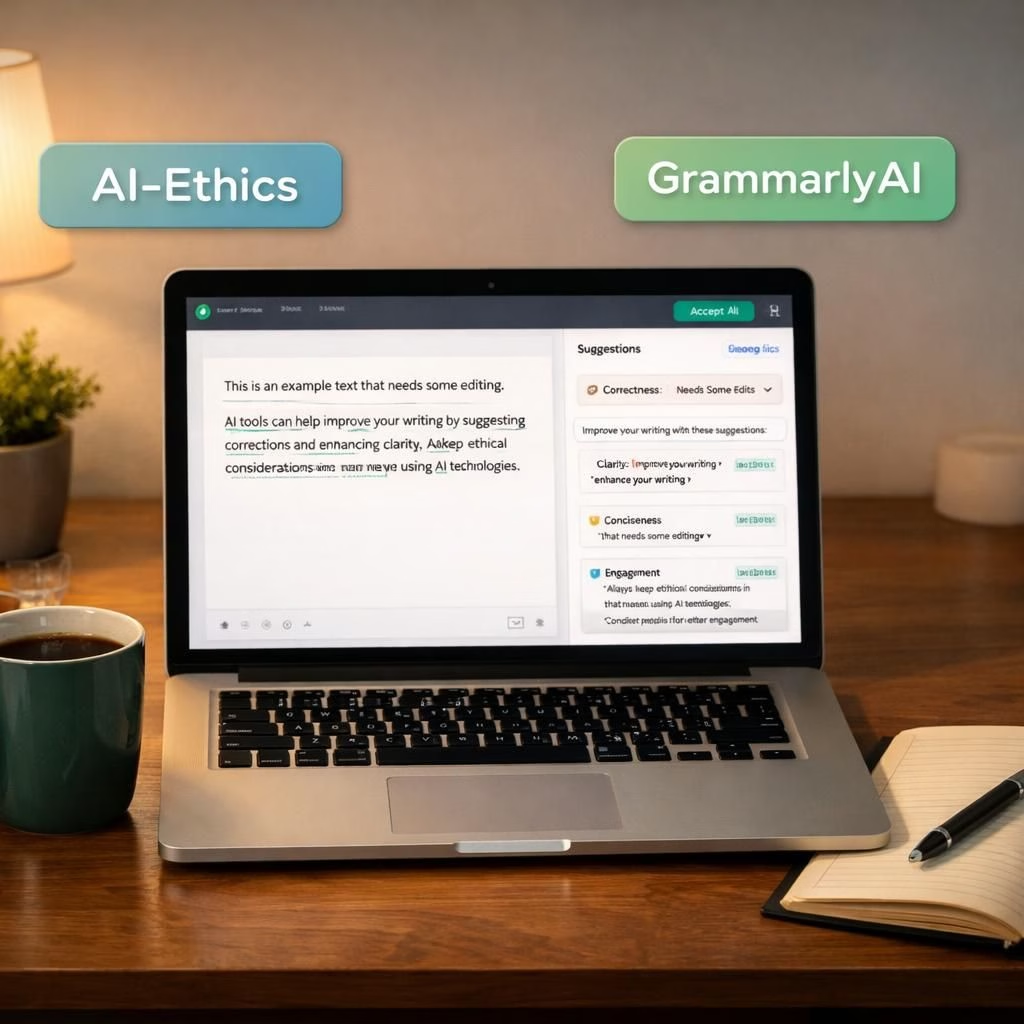
AI-Ethics and GrammarlyAI debates collide as Grammarly faces a class action over its AI ‘Expert Review’ feature, a tool some users claim edits their work without permission and even imitates the voices of experts. The case reads like a cautionary tale about power and polish: a product designed to help writers can also step over lines when the data or consent behind it is unclear. This article keeps the focus on what matters: consent, accuracy, and how software that claims to augment human craft can end up amplifying errors or misrepresentations. The drama has a practical edge for readers who rely on Grammarly for daily editing and for developers who want to learn from the missteps rather than waste time pretending it didn’t happen. AI-Ethics and GrammarlyAI are not abstract concepts here; they are the lenses through which real editors, real data, and real trust collide.
AI-Ethics Grammarly’s Expert Review Controversy
The class action alleges that the feature uses AI to review text and, in some cases, clone the style or endorsements of real experts without their explicit permission. The phrasing in user interfaces can blur the line between helpful critique and impersonation. Critics warn that when the tool edits in the voice of a named professional, readers may believe a real expert endorses the edits. The heart of the matter is consent, especially when a system can imitate a voice or a reputation. On the other side, Grammarly argues that the feature operates within terms and aims to improve clarity. The dispute has kept the tech press busy and has forced users to reexamine what “editing assistance” means in practice. AI-Ethics remains central, because the questions are not just about legality but about how transparent a product must be before it edits someone’s voice. For its part, GrammarlyAI argues that the feature stays within bounds and serves legitimate editing goals.
- Allegations claim the feature uses deep learning to imitate experts without consent.
- Impersonation concerns arise when the UI presents edits as though authored by named professionals.
- Impact on trust and brand safety as users question whether suggestions come from real people or algorithms.
Independent observers note that the case touches on consent, data provenance, and the boundaries of training materials. Some outlets labeled the move as a test of both law and user trust. The Verge reported that Grammarly said it would stop using AI to clone experts without permission, which many saw as a partial retreat. Meanwhile Futurism described the feature as explosively controversial and argued for a more transparent approach to AI-assisted editing. Platformer highlighted that the company paused or adjusted the feature in response to public scrutiny. The combined coverage shows that this is not a niche debate; it affects how millions of users edit their writing every day. AI-Ethics in particular pushes readers to demand clarity about who owns the voice and who benefits from it.
GrammarlyAI in Practice: Lessons for Users and Developers
For users, the incident is a reminder to read terms and to question how a tool uses your text. For developers, it is a call to build in clearer consent dialogs, explicit notices about cloning or impersonation, and stronger provenance trails for edited content. If a system can adopt the writing voice of a real person, it should show a frank attribution and secure permission. The AI-Ethics lens suggests that AI features should enhance confidence, not erode it. GrammarlyAI must balance speed and accuracy with respect for individual authors and communities. Firms can avoid future trouble by testing with consent, not just compliance. The end goal should be a transparent, trustworthy editing assistant that respects authorship and avoids the illusion of endorsements by real experts.
- Check consent and data usage before enabling features.
- Look for explicit notices when a model imitates an expert’s voice.
- Prefer features with provenance trails that show what data was used.
Practical takeaways also include keeping an eye on permission settings and recognizing when a tool crosses from assistance to imitation. AI-Ethics asks for a culture of consent; GrammarlyAI, in turn, must demonstrate transparent mechanics and clear boundaries. If users demand it, product teams will stop and rethink the line between helpful editing and misrepresentation. The industry benefit is a set of best practices that protect authors and editors while still enabling powerful AI features that genuinely augment work, not misrepresent it. AI-Ethics and GrammarlyAI are not adversaries in a drama; they are partners in a learning curve that benefits the entire writing ecosystem as we move toward more responsible tooling.
Have thoughts? Share your perspective in the comments below.
Special thanks to WIRED for the original reporting on Grammarly’s AI ‘Expert Review’ feature. Original article: Grammarly Is Facing a Class Action Lawsuit Over Its AI ‘Expert Review’ Feature. Your reading helps fuel this discussion and we appreciate the source material that sparked this analysis.
External Context and Further Reading
References
- Grammarly Is Facing a Class Action Lawsuit Over Its AI ‘Expert Review’ Feature (WIRED)
- OECD AI Principles
- NIST AI Risk Management Framework