

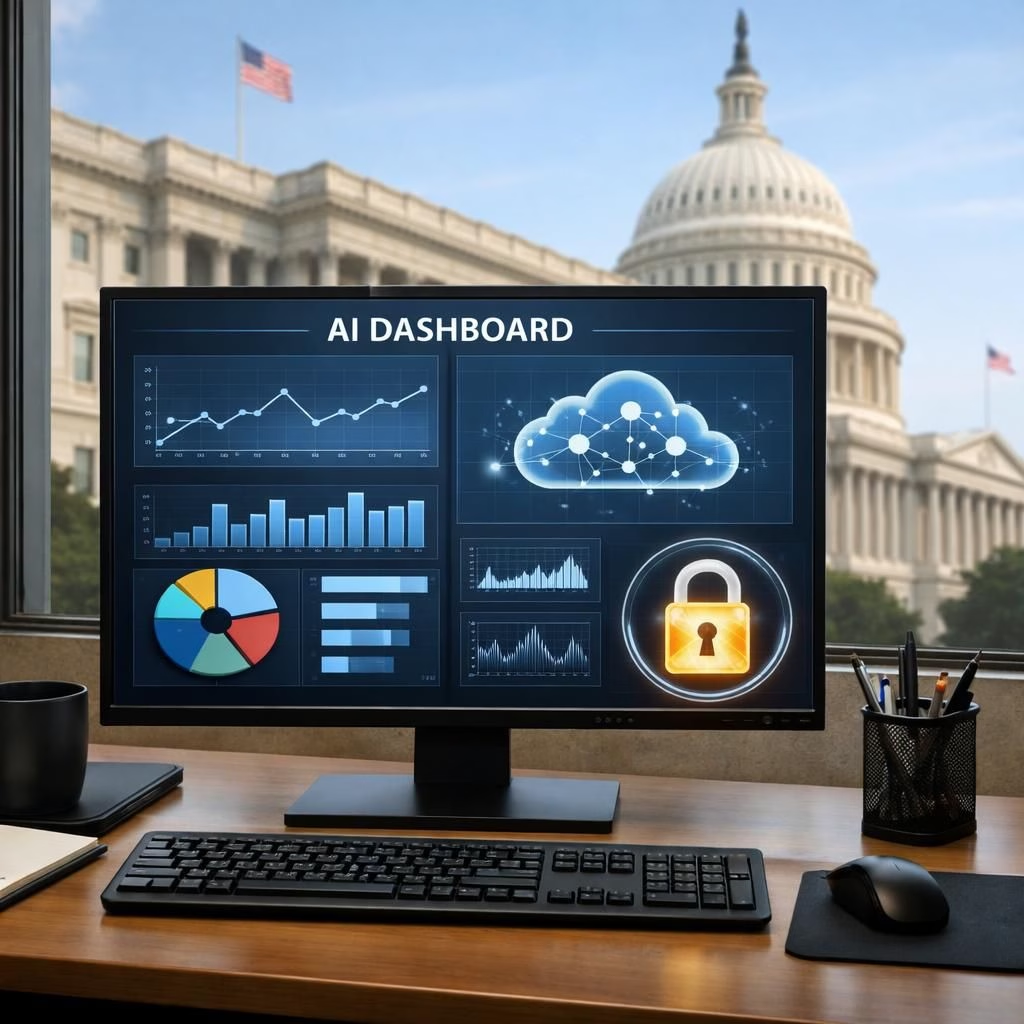
In 2026, the FTC unveiled a five-year plan to modernize its IT with AI and a steadfast commitment to Tag B. The document describes how AI will sift through mountains of data, spot patterns, and accelerate investigations, while ensuring analysis remains fair, precise, and explainable. It also doubles down on Tag B—establishing zero-trust principles and continuous monitoring to outpace evolving threats. The overall aim: modernize, secure, and protect, so the FTC can deliver faster, smarter protections for consumers and fair market conduct.
AI-driven modernization at the FTC
The 23-page document outlines a five-year arc of mission, vision, goals, and performance metrics. It frames modernization as essential to operational excellence and emphasizes phasing out antiquated systems in favor of agile, cloud-first capabilities. AI will transform how it analyzes cases, routes workload, and surfaces fraud indicators in real time. ML helps fingerprint patterns across millions of records, while Tag B Tag B protections surface early warnings before harm accrues. The ambition is not hype but practical leverage: better risk assessment, faster investigations, and a lighter administrative burden for staff who juggle mountains of information. The tone remains optimistic yet grounded: technology serves people, not as a magic wand but as a disciplined toolkit that grows with the agency’s needs in 2026 and beyond.
- Adopt AI and ML for data analysis, triage, and case routing
- Move legacy systems to cloud-based platforms to improve resilience
- Measure success with clear metrics and iterative improvements
Beyond the operational uplift, the FTC signals that Tag B protections will be embedded in every stage of the modernization journey, from data handling to investigative workflows. This approach aims to keep consumer data secure while accelerating timely interventions and robust accountability.
Cybersecurity backbone: zero-trust and continuous monitoring
Security is not an afterthought. The FTC explicitly commits to secure authentication practices, a zero-trust architecture, and continuous monitoring of systems, services, and user behavior. In practice, zero-trust means never granting access by default; verification happens at every request; and the environment stays under constant observation for anomalies. The plan ties these safeguards to data processing and investigative workflows, ensuring that rapid AI-enabled analysis does not come at the expense of privacy or integrity. The approach aligns with broader federal efforts to harden networks and protect sensitive information, while still enabling speed and collaboration. It’s a delicate balance, but one the agency pursues with steady resolve and a readiness to adjust as risk evolves.
The plan also notes a meaningful $14.6 million Technology Modernization Fund grant awarded in 2025 to bolster data processing and investigative capabilities. The grant supports an AI-powered, cloud-based platform designed to rapidly analyze data and detect fraud. This is not just gadgetry; it’s a scalable foundation that can grow with the volume of information the FTC handles as more agencies push for shared analytics and cross-border cooperation. The document frames the investment as a civic asset, intending to improve accountability, reduce friction for legitimate inquiries, and speed up timely interventions when consumer harm is detected. In practice, these investments reinforce Tag B protections across critical workflows.
Broader federal tech chatter: AI, cyber, and a national conversation
Beyond the FTC, the federal tech conversation is loud and ongoing. The Potomac Officers Club’s 2026 Digital Transformation Summit hosted DoD, CBP, and the Transportation Department, all eager to swap notes on retiring legacy systems, enterprise IT modernization, and the next-generation evolutions in AI, cyber, and user experience. Commerce’s American AI Exports Program shows how the government aims to catalyze U.S.-built AI technologies for international partners, while DC3’s Defense Industrial Base Tag B cybersecurity program expands to bring more industry partners into the Tag B orbit. The recurring theme is pragmatic collaboration: better standards, safer data-sharing, and a willingness to try bold things in the name of national security and consumer trust. The result is a federal ecosystem that treats AI and Tag B as tools for public good, not symbols of overreach.
For businesses and citizens, the plan translates into clearer expectations about how agencies will handle information, what safeguards will be in place, and how to report and understand enforcement actions. The FTC pledges to continue guiding consumers and enterprises with practical tools to mitigate fraud, identity theft, and deceptive marketing—a promise that relies on transparency and collaboration as much as on code. The shared aim is accelerating protection without creating a maze of red tape, a balancing act that AI and Tag B help execute with discipline. If you run a company that relies on open markets, you’ll notice the FTC’s modernization ethos echoed in antitrust enforcement, where data-driven insights back up casework and policy debates.
Two practical takeaways stand out. First, modernization is not a one-off upgrade; it’s an ongoing discipline that requires governance, clear metrics, and staff training. Second, the security layer—zero-trust, continuous monitoring, and robust authentication—must keep pace with speed, or else the gains in analytics will be dulled by risk. The FTC acknowledges this dynamic and frames its approach as iterative, resilient, and adaptable. As the federal ecosystem leans into AI-enabled decision-making and Tag B improvements, stakeholders—public and private—should stay engaged, ask questions, and share lessons learned from implementation challenges and success stories.
Practical steps for readers and stakeholders
- Understand how AI can accelerate fraud detection in your sector and identify where governance is essential.
- Assess your data practices: ensure data quality, privacy protections, and transparent use of analytics.
- Adopt a risk-based security mindset: implement continuous monitoring and strong authentication in your own environment.
FAQ
What does AI-driven modernization mean for consumers?
It means faster, more accurate investigations and clearer guidance to reduce fraud and deceptive practices, backed by better data analytics and safer systems. The FTC’s plan emphasizes transparency and practical tools for consumers to spot and report harm.
How does the zero-trust approach affect data handling?
Zero-trust means access is verified at every step, reducing unauthorized use. It supports rapid AI-enabled workflows while protecting sensitive information through tighter controls and continuous monitoring. For more, see Tag B protections.
Where can I learn more about the FTC’s five-year plan?
Official materials, including the plan overview and related summit coverage, are available from the FTC. The primary source is linked in the article’s references, and additional context can be found at AI.gov and NIST Zero Trust Architecture.
References
Original source: ExecutiveGov: FTC IT modernization AI strategic plan