

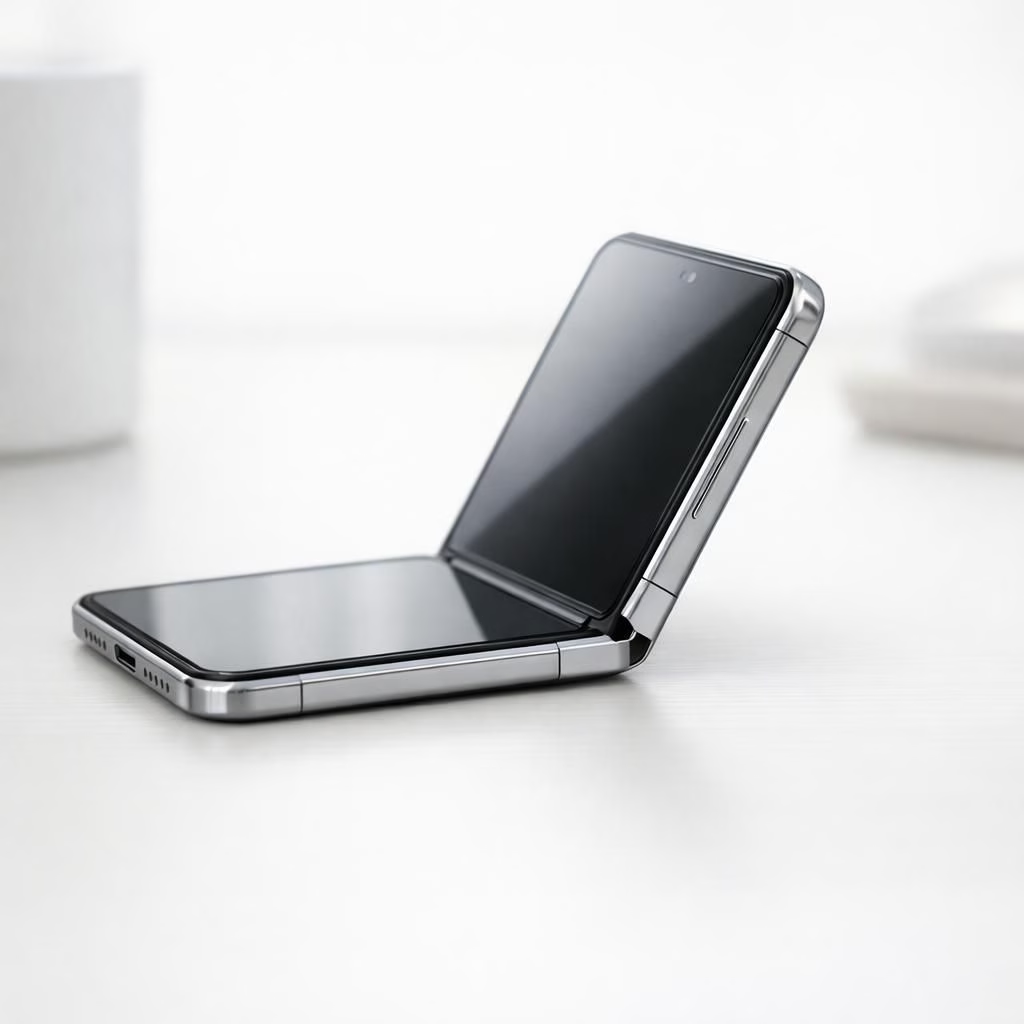
In a world where devices bend and bend again, the iPhone Fold has quietly stepped into a trial-production corridor. The Launch 2026 timeline is now visible in industry chatter, and optimism is on the menu alongside a stack of questions. This feature isn’t about hype; it’s about a real device trying to prove that folding can be useful, not just fashionable. The road to shipping is long, but there are clear signs that this foldable may become more than a parlor trick.
While we wait for the hinge to behave, the iPhone Fold team tests the screen, battery, speakers, and software synergy under practical daily tasks. They run fold-unfold cycles, check for crease wear, and measure heat during a streaming session. The result may be a device that feels sturdy enough for pocket piloting and desk-side reading, with a dash of theater for industry events. It’s not merely a stunt; it’s a plan with a purpose.
In conversations with insiders, the project is framed as a pragmatic attempt to turn a clever idea into a dependable gadget. The iPhone Fold isn’t about novelty alone; it’s about rethinking how we carry, type, and multitask with a single device. The objective remains simple: deliver an ecosystem experience that feels familiar even as the form shifts in your hand. The hinge should vanish as a problem and reappear as a feature you actually enjoy using.
iPhone Fold: A Practical Peek Into the Foldable Future
The hardware and software teams emphasize hinge durability, fluid transitions, and screen protection. A folded display should feel natural, not quirky; the user experience should be intuitive, not experimental. The iPhone Fold aims to blur the line between phone and tablet, allowing a confident switch between modes with minimal friction. App continuity matters; nothing should drop in quality when you rotate or open the device in a rush.
Skeptics worry about thickness, weight, or the courage to price a hinge-heavy device. The honest truth is that every foldable asks for tradeoffs; the art is balancing them with meaningful benefits: multitasking, better content creation, and genuinely helpful split-screen workflows. In tests, the iPhone Fold demonstrates hinge stability after countless folds, with display brightness and color staying consistent across angles. It isn’t magic, but it is credible progress dressed up in thoughtful hardware design.
Software readiness is half the battle. iOS must adapt to a new shape without fighting it. Prototyping teams run productivity flows, video calls, and games in folded and unfolded states. The goal is a seamless, free-flowing experience that respects the user’s context, not a stubborn lab experiment. The iPhone Fold promises smoother transitions and a more natural sense of continuity across apps and tasks.
Launch 2026: Timeline, Trials, and Realistic Optimism
Launch 2026 is not a magic date carved in stone; it’s a plan built on milestones. Hardware refinements, software optimization, and developer ecosystem outreach form the backbone. The trial-production phase acts as the gatekeeper between concept and full-scale manufacturing. Engineers monitor cooling, battery endurance, firmware stability, and user feedback to steer the project back on course when needed.
The objective is a premium yet practical device, not a fragile unicorn that disappoints on day one. The Launch 2026 target remains ambitious, but the progress is measurable and tangible. If the hinge holds up under real-world use and the software feels polish rather than patchwork, the foldable dream can gain serious momentum. A successful Launch 2026 would invite a wave of real-world use cases and a broader ecosystem of accessories and apps that embrace the fold rather than fight it.
As the calendar advances, the iPhone Fold becomes more than a novelty; it becomes a test of whether users want their phone to adapt to their moments. If the hinge survives daily stress, if multitasking remains smooth, and if pricing is sensible, curiosity will translate into steady demand. The Launch 2026 plan also prioritizes case design, magnetically attached accessories, and better app support to make the fold feel natural in everyday life. The result could be a new norm where folding is a habitual feature, not a headline trick.
In the end, the iPhone Fold is a bet on a future where a single device morphs to fit context. The trial-production phase is where you learn what works and what needs more polish without risking a costly mistake. Clear milestones, solid hardware choices, and software that respects the form can turn ambition into reality. If the product clears the bar, the Launch 2026 date moves from rumor to milestone, and early adopters will have a tangible reason to cheer rather than simply speculate.
Two big takeaways stand out: foldable form factors have matured enough to deserve serious attention, and the ecosystem around them is finally catching up. This is not just about a novelty device; it’s about shaping a more flexible, responsive mobile experience that adapts to the user. The iPhone Fold offers a practical path forward, balancing ambition with careful engineering, and the Launch 2026 timeline gives the movement a meaningful deadline to aim for.
If you enjoyed this optimistic analysis, I invite you to share your thoughts and questions in the comments. Your perspective helps shape the conversation around promising tech experiments that may—or may not—reshape daily life.
Source credits and thanks to the original reporting partners close the loop, because good ideas deserve to travel. Original reporting: MacRumors: iPhone Fold Enters Trial Production Phase Ahead of 2026 Launch. Thank you for the original material that sparked this hopeful rewrite.
iPhone Fold: Practical steps for evaluating readiness
- Assess hinge durability with standardized folding cycles and real-world use cases.
- Verify app continuity across folded and unfolded modes without latency.
- Check battery life and thermal behavior under typical tasks like streaming and gaming.
- Review case designs and accessories to ensure a natural everyday fit.
FAQ: iPhone Fold and Launch 2026
- When can we expect Launch 2026?
- Launch 2026 is described as a milestone-driven plan, not a fixed date. Progress depends on hardware, software, and ecosystem readiness.
- Will the iPhone Fold be affordable?
- Pricing will reflect premium materials and a new form factor. Expect a careful balance between features, durability, and accessibility.
- How will developers adapt to the fold?
- Expect continued emphasis on multi-window workflows, app continuity, and better toolkit support to leverage the fold’s benefits.