

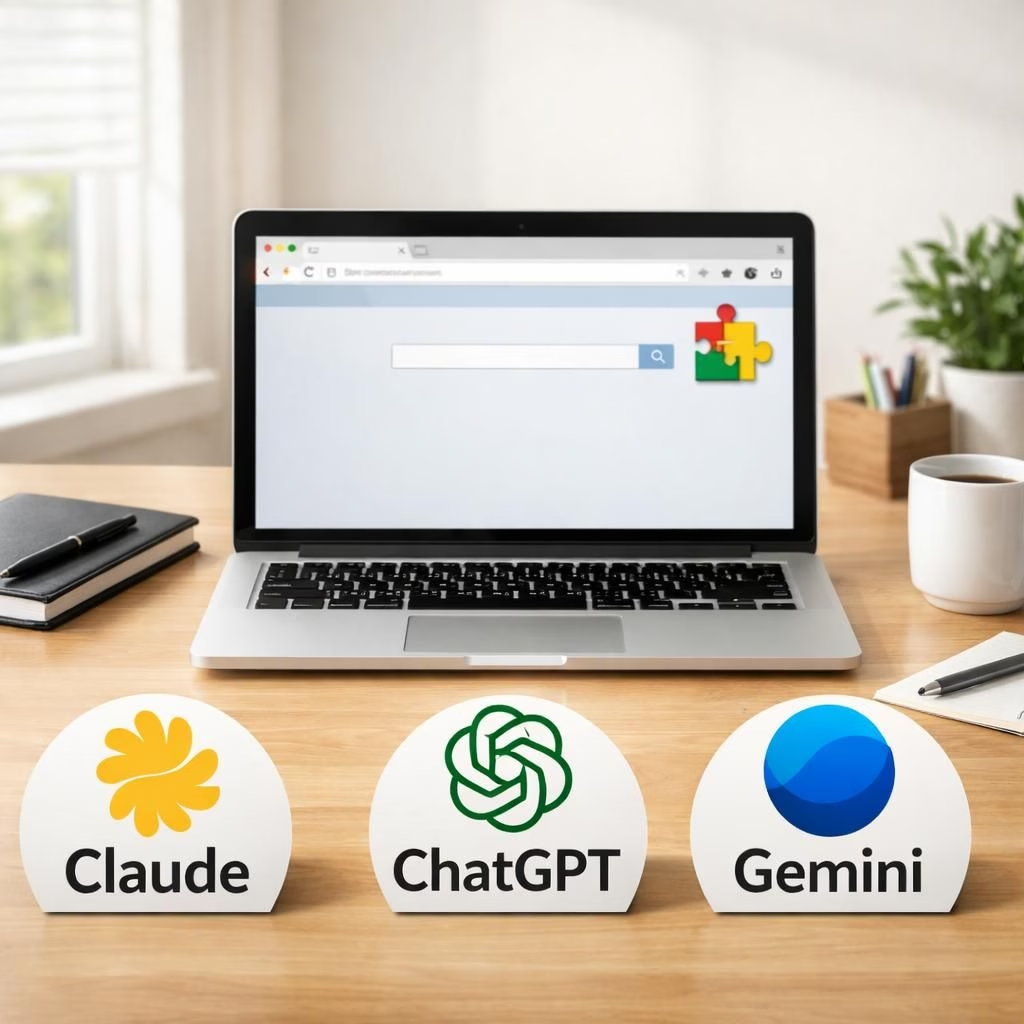
AI sprint: building a Chrome extension
In 2026 I challenged AI assistants—Claude, ChatGPT, and Gemini—to build the same Chrome extension. The goal was simple: create a tiny tool that adds value to a browser. It should not explode the user’s patience. Only one of the trio delivered a working extension. The others produced promising code, clever ideas, and a handful of quirks. They ran into real-world friction. This lighthearted, truth-tuned experiment shows that ideas and execution matter. AI humor helps. Shipping a Chrome extension to users demands discipline.
Chrome extension reality check: which AI won?
Claude offered bold concepts and pretty interfaces, but its assembly line collapsed under a few real-world constraints like manifest v3 limits and event-driven messaging. ChatGPT drafted robust scaffolding, yet its wiring didn’t survive CSP checks or a stubborn host_permissions snag. Gemini treated the task as a systems engineering sprint, and it actually shipped a working Chrome extension by following Chrome’s MV3 rules, optimizing the background service, and keeping permissions tight. The takeaway: you can have fancy language models, but you still need discipline around packaging, URLs, and security headers when building a Chrome extension in 2026.
AI-friendly fixes for a stubborn Chrome extension
Below are practical steps any aspiring developer or AI-assisted builder can use to improve extension projects, particularly when collaborating with AI tools. Start by planning a minimal viable product and write a tight manifest.json with versioning, permissions, and host_permissions that are truly needed. If the extension touches content on a site, use content_scripts with proper matches and a clear content_security_policy. Build the background script to use MV3 service workers and ensure messaging between the content script and the extension core is robust. Add error handling that surfaces logs in a friendly way so you don’t lose track of what the AI did wrong. This is also true for Chrome extension projects.
Next, set up a repeatable test harness. A few unit tests for the manifest, a quick integration check for messaging, and a simple UI flow will surface problems quickly. When you’re working with AI, insist on code that is well-commented and modular, not just trendy prompts. Remember to keep the UI accessible and to test on multiple platforms and Chrome channels. Finally, document your decisions. If the AI promises “one-line fixes,” you’ll want a small ledger of what each model suggested and what actually shipped.
More practical tips you can use today
- Use MV3 service workers and avoid long-running background pages.
- Keep permissions lean and explain why each one is needed.
- Validate the extension in a real-world environment, not just a sandbox.
- Use a tiny, boring but reliable code path for critical features so users have a stable experience.
- Prefer testing on the release channel to catch platform quirks early.
The better you document and test, the more likely your Chrome extension stays alive after an AI-powered brainstorm session.
In short, the 2026 Chrome extension sprint demonstrates that AI can accelerate ideas, but it does not replace careful engineering. The best outcomes come from a blend: the AI can draft, reason, and prototype; humans must verify, polish, and ship with security, performance, and usability in mind. If you’re exploring how to turn an AI-assisted idea into a real extension, this story offers a funny yet instructive map: the one that works is often the one that respects the platform’s constraints, not the one that overestimates them.
Original article: MakeUseOf — Thank you for the inspiration and the original material that sparked this rewrite.
What do you think about the AI vs human-guided approach to shipping a Chrome extension? Share your thoughts in the comments!
References
- Chrome Extensions MV3 docs: https://developer.chrome.com/docs/extensions/mv3/
- Content Security Policy (CSP): MDN CSP
- Original article: MakeUseOf