

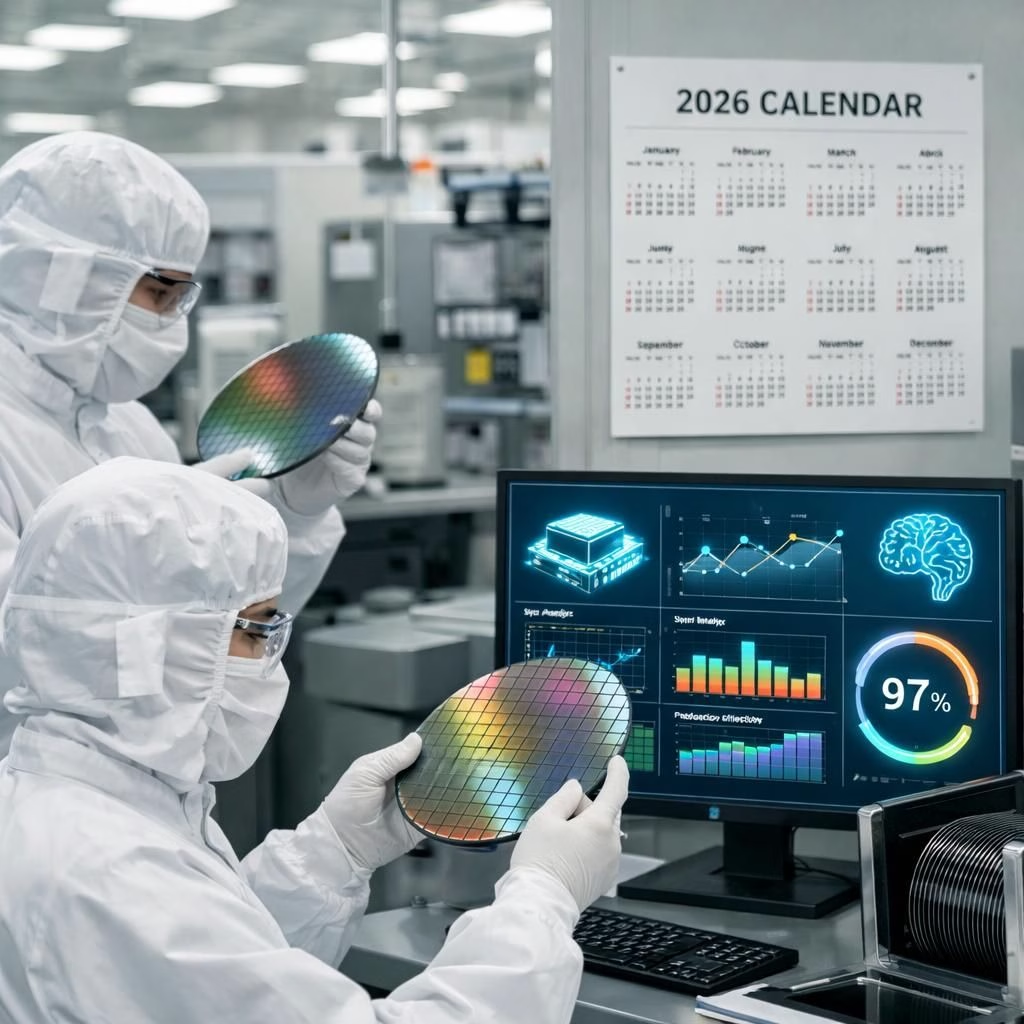
China’s chip industry is accelerating as the global push to deploy ai infrastructure drives demand. Executives say momentum is stronger than expected this year, with factories humming and balance sheets improving. Manufacturing capacity for chips on 22nm to 40nm nodes is projected to reach 42 percent of global output by 2028, up from 37 percent in 2026, according to SEMI. The ai surge is reshaping testing, packaging, and high-speed interconnects, as chips become more complex and performance-hungry. Our industry contacts note ai power requirements have climbed, lifting [Tag B](https://www.geekyopinions.com/tag/semiconductors) testing across labs and fabs. The optical interconnect layer — a critical link inside data centers — positions China as a major supplier. Firms report booked-backlogs into next year, signaling demand and supply aligning. The memory cycle appears optimistic, with planned capacity expansions and new production bases. Foreign suppliers still play a role, offering expertise and after-sales support where domestic players are catching up. The mood is optimistic, yet pragmatic, as ai and [Tag B](https://www.geekyopinions.com/tag/semiconductors) stay in the spotlight.
ai powered testing reshapes semiconductors landscape
In the lab and the fab, data-driven testing has become routine. Diagnostics help teams hit tighter tolerances without sacrificing throughput. The devices powering phones, cars, and cloud servers now ride on smarter [Tag B](https://www.geekyopinions.com/tag/semiconductors) testing benches and modular packaging. Vendors add high-speed interconnects to the stack, keeping data flowing between chips and servers. The trend benefits consumers too, because higher efficiency often translates to longer device life and lower energy use in these workflows. Yet the shift demands new skills, as engineers learn to read feedback loops, calibrate sensors, and interpret complex interconnect signals. Early pilots show improved yield, faster debugging cycles, and happier chip fabs. Training programs rise as teams learn to interpret new output, test new materials, and optimize packaging for future workloads. The broader market gains from faster innovation cycles, stronger data center performance, and [Tag B]‑driven service models built around smarter interconnects.
semiconductors supply chain and ai resilience
The supply chain for the ecosystem has always required patience and precision, and the ai wave adds a new rhythm. Raw materials, advanced packaging, and equipment stay in tight supply as factories push capacity. ai helps forecast demand, schedule orders, and optimize logistics across continents, keeping leaders awake in a good way. Foreign suppliers remain a vital part of the picture, bringing specialized materials and after-sales service that domestic rivals still chase. The memory sector, powered by big players in the ai era, expects large-scale capacity expansions as China leverages its robust manufacturing base. The balance of domestic know-how creates a resilience cushion against volatility, which the industry views with cautious optimism. Automated systems monitor supply risk, and manufacturers share short-term plans to diversify suppliers. Industry analysts emphasize that [Tag B] supply chain visibility is improving thanks to automated risk monitoring and diversified suppliers. The trend promises resilience, but only if players stay lean and curious.
As 2026 progresses, the conversation circles back to a simple idea: better chips enable better ai experiences. The 22nm to 40nm family remains the backbone of many everyday devices, while newer nodes push the envelope for AI workloads. The nation appears ready to turn on the factory taps, invest in testing, and align public and private efforts toward a more resilient, advanced semiconductor ecosystem. If you enjoy the mix of numbers, forecasts, and practical steps, you are reading the right blend of sentiment and data in the ai powered [Tag B](https://www.geekyopinions.com/tag/semiconductors) space. We invite you to share your thoughts in the comments.
Original article attribution: Reuters. Thank you to Reuters for the original reporting on Semicon China 2026. Reuters Technology.
For related reads, consider these contextual sources and internal notes: China’s big tech partnership with Samsung and Nvidia, US concerns over Nvidia’s AI chip boost, and EU high-risk tech phase-out offer broader context.
External context sources: SEMI and Reuters Technology provide broader coverage on AI-driven chip-market dynamics.
FAQ
- What does AI-driven demand mean for China’s chip capacity by 2028?
It signals rapid expansion at mature nodes (like 22nm-40nm) and steady investment in testing, packaging, and back-end services to support AI workloads and data-center growth. - Why are foreign suppliers still important as China’s domestic industry grows?
Specialized materials, advanced equipment, and reliable after-sales support help maintain uptime and accelerate technology transfer as domestic firms scale up. - What should readers watch next in the AI chip space?
Pay attention to supply-chain diversification, advances in high-speed interconnects, and how policy shifts influence cross-border collaboration and investment decisions.
Conclusion: AI is accelerating China’s chip ambitions, but sustained gains will rely on disciplined execution, talent development, and supplier resilience.