

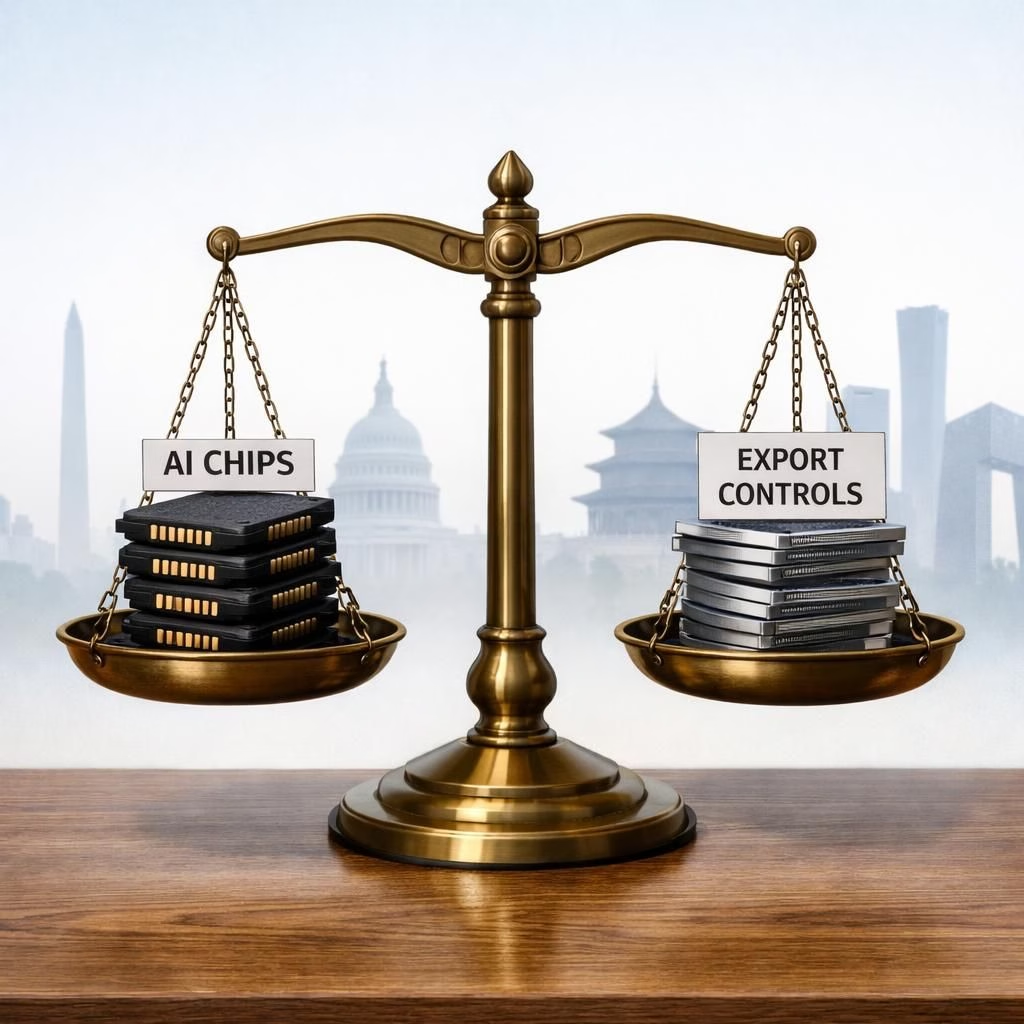
In 2026, the hearing on export controls and AI chips opened with a measured mix of bravado and technical detail, a conversation lawmakers take seriously. US Commerce Secretary Howard Lutnick sought to reassure senators that American technology is not, and will not be, seeping into China’s military pipeline. He described a delicate balance orchestrated by a president who carries both charm and a quiet conviction that the best policy is the one that keeps the most strategic tech from the wrong hands. He noted that China had not bought any of the most advanced chips as of today, using the phrase as a bookmark for the moment. Yet critics in the other chamber argue the clock is running differently, with Gregory Meeks saying the export controls regime has been slow to translate into steady enforcement. The dynamic is not a dry policy map but a living tension: national security officials, corporate leaders, and lawmakers weigh how far to bend without breaking trust with allies or stifling domestic innovation.
export controls in practice: a balancing act with real chips
Beijing, meanwhile, appears keen to build a self-sustaining tech ecosystem, a shift Lutnick says reflects strategic calculation rather than a sudden burst of thrift. The Chinese cloud market wants the best chips, but government policy, he contends, keeps that appetite on a tight leash to protect domestic industry. The posture is confident, even brazen at times, and the line is crisp: the United States will not flood Beijing with the top scale of chips, not today, not under this administration. Yet the story remains unsettled, because the same chips that excite investors also trigger alarms in defense circles. The result is a balancing act that has become a kind of national sport: part diplomacy, part supply chain management, and all about keeping a lead without appearing to hoard it.
On the other side of the Capitol, the politics of procedure take center stage. Meeks described the markup as an admission that the administration has dropped the ball on outbound technology control. He cited a slow pace and bureaucratic friction that pushes risk into the hands of unprepared firms and a nervous industry that wants a clear, predictable path. In a separate setting, Navy Admiral Samuel Paparo warned that granting more access to advanced AI chips could sharpen the PLA’s warfighting capabilities and shift the balance of power in unpredictable ways. Lutnick emphasized that the United States seeks to preserve a margin of safety by structuring exports around domestic production and careful licensing, arguing that Beijing is pursuing its own vibrant, homegrown cloud and chip ecosystem. The tone of the exchange was brisk, not acrimonious, and the underlying lesson was clear: policy levers must be precise to avoid hobbling innovation while still protecting service members in harm’s way. The debate is less about rhetoric and more about whether enforcement will keep up with the speed of modern tech and the ambitions of a rising rival.
On Nvidia’s front, the H200 episode continues to baffle observers. Nvidia announced that Chinese customers had placed orders, and the administration signaled a path that would be compliant with licensing regimes, including a 25 percent export fee. Yet Lutnick claimed that zero actual shipments have occurred. The disconnect between orders and shipments reveals the friction in the supply chain and Beijing’s outward push for self-sufficiency, a dynamic he attributes to Beijing’s drive to build domestic production lines. The architecture, codenamed Blackwell, remains out of reach, not because the US wants to block China from innovation but because the gap is intentional and multi-year in depth. The policy posture aims to preserve a generational lead while ensuring business deals proceed with caution. In the background, lawmakers debate the severity of penalties for export violations and whether a broader bill such as the MATCH Act should tighten control over chipmaking tools and enforcement mechanisms. The mood is pragmatic: a measured attempt to shield strategic assets while preserving some room for collaboration that does not turn into a full-blown tech cold war. The tension is real, and the stakes are high as a Beijing summit shapes the next steps for the global chip market.
Beijing’s push toward self-sufficiency remains a driver of policy evolution. The administration has signaled that export controls will focus on non-sensitive, high-impact tools while allowing limited sales of select AI chips under strict licensing. The practical question remains: can America sustain its edge while keeping markets open enough to support growth in AI and other sensitive sectors?
AI chips and export controls risk: a cautious climb toward clarity
Meanwhile, the House Foreign Affairs Committee advanced a bipartisan package of more than 15 bills, including the MATCH Act, to tighten oversight of chipmaking tools and raise civil penalties for export violations. Meeks criticized lawmakers for trying to micromanage technological requirements, arguing the Commerce Department’s Bureau of Industry and Security should take the lead. He warned that the agency under the Trump administration has been a picture of dysfunction and delays that hamper US firms competing with China. The dynamic underscores a broader tug-of-war: how to push for stronger rules without stifling nascent innovation in a sector that changes monthly. The goal, officials say, is to build a framework that is predictable enough for business yet firm enough to deter a rapid shift toward a Beijing-chosen standard. The practical question remains: can America sustain its edge while keeping global markets open enough to support growth in AI chips and other sensitive sectors?
Beijing summit to focus on non-sensitive goods has become a central thread in the narrative, with officials urging a pragmatic approach that broadens the set of topics beyond security-soaked chips. US Trade Representative Jamieson Greer told the House Ways and Means Committee that the trip will aim for a proactive agenda, focusing on areas where trading, selling, and buying can occur without triggering new rounds of restrictions. These are non-sensitive goods, Greer explained, and they represent a stretchable corridor for cooperation even as the globe keeps a wary eye on the most sensitive domains. In short, the strategy tries to keep the dialogue alive while preserving space for strategic competition to breathe rather than to gasp. The irony remains: the tech world thrives on speed, but policy slows down to carefully choreographed steps, which is exactly the kind of dance that makes a 2026 policy year feel both urgent and oddly ceremonial.
Beijing remains a focal point for the global supply chain, and the coming weeks will reveal how much room there is for collaboration on non-sensitive goods, while still defending the core national security perimeter that so many lawmakers insist on guarding tightly. The practical takeaway is simple: balance is not a one-off decision but a continuous recalibration in a landscape where chips travel as fast as ideas. If you enjoyed this take or have fresh thoughts on how export controls and AI chips should be managed in 2026, please share your perspective below. References to the original article are included below for context.
Special thanks to the original article for inspiring this rewrite: SCMP coverage.
Export controls: guidance for industry
- Understand evolving licensing regimes for AI hardware and related tools.
- Strengthen compliance programs to screen customers and end users.
- Map supply chains to identify critical components and bottlenecks.
- Prepare for reporting, audits, and potential penalties under new rules.
AI chips: risk and opportunity in policy
- Balance national security concerns with the pace of innovation.
- Establish predictable rules for cross-border collaboration and licensing.
- Assess domestic capacity and resilience while engaging global markets.
- Monitor evolving policy around the Beijing summit and market moves in AI.
References
Original source: SCMP article