

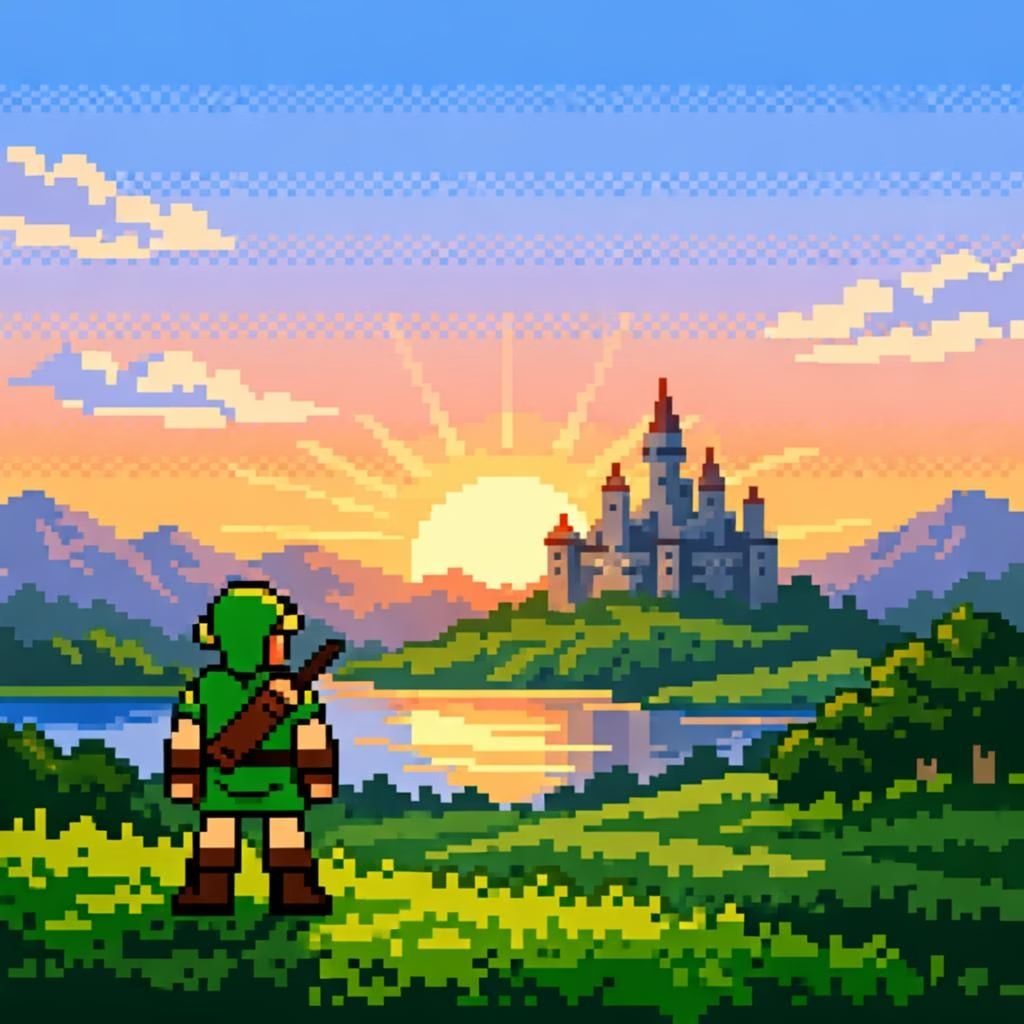
Yes, Zelda marked its 40th birthday today (in Japan, at least). On 21 February 1986, Nintendo introduced the world to a fantasy land called Hyrule. It was a place where the open world vibe invited you to redraw your map with every step. The iconic Koji Kondo theme reportedly sprang to life as a last-minute substitute when Boléro couldn’t be used. The line ‘It’s dangerous to go alone! Take this’ sealed the moment in gaming lore. Zelda has become a touchstone for design and memory in the hobby.
Zelda milestones in game design
That launch was more than a novelty. It redefined how players approach space in a video game. The game offered a compact world where players learned by doing: enter a dungeon, find a key, survive a dangerous gauntlet, and push forward. Items did not come all at once; you earned them through exploration and trial. The sense of mystery grew from minimal instruction and generous consequence. And yes, the adventure was anchored by a simple quest: rescue and restore peace, with a hero who wears green and never plays it safe for long. Zelda became a blueprint for exploration-first design.
From a mechanical standpoint, the game introduced a non-linear pace that still feels fresh. You could backtrack, try new routes, or dash straight into danger to reach a hidden chamber. The map design encouraged curiosity, and the dungeon layouts rewarded memory, inventory management, and clever use of tools. The original story offered a timeless frame: good versus evil, a princess in need of aid, and a silent promise that the hero will learn through risk. No, Tolkien did not personally author a Second Quest for it, but fans certainly did improvise their own paths.
Thanks to a handful of clever constraints—limited memory, a tiny screen, and the need to fit everything on a single cartridge—developers learned to pack meaningful moments into compact spaces. The result was a template for many action-adventure RPGs to come. The game’s influence shows up in level design that invites experimentation, and in the way a single item can unlock entire regions of a map. It wasn’t about pushing hardware. It was about telling a story through discovery, with friendly hints scattered around corners and a sense that the world rewards curiosity more than obedience.
open world echoes in Nintendo’s legacy
In subsequent decades, the franchise continued to evolve while preserving its core appeal. The open world lineage influenced later epics in the broader gaming landscape—less about forcing a single route and more about giving players meaningful freedom. You can point to modern adventures that balance resource management, puzzle solving, and exploration, all while offering a strong sense of place. The franchise succeeded by offering a consistent promise: if you dare to wander, you will uncover something worth keeping. The art direction matured, the storytelling became more cinematic, and the scale expanded without losing the intimate feeling of stepping into a familiar forest or a windy valley. The result is a design ethos that many developers still chase: use space as a character, reward curiosity, and let discovery pace your journey.
Availability has kept the experience accessible across generations. The original title has appeared in re-releases, on GBA and GameCube compilations, on Virtual Console, and through Nintendo Switch Online. Special edition Game & Watches and even Animal Crossing consoles offered retro moments for fans. Each release kept the core loop intact—exploration, encounter, reward—so new players and old hands alike could share in the wonder without mastering a new control scheme every time. The broader point is simple: this is a game that travels well because its core mechanic is honest and inviting, not flashy or arbitrary.
Beyond the four corners of Hyrule, fans have built communities that celebrate the series’ origin and evolution. A modern reader can revisit the early game and recognize how the texture of exploration still matters in a game that can feel both totemic and adaptable. The excitement around anniversaries isn’t just nostalgia; it’s a reminder that a single, well-designed experience can shape the industry for decades. As we reach this milestone, we celebrate not just a game, but a culture of curiosity that continues to power new experiments in game design.
We’ve curated a poll tracking where fans first encountered the adventure—from the Disk System to modern services—and a playful ranking of every game in the series. It’s a chance to reflect on your own beginnings and see how the community remembers the journey. Whether you started in the old days or only recently discovered the realm, your perspective adds to the living history of this remarkable franchise.
Finally, a note of gratitude to the writers and researchers who kept the flame alive in those early days. Their work created a shared memory that still fuels our imagination today. Special thanks to the original article for the inspiration and a deeper look into the birth of this legendary adventure: original source material.
We’d love to hear your thoughts. Please share your memories in the comments. And if you have a first memory of the adventure, or a platform you’ll never forget, drop it below.
Practical takeaways for designers
- Embrace non-linearity: let players choose their path and learn by exploration.
- Design meaningful incentives: a single tool can unlock vast regions when used creatively.
- Balance constraints with curiosity: a small cartridge can power a big sense of discovery.
FAQ
- Q: When did The Legend of Zelda turn 40?
- A: In Japan, the original release date was February 21, 1986, marking its 40th anniversary this year.
- Q: Why is Zelda described as open world design?
- A: Because its exploration-driven flow, backtracking possibilities, and item-driven progress invite players to wander and discover.
- Q: On which platforms did Zelda appear first?
- A: The original release launched on the Famicom Disk System in Japan, with later ports expanding to multiple platforms.
The Zelda design ethos in 2026
The core idea remains simple: exploration rewards curiosity. The team at Nintendo continues to push how space can feel alive, whether in a classic dungeon or a sprawling modern landscape. Zelda isn’t just a game; it’s a blueprint for how we think about world-building in interactive media.