

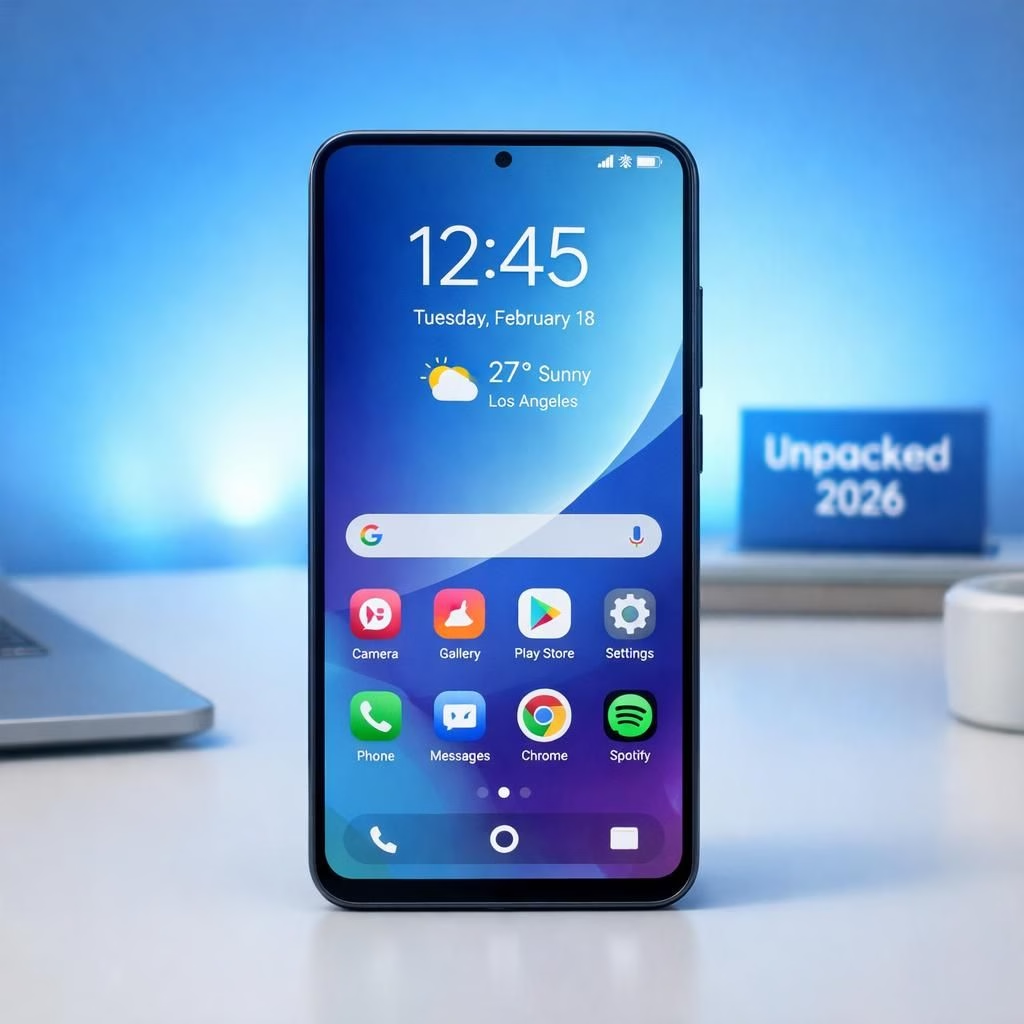
Welcome to our late-night preview of the Galaxy S26 and the AI-driven future it’s nudging along. After CES 2026, Samsung confirms its first Galaxy Unpacked of the year on February 25 in San Francisco. The Galaxy S26 lineup sticks to a restrained redesign ethos: familiar lines, subtle tweaks, and a strong emphasis on AI-powered smarts over flashy hardware. In short, Galaxy S26 aims to polish the experience with AI-assisted performance.
Galaxy S26 Unpacked 2026: date, venue, and vibe
Samsung has made the invitation official. The event will be February 25, 2026 in San Francisco, with a keynote at 10:00 AM PT (1:00 PM ET) and a livestream on Samsung.com, their newsroom, and YouTube. The wording hints at a larger AI theme, calling this a new phase in the era of AI as intelligence becomes truly personal and adaptive. That sounds lofty, but it’s also a nice way to say your phone might finally know you better than your aunt does. We’re not expecting radical design revolutions; expect the Galaxy S26 to look familiar, with internal upgrades that matter more than a new silhouette. Expect to see the Galaxy S26 trio in the lineup, and yes, the S26 will be the centerpiece of the day.
Inside and out, the Galaxy S26 keeps a steady course. The design remains restrained, the chassis comfortable, and the flat front with a rounded frame continues to anchor the look. The camera island on the back sits in a vertical pill-shaped plateau, a familiar silhouette that makes the Galaxy S26 instantly recognizable. The S26 Ultra may bring a slightly different finish and a taller camera profile, but the essence stays true to the family’s design language. For fans of Samsung’s recent approach, this is reassuringly familiar without feeling stale. If you loved the Galaxy S26 last year, you’ll feel right at home with the Galaxy S26 this year as well.
That means the Galaxy S26 keeps the familiar chassis you already know, while the internals push the device forward. The base models should stick with a 6.3-inch FHD+ display, and the overall footprint should remain compact enough for one-handed use. Storage will likely start at 256 GB with 12 GB of RAM across the board, while a 512 GB option may appear on higher trims. The battery footprint should land around 4,300 mAh on the base configuration, delivering a confident day of use for most typical smartphone tasks. The goal here isn’t a dramatic redesign, but a practical refinement where it matters most: speed, efficiency, and AI-powered polish.
AI-forward features and on-device intelligence
One of the most intriguing angles is AI-driven performance. Samsung has been quietly courting AI partnerships and improving on-device processing for years, and 2026 could be the year the math finally shows up in public. Expect on-device AI to power smarter photography, faster app launches, and smoother multilingual translation in one bump of the software. The teaser from February 17 about AI-powered photography tools promises the S26 line will turn a photo from day to night in seconds and help you restore missing parts of objects with a tap. It sounds a bit like magic, but it’s really just clever software running on silicon.
In addition to on-device AI, Samsung reportedly explored partnerships with Perplexity to weave its AI search into OneUI and the Samsung browser. If true, your phone would become a more capable assistant than a pocket encyclopedia and a sidekick to Google Gemini in the same ecosystem. There’s also talk of a refreshed Bixby that could tie into Perplexity as another AI option. The quick reveal cadence — teasers, then real demos at Unpacked — should satisfy the modern appetite for AI without turning the event into a product demo of sci-fi promises.
The camera suite for the Galaxy S26 is where it gets grounded again. Leaks suggest the base S26 retains the core 50 MP main sensor, 12 MP ultrawide, 10 MP 3x tele, and a 12 MP selfie cam, a familiar mix that reminds us this isn’t about chasing every latest sensor trend, but about delivering reliable, story-ready image quality. The S26+, mirrors the same camera language with some battery and display adjustments, while the S26 Ultra is whispered to boast a revised finish and a subtle camera bump that stands out without shouting. If you’re hoping for big innovations in the camera hardware, the real win might be in software and processing power rather than a completely new sensor lineup. The Galaxy S26 line, with AI-powered processing, aims to deliver better results in every shot, not just nicer press photos.
On the inside, Qualcomm’s Snapdragon 8 Elite Gen 5 is the headline chip for the main lineup, with rumors of Samsung’s Exynos 2600 only in certain regions. That regional tango is nothing new for Samsung. Either way, you’ll get snappier performance, better on-device AI inference, and more energy-efficient processing. The S26 trio is expected to continue Samsung’s habit of keeping the design steady while cranking the silicon heat at the core. And yes, battery life will be a talking point, with the base model probably landing around a 4,300 mAh capacity in the leaner configuration. The AI theme should help squeeze more practical performance from that hardware, turning horsepower into smoother everyday use. Galaxy S26 will keep the chassis we know while supplying the brainpower we hoped for in 2024 and 2025.
Design, materials, and the S26 family composition
From the leaks we’ve seen, the Galaxy S26, S26+, and S26 Ultra will maintain a flat front and frame with rounded corners. The camera stack on the back sits in a vertical pill-shaped plateau, a familiar identity that makes the Galaxy S26 instantly recognizable. The S26 Ultra could switch back to an aluminum frame after using titanium on earlier Ultras, and there are whispers about new finishes that give the device a slightly more premium tactile feel. Some chatter suggests Qi2 charging may still be a case-only feature rather than a built-in magnet accessory, which continues Samsung’s cautious approach to magnetic accessories. If magnet compatibility matters to you, keep an eye on case designs rather than the phone itself. This is exactly the kind of thoughtful, incremental refinement that makes the S26 feel trustworthy rather than experimental.
Storage options for the base S26 are likely 256 GB or 512 GB with 12 GB of RAM across the board, delivering a steady baseline for the AI features that rely on fast memory. The S26 Ultra is the big one in terms of camera numbers and premium touches, but leaks emphasize that the difference will be in finish and micro-design, not a wholesale jump in sensor count. The S26 Edge remains a niche option rather than a brand-new form factor, with design cues that echo some of Google’s Pixel aesthetic rather than Apple’s character. This approach fits Samsung’s strategy: refine, not revolt, and let the AI do some of the heavy lifting behind the scenes.
Additional devices and AI-centric accessories
Samsung’s product ecosystem continues to evolve with wearables and earbuds. The Galaxy Buds 4 and 4 Pro are rumored to arrive with a more compact case and refined stems, aligning with the broader AI-driven comfort push. A new Ultra Wideband chip could be in the buds for easier finding via Google Find Hub networks, a practical feature for people who misplace their gadgets more often than their keys. The broader AI narrative ties the whole ecosystem together, enabling smoother cross-device scenes where your phone, headphones, and watch feel like one connected brain rather than a loose collection of gadgets.
What this means for buyers and the tech-curious
For buyers, the Galaxy S26 lineup likely offers a familiar feel with incremental improvements. If you value design continuity, you’ll appreciate the unchanged silhouette paired with more capable internals. If you crave AI-driven software improvements, you’ll get a more capable on-device AI engine, improved photo tools, and smarter fine-tuning of processes. If you’re all about the camera, you’ll likely see consistent performance with small refinements in low-light photography and faster subject tracking thanks to the Gen 5 chip and on-device AI. As for magnets, the rumor mill suggests Samsung may stay conservative here, favoring case-based magnet additions instead of built-in magnets. It’s not glamorous, but it’s pragmatic for a company that tends to ship solid devices with a long shelf life.
Closing thoughts, and an invitation
The Galaxy S26 is shaping up to be a sensible step forward. It won’t reinvent the wheel, but it hopes to roll faster on AI-assisted momentum, better on-device efficiency, and more confident with smart photography. If you enjoy a product that feels familiar but is quietly smarter, the S26 family could be right in your wheelhouse. We’ll be watching the Unpacked event closely and will share hands-on impressions as soon as we can.
What are your thoughts on the Galaxy S26 and its AI-driven direction? Share your thoughts in the comments and join the conversation. Original article: Engadget original coverage. Thank you to Engadget for the material that helped shape this take.
Practical: Quick upgrade considerations
- If you’re coming from an older Galaxy, S26 offers familiar design with meaningful internals.
- Look for the base 6.3-inch model with dependable battery life and AI-powered tweaks.
- Consider the Ultra for premium finish and a subtle camera bump, not a dramatic sensor jump.
FAQ
- When is Galaxy Unpacked 2026?
February 25, 2026, in San Francisco. A livestream will be available on Samsung’s channels. - Will the S26 use Exynos in some regions?
Yes, rumors suggest Exynos 2600 may appear regionally, alongside Snapdragon 8 Elite Gen 5. - Is Qi2 support built-in?
Rumors point to case-based magnets rather than an integrated magnetic ring, but watch the case ecosystem for updates. - Where can I watch the event?
Livestream on Samsung.com, the Samsung newsroom, and YouTube.
References
Engadget original coverage: https://www.engadget.com/mobile/smartphones/…/unpacked-2026.