

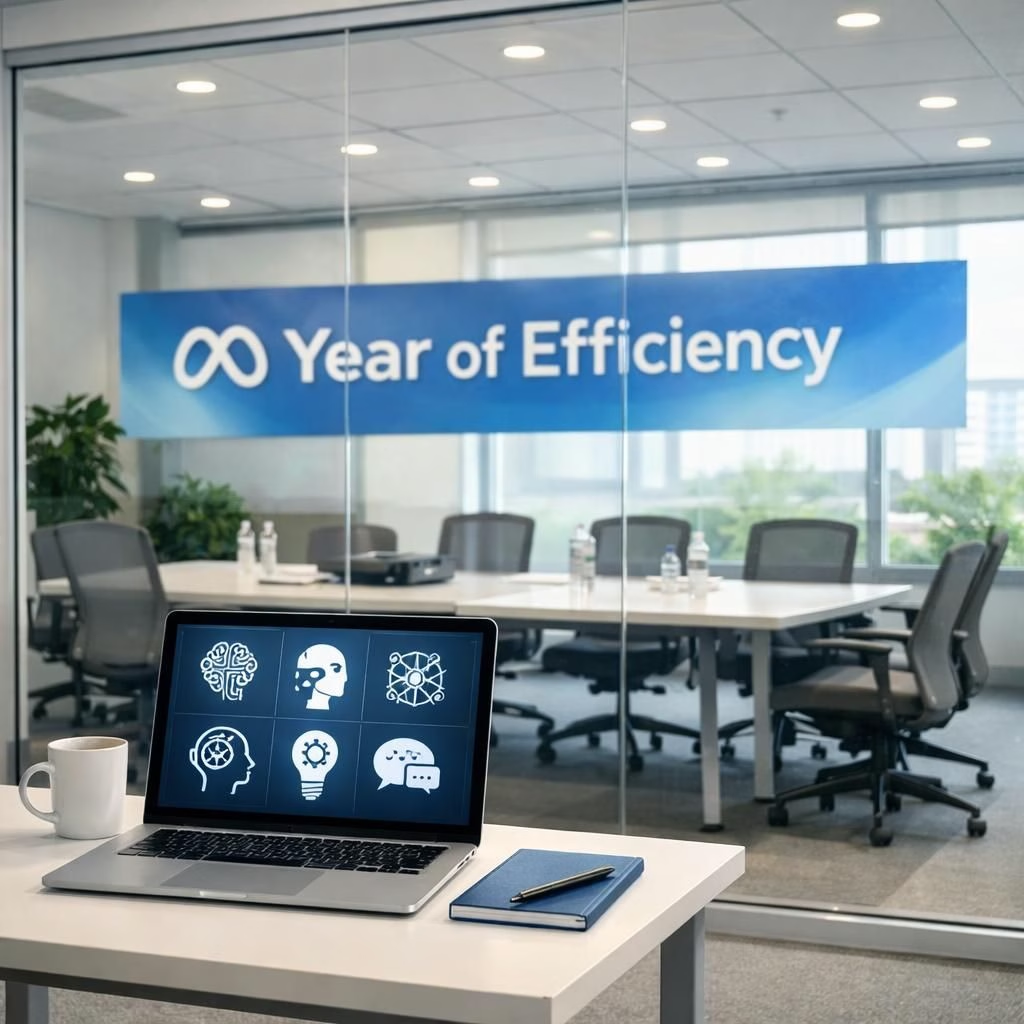
From the glassy atriums of Meta, the Meta Superintelligence Labs signals the Year of Efficiency turning into a year of dread for many staff. The company plans to shed roughly 8,000 roles, about 10% of the global workforce, even as profits climb and AI infrastructure expands behind the curtain. At the same time, the gleaming label of Meta Superintelligence Labs signals a bold AI push that reshapes budgets and career stories in 2026. The contrast is loud, the mood is skeptical, and yet the show must go on as investors nod and managers clutch slides about traction.
Year of Efficiency in Practice
Meta’s CFO Susan Li described the layoffs as part of a leaner operating model designed to offset massive capital expenditures. The company said it expects to spend between $125 billion and $145 billion on AI in 2026, nearly doubling the 2025 outlay. On an earnings call, CEO Mark Zuckerberg framed the cuts as a necessary cost-control measure tied to the AI binge, and he did not rule out further rounds in the second half of the year. The numbers drop like a drumbeat: hundreds of millions here, tens of millions there, all aimed at keeping the AI engine running.
In broader mood, insiders described morale as ‘horrifically and historically low.’ Some staff even hope for severance as a relief valve, a possibility the company sweetened with a package that includes 16 weeks of pay and 18 months of health care—a so-called golden parachute to soften the sting of job loss in a high-stress, high-stakes environment. The Meta Superintelligence Labs framing shows up again in internal memos and town halls, a constant reminder that the company believes it can squeeze value from both people and silicon.
Since 2022, roughly 25,000 roles have vanished in this ongoing reshaping, a statistic that haunts the lunchroom chatter as much as the quarterly results. Yet the cadence of layoffs sits beside banners about momentum and efficiency, making the office feel like a balanced diet: a little lean, a lot AI, and a pinch of bravado for flavor.
The Year of Efficiency narrative continues to appear in slides and emails, insisting there is a method to the madness and that the AI investment is, somehow, a long-term gift to the business and its users. In the same breath, the company keeps emphasizing that the AI push is not about replacing humans, but about augmenting them—though the math makes the replacement narrative hard to ignore for those on the floor.
Inside Meta Superintelligence Labs: The Pay, The Pressure
The other half of the story centers on the Meta Superintelligence Labs, a badge that signals what many call the front line of the AI arms race. While the company reports record profits, the attraction is becoming a magnet for elite talent, and the compensation chatter confirms a widening pay gap. Some insiders whisper that top AI researchers could command packages near $100 million, an eye-popping headline that highlights the tension between mission and money in 2026. The labs are not just a dream; they are a budgetary beacon for how aggressively Meta plans to stay ahead in the global AI race.
Variance in compensation is more than a bragging point; it changes team composition, recruitment, and the culture of the workplace. The Labs are framed as a place to push boundaries and deliver rapid AI breakthroughs, a pitch that resonates with some engineers and unsettles others who wonder if loyalty to the mission always aligns with the paycheck. The reality is a blend: ambition, risk, and a scramble for talent who can turn ideas into scalable products at speed.
Within these labs, the allure of impressive titles and high-stakes projects sits alongside the ongoing concern about work-life balance. The pay dynamics feed a widening gap between executives and newer AI recruits, even as the company promotes a narrative of opportunity and growth. The net effect is a workplace where wild ideas collide with the demands of a quarterly cadence, and where the word ‘transformation’ travels faster than the elevator between floors.
Independent observers note that the Meta Superintelligence Labs push is, at its core, a bet on platform-scale AI that can influence not just how Meta operates, but how the industry evolves. The energy is electric, the risk is high, and the cultural friction is real. As the labs chase breakthroughs, employees watch the horizon for signs of stability, fair evaluation, and a sense that the company truly values human contributions alongside machine ones.
Surveillance, Privacy, and the Human Factor
Amid the rush toward smarter machines, the Model Capability Initiative has sparked backlash. What began as a plan to capture keystrokes, screenshots, and workflow data on US laptops aims to train AI agents that can mimic human work. There is no opt-out in the United States, while GDPR protections apply in Europe. The combination of high-tech ambition and personal data raises eyebrows and invites debates about privacy, trust, and the kind of corporate culture a major platform wants to cultivate.
Some employees have taken to distributing flyers around Meta Superintelligence Labs offices, labeling the company an “Employee Data Extraction Factory.” The phrase lands with a sting because it highlights the friction between efficiency goals and personal boundaries. Yet the company argues that data collection is essential to building smarter tools and improving products, even as workers voice concerns about being constantly watched. The tension is real, but so is the defense of innovation in a competitive AI landscape.
For readers who crave context, the broader trend is not just about a few layoffs. It is about how a social-media giant balances record profits with ongoing investments in AI. The tension spills into every meeting, every town hall, and every conference room where budgets are debated, dashboards are shared, and caution flags are raised whenever a new AI initiative is pitched as ‘transformational.’
As 2026 marches on, the story of Year of Efficiency and Meta Superintelligence Labs remains a cautionary, even entertaining, tale of modern tech life. What do you think about prioritizing AI spend over human heads? How would you balance innovation with worker welfare? Share your thoughts in the comments. And for those curious about the original reporting that sparked this reflection, a note of thanks to Wired for the coverage. Original article: Wired – Original Coverage.
Practical steps for teams and workers
- Document expectations and severance terms: Ask HR for a written severance plan and explicit timelines.
- Strategic skill-building: Identify AI-related skills that stay valuable even as roles shift (data literacy, product thinking, etc.).
- Network and plan transitions: Proactively connect with teams that align with your interests and potential internal openings.
- Protect health and financial wellbeing: Review healthcare continuance options and ask about health coverage during a transition.
FAQ
- What is the Year of Efficiency?
It’s Meta’s framing for cost control and AI-led productivity improvements in 2026, including staff reductions paired with heavy investment in AI infrastructure.
- How is Meta’s AI spend affecting staff?
Executives say AI investments aim to augment human work, but layoffs and higher pay for AI recruits create tension among teams.
- What is the Model Capability Initiative?
A data-collection program on US laptops designed to train AI agents, with privacy rules differing by region.
- Where can I read the original reporting?
The core reporting this article builds on is from Wired; see the linked coverage and the Times of India source at the end.
In sum, Meta’s Year of Efficiency shines a light on how tech giants juggle profits, AI ambitions, and people. For readers, the takeaway is clear: monitor AI spend, seek clarity on severance and roles, and watch how leadership communicates about transformation. If you’re following this story, stay tuned for updates as more earnings data and policy decisions come to light.
References
- Times of India – As May 20 set date for Meta layoffs nears, employees claim horrifically and historically low morale
- Wired – Original Coverage
- CNBC – Meta layoffs and AI spend