

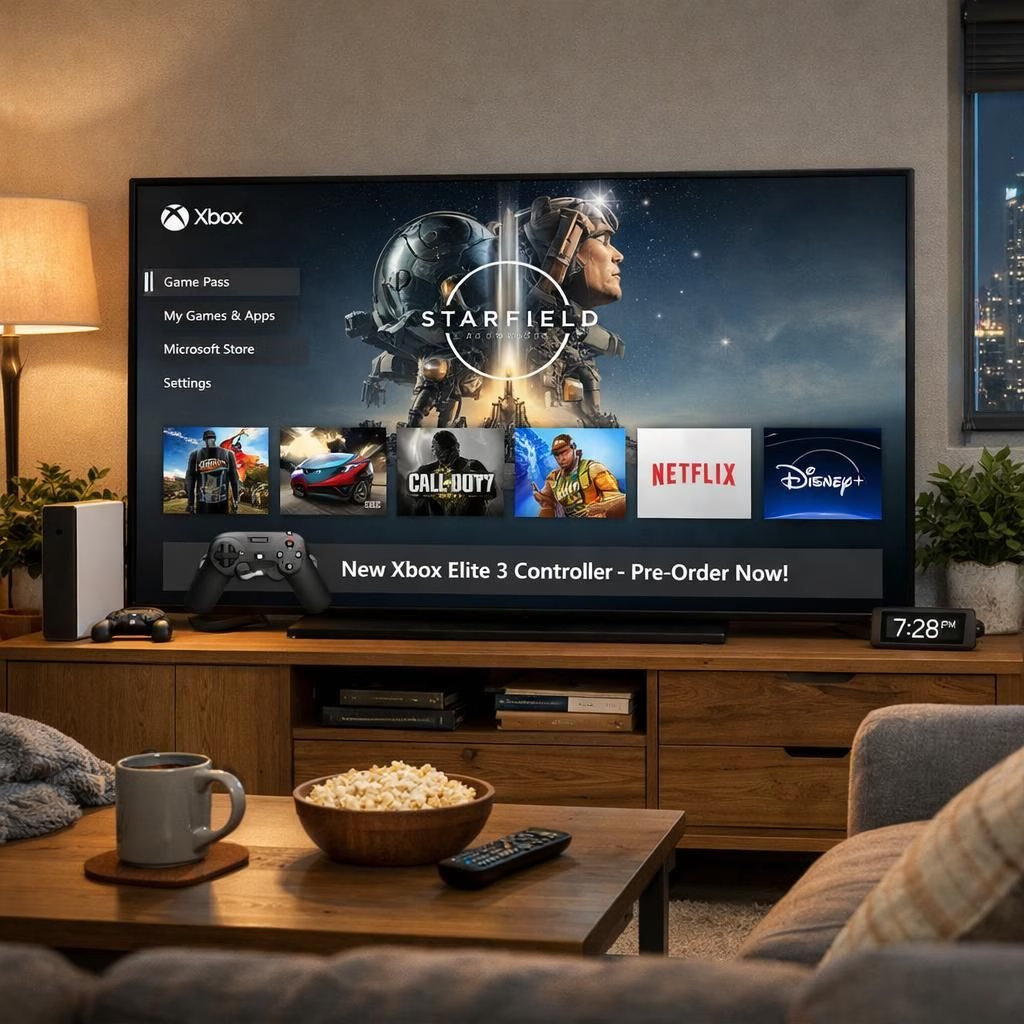
Xbox and Ad-Supported Streaming are teaming up for a bold experiment in 2026. The core idea is simple: offer a free, ad-supported streaming tier that lets players jump into cloud gaming without an upfront cost. Ads help keep the service running. This is not a gimmick. It’s a thoughtful move to broaden access, boost discovery, and keep players in the ecosystem. The approach mirrors a broader industry trend toward flexible pricing and optional upgrades, while preserving the feel of real gaming. In this post, we’ll unpack what this means for players, developers, and the wider gaming landscape, keeping the core truth intact but adding a dash of practical optimism.
Xbox and Ad-Supported Streaming: The Free Tier Frontier
At the heart of the push is a straightforward proposition: let new players sample cloud gaming without a subscription barrier, supported by advertisements rather than a credit card. The appeal is obvious—lower friction lowers the hurdle to trial, and a larger audience can lead to more word-of-mouth recommendations and longer-term engagement. From a tech perspective, the model relies on solid streaming infrastructure, responsive edge nodes, and clever ad-integration that tries not to ruin the immersion. In short, Ad-Supported Streaming is meant to be accessible without feeling like you’re watching an in-game commercial every five minutes.
Economically, the strategy works best when it complements paid tiers rather than cannibalizes them. Xbox appears to be testing how ads influence session length, game discovery, and conversion from free to paid, which can yield valuable data for product teams and developers alike. The broader takeaway is that a free tier, properly executed, can act as a funnel—introducing a larger audience to the Xbox ecosystem and encouraging organic growth through playtime and social sharing.
Why Xbox Chooses Ad-Supported Streaming for Cloud Gaming
Choosing Ad-Supported Streaming as a pathway into cloud gaming reflects a practical read of the market. Not everyone wants to pay upfront for every gaming session, especially casual players and households exploring the format for the first time. Ads, when balanced well, create a sustainable funding loop that keeps servers live and latency optimized. For Xbox, the aim is to provide value and choice, so players can stick with the platform even if they occasionally opt for an ad-supported session. This approach also gives indie and mid-tier developers a potential discovery channel, since a broader audience can reveal hidden gems that might not emerge in a paywall-only environment.
What This Means for Players and Households
For players, the prospect is straightforward: more ways to access games, more opportunities to try new titles, and a model that respects different budgets. The Ad-Supported Streaming tier can serve as a low-risk entry point for families or casual gamers who want to sample cloud gaming without committing to a monthly fee. It also puts a spotlight on user experience. If ads are well-timed and non-disruptive, players may hardly notice them—think banner hints, optional ad boosts for rewards, or contextually relevant promotions tied to the game you’re playing. The goal is a smooth, frictionless experience where ads feel like a background chorus rather than a drumbeat that ruins immersion.
From a usability angle, the free tier should still deliver solid performance. Latency, input responsiveness, and game compatibility matter just as much as ad load. The best outcomes come when Ad-Supported Streaming keeps pace with user expectations, delivering familiar Xbox quality while offering a transparent path to paid upgrades for an ad-free experience. This balanced approach aligns with the broader industry trend toward hybrid models that prioritize inclusivity and choice without compromising performance.
Ad-Supported Streaming: Economic and UX Angles
The economic logic behind Ad-Supported Streaming is not a conspiracy, but a calculated bet on longer play sessions and broader discovery. If you can hook a player with a free session and an occasional ad, the odds of them trying more games rise. For developers, this can broaden visibility and create new revenue channels through ad partnerships and premium upsells. The UX challenge is to keep ads respectful—short, non-intrusive, and relevant—so the gaming experience remains enjoyable. When done right, the model benefits players (lower upfront costs), developers (more eyeballs on new games), and the platform (a diverse revenue mix that stabilizes long-term growth).
In practice, the Ad-Supported Streaming tier will need robust telemetry to monitor ad cadence, engagement, and churn. If the system learns and adapts—reducing ad frequency during peak play times or offering opt-in rewards—the experience stays user-friendly. This is where Xbox can shine: a thoughtful balance between monetization and entertainment, with a clear path to upgrades for those who want uninterrupted play.
Implementation Details and Potential Caveats
Any new tier brings implementation questions. How will ads be delivered without interrupting the flow? Will certain genres or games see higher ad density? How will cross-device play feel when switching from a free session on a console to a PC or mobile device? The industry is watching to see how well the Ad-Supported Streaming model can preserve the magic of gaming while creating a sustainable model for service providers. The key is to keep the tech invisible enough that players focus on the game, not the interstitials. If the experience remains smooth and reliable, the free tier can complement existing subscriptions rather than disrupt them.
What to Watch Next
As this trial unfolds, several signals will matter: changes in session length, shifts in game discovery, and any uptick in paid conversions. Expect a mix of quick iterations and longer-term experiments as teams adjust ad formats, placement, and rewards. The most interesting outcome would be a hybrid ecosystem where Ad-Supported Streaming acts as a funnel—drawing players into more immersive, paid experiences while keeping the core console gaming vibe intact. If Xbox can deliver on this balance, the model could become a meaningful blueprint for cloud gaming across the industry.
To wrap up, this move signals a thoughtful embrace of flexibility and accessibility in the Xbox portfolio. Ad-Supported Streaming isn’t about cheap thrills; it’s about smart monetization that respects players’ time and budgets while expanding the gaming audience. The next several months will reveal how smooth the integration is and whether the free tier becomes a lasting fixture in the Xbox strategy, or a learning phase that informs bigger, better ideas for 2026 and beyond.
Original reporting and inspiration come from several sources during this exploration, including coverage from Kotaku, CNBC, The Verge, Xbox Wire, and The Hollywood Reporter. Special thanks to the original material for guiding this synthesis and for continuing to push the conversation forward.
Linkback attribution and gratitude: Thank you to the original article and its team for the thoughtful reporting that sparked this analysis. Original article: Original article on Kotaku: Xbox testing free Ad-Supported Streaming.
References
- Original source linkback: Kotaku: Xbox testing free Ad-Supported Streaming
- The Hollywood Reporter coverage on ad-supported cloud gaming
- CNBC coverage on cloud gaming strategies
- The Verge coverage of Xbox cloud gaming experiments