

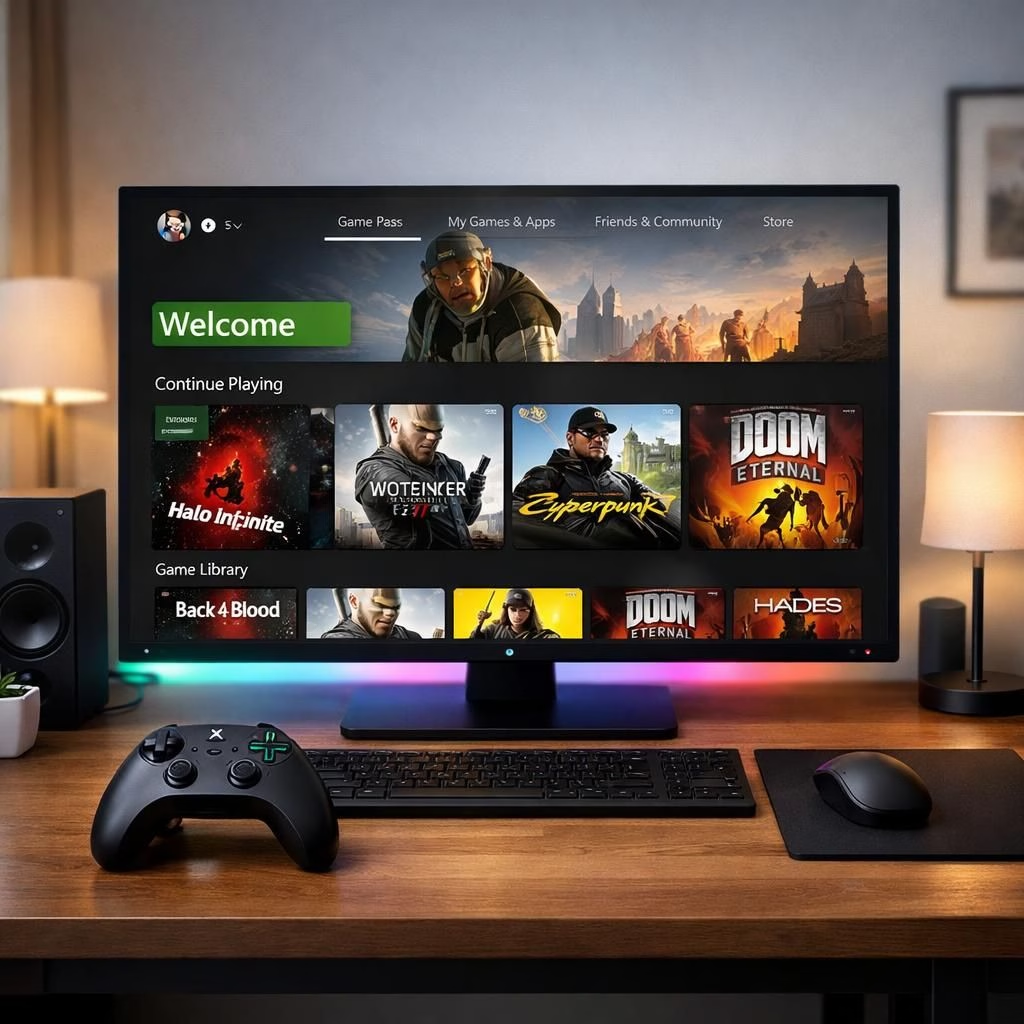
Welcome to the era of backward-compatibility and Tag B, where Xbox extends its reach to PC players with OG Xbox classics and an achievements-powered upgrade. The idea is simple, the execution delightful: you can replay the games you loved on a modern PC with a few modern conveniences, and you can earn those shiny achievements while you’re at it. In 2026, this shift isn’t about replacing consoles; it’s about expanding the playground, so you can enjoy the best of both worlds without sacrificing your desk Feng Shui.
backward-compatibility and PC-gaming: A New Era on the Desktop
When the dust settled on the initial announcements, the core truth stood tall: backward-compatibility is finally done right for Tag B. Not only are the OG Xbox titles making a return, they’re returning with quality-of-life updates that feel almost cheekily practical. You’ll find improved load times, stable framerates, and an achievements system that nudges you to explore corners you might have forgotten. It’s not nostalgia dressed up as a gimmick; it’s a thoughtful extension of a library that deserves to be revisited. The PC version promises to respect the original games while removing friction that kept players away in the first place: complicated emulator setups, compatibility doubts, and the fear that your favorite game might not boot on a current machine.
What that means in everyday terms is simple: a game you finished years ago can be revisited with a PC-friendly control scheme, modern display resolutions, and the satisfaction of earned achievements that cross over to Xbox Live. The Tag B version promises to respect the original games while removing friction that kept players away in the first place: complicated emulator setups, compatibility concerns, and the fear that your favorite title might not boot on modern hardware.
What this means is that a classic title can be replayed with a PC-friendly control scheme and cross-device progress. This is not about forcing retro experiences into a slick modern package; it’s about letting them play smoothly in today’s living room. This backward-compatibility approach makes room for the past, turning cartridges into digital triumphs.
Delightful details will matter. We’ll see ergonomic menu layouts, streamlined saves, and optional enhancements for sound, visuals, or accessibility without muting the original flavor. The timing of these releases matters; a well-timed launch window lets players savor the moment and build shared memories of the OG titles as a cross-platform experience. The community benefits when publishers respect history while inviting new players to explore it. In this sense, backward-compatibility isn’t just a feature; it’s a bridge that invites collaboration between classic fans and newcomers, with both sides learning and laughing together.
This backward-compatibility approach bridges Tag B ecosystems, letting PC players and console fans share the same classics.
Beyond the initial four games, expect a rolling cadence of updates, expansions, and clever integrations with PC ecosystems that today’s players already use. The goal is to create a stable, repeatable process for turning beloved titles into PC-friendly experiences, not a one-off fix. If the first wave lands smoothly, it sets a precedent: a thoughtful, cross-device backward-compatibility that preserves the magic.
What does this mean for the broader gaming landscape? It signals a quieter revolution: more collaboration between console legacies and PC innovation, more options for players who juggle multiple platforms, and more respect for the people who kept these games alive in the years between their original release and today. It also invites developers to consider how their catalogs might benefit from a similar, carefully planned approach—handshakes that bring old favorites to new hardware while keeping the spirit intact.
In short, backward-compatibility and Tag B together craft a more inclusive, lower-friction path for classic titles. The Xbox platform is not erasing the past; it’s making room for it in a brighter, more accessible horizon. The achievements system, the smoother performance, and the ability to play with modern setups all contribute to a more welcoming digital frontier for gamers who want the best of both worlds with a minimum of screens and cables getting in the way.
Share your thoughts below: did you long for OG Xbox titles on PC, and are you excited to chase achievements across devices? Do you expect the initial four-game lineup to spark future classics? Your feedback helps shape how these experiences evolve, so jump into the conversation and tell us what you’d like to see next in the backward-compatibility Tag B journey.
Original reporting and inspiration from: Windows Central, The Verge, XBOX Wire, PureXbox, Digital Foundry. Thank you to these outlets for their coverage and for providing the groundwork that informed this piece.
Practical steps for players eager to try
- Verify your PC meets the minimum requirements and ensure your Xbox account is linked to your PC launcher.
- Choose your preferred input method (keyboard/mouse or controller) and tailor your controls for comfort and precision.
- Check for the four-launch lineup and enable cross-device achievements to see progress travel across platforms.
FAQ about backward-compatibility on PC
- Will OG Xbox games run on PC? Yes. Microsoft is rolling out official support with quality-of-life upgrades.
- Do achievements carry across devices? Yes. Progress can sync across PC and Xbox hardware when you use the same account.
- Which games launch first? Four classic titles were announced initially to showcase the approach; more are expected over time.
- Will this replace any original hardware? No. It expands the ecosystem and preserves the look and feel of the originals while improving accessibility.
In short, this initiative is about accessibility, consistency, and respect for the classics. If you’re curious about the four initial games, stay tuned to official channels for updates and hands-on impressions as the PC-forward path unfolds.