

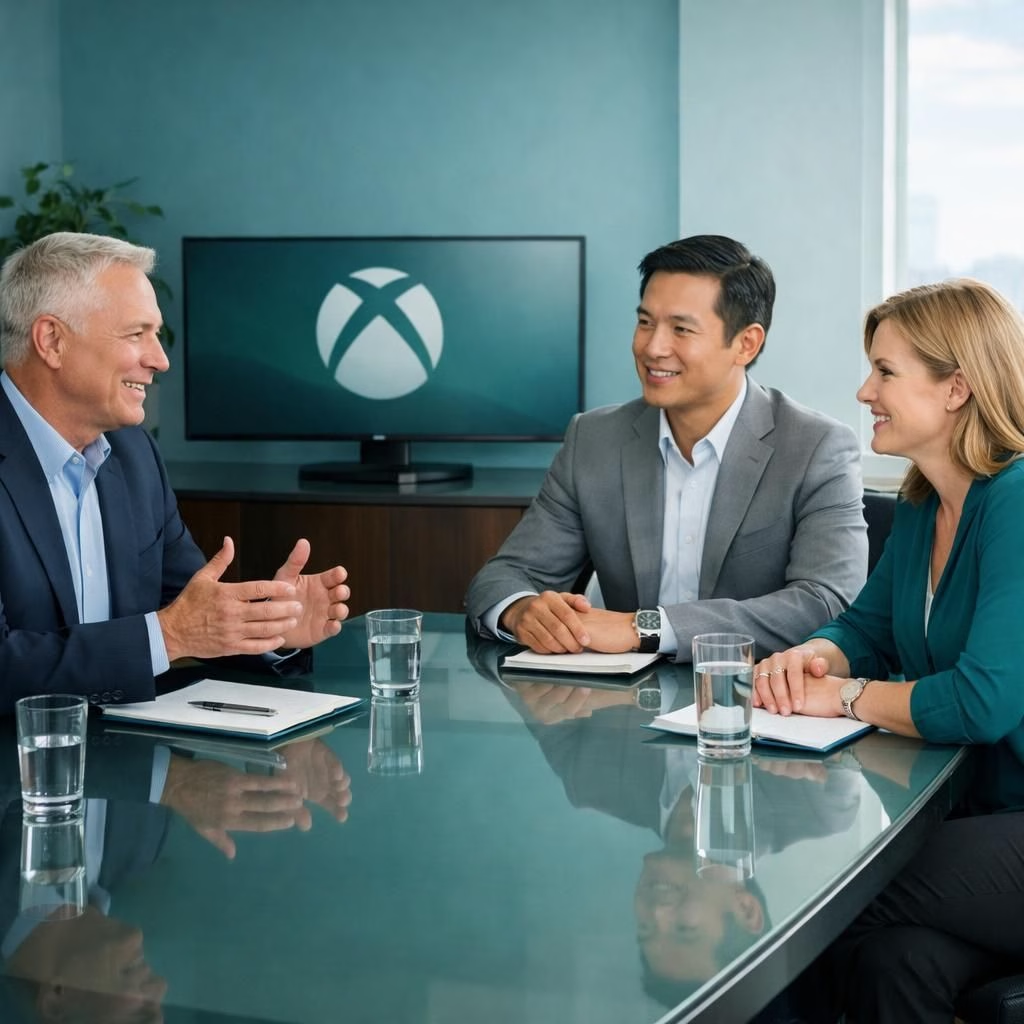
When a gaming giant announces leadership shifts, the internet tends to lean forward, seeking clarity and context. This time, Sarah Bond and Phil Spencer symbolize a new chapter for Xbox, signaling a shift from drama to strategy. In 2026 terms, this reads as a well-timed upgrade rather than a drastic reboot, a moment to pause, recalibrate, and push the ecosystem toward the next horizon. Sarah Bond has since taken to LinkedIn to issue a statement on her departure from the company, which is actually a note she sent to her team when the news was announced. In the statement, she doesn\’t explain exactly why she\’s chosen to leave, aside from that it is "the right time to take my next step, both personally and professionally".
Xbox Sets the Stage for a New Era
Sarah Bond\’s departure creates space for a deliberate handoff to Asha Sharma, a leader with deep technology instincts and a track record of scaling platforms. The public talk centers on continuity: Bond will serve as Special Advisor to Sharma, ensuring a smooth transition while Satya Nadella and the broader leadership ecosystem provide steady support. The plan emphasizes faster growth in PC and cloud gaming, the ongoing development of the next console, and a platform that remains open across devices. In practical terms, that means more robust developer tooling, clearer partner programs, and a commitment to keeping the player experience at the center of every decision. The messaging slows down the hype and speeds up the execution, a combination that seasoned fans and industry analysts tend to trust. The open-systems objective is not just marketing fluff; it is a real attempt to reduce device friction and let studios ship once, and play everywhere. The shift also acknowledges the reality of a changing regulatory and supply chain environment, and it leans into resilience, collaboration, and iterative improvement. In other words, Xbox is betting on people, processes, and partnerships to accelerate the next generation of gaming experiences while preserving the core identity of a brand that has long prioritized player satisfaction.
- Bond\’s move creates a clear path for Sharma to lead while ensuring continuity as she serves as Special Advisor.
- The focus remains on PC and cloud gaming, with continued development of the next console on track.
- Open, cross-device tooling and partner programs are prioritized to reduce friction for developers and players alike.
Sarah Bond\’s leadership style, as reflected in her public communications, centers on clarity and gratitude. She speaks of the people who built and supported the platform, and she consistently frames challenges as opportunities for better systems and more inclusive access. The practical takeaway for players is simple: the underlying infrastructure that powers cross-device play, cloud streaming, and a growing library of titles should become easier to use, faster to adopt, and more reliable across regions and devices. The emphasis on technology and commerce experience in Sharma\’s future role signals a pragmatic blend of architecture and business acumen that should help Xbox stay competitive in a crowded market. This is not a hollow transition; it is a carefully choreographed evolution designed to keep the platform robust while inviting fresh ideas to test, iterate, and scale.
In corporate storytelling terms, this moment feels like a deliberate choice to protect momentum. Bond\’s note indicates a desire to ensure continuity for players and developers alike, rather than a dramatic farewell to a beloved era. The Special Advisor arrangement gives Sharma a runway to implement her vision while maintaining a line of sight to the company\’s core mission. For the many teams spanning design, engineering, and publishing, the plan offers a sense of stability during a period of change. And for investors and observers, the storyline signals disciplined governance and a readiness to adapt quickly if external conditions demand it. The emphasis on cross-device openness, developer tooling, and scalable cloud services aligns neatly with the industry\’s longer arc toward more flexible, accessible gaming across devices and networks.
Sarah Bond\’s Legacy: Lessons from a Leader
Sarah Bond\’s leadership, as reflected in her communications and the broader corporate narrative, centers on people, process, and performance. She frames opportunity and challenge as two sides of the same coin, emphasizing mentorship, collaboration, and the shared responsibility of delivering value to players and partners. The public notes repeatedly touch on a few enduring themes: building trust, supporting teams, and maintaining a laser focus on the player experience. She asks the tough questions—Did I bring my best? Did I help someone else succeed? Did I do my best work?—and uses the answers to steer daily choices and long-term strategy. The practical impact is visible in how engineers and developers report clearer roadmaps, stronger collaboration with studios, and a platform that feels more accessible across Windows PCs, consoles, and cloud streaming. Her philosophy—prioritize impact, empower others, and stay relentlessly curious—offers a simple blueprint for leadership that can survive any one person\’s tenure and still propel a brand forward.
The Bond era also highlights the importance of a well-structured transition in a high-stakes industry. It\’s not just about a title change; it\’s about preserving the culture of accountability, speed, and customer empathy that gamers expect. Sarah Bond\’s openness to fresh eyes, paired with Sharma\’s proven capabilities, creates a narrative of resilience and continuous improvement. When teams see leadership openly embrace change as a path to progress, they are more likely to experiment with new ideas, refine processes, and push for better tools that reduce friction for developers and players alike. In short, the legacy is less about a single moment and more about a sustained discipline: keep the player front and center, scale responsibly, and invest in a platform that can evolve with the market while staying true to its core values.
Open platforms and cross-device experiences remain a central theme. The industry is watching how Sarah Bond will balance ambitious growth with the need to protect user trust, data privacy, and fair competition. The forthcoming era appears to be one where leadership transitions are embraced as an opportunity to refresh the strategy, energize the team, and accelerate product delivery without sacrificing quality. For fans, this translates into confidence that the brand can navigate turbulence while continuing to deliver meaningful gaming experiences across PC, console, and cloud environments. The tone from Sarah Bond and the implied roadmap for Sharma convey a shared belief that a bigger, more open ecosystem benefits everyone—players, developers, and the business alike.
Finally, a note of appreciation to the original source material that inspired this reflection. A heartfelt thanks to the LinkedIn posts and public statements that captured the tone and the details of this transition, offering a useful case study in leadership communication during a period of change. Original article reference here: LinkedIn.
We invite you to share your thoughts on what this leadership transition means for developers, players, and the broader gaming ecosystem. Do you expect Sharma to accelerate cross-device innovation? How should Xbox balance openness with platform stability? Join the conversation in the comments below and help us explore the possibilities together.
Original article attribution: Thank you to the original author and source for the material that sparked this thoughtful rewrite. We appreciate the context and the opportunity to reflect on leadership, strategy, and the future of Xbox: LinkedIn.
FAQ
Q: What does this leadership shift mean for Xbox?
A: It signals continuity and a strong execution path, with Sharma leading as CEO while Bond guides as Special Advisor, keeping focus on cross-device openness and cloud growth.
Q: Who is taking over as CEO?
A: Asha Sharma will lead, with Bond stepping in as Special Advisor to ensure a smooth transition and sustained momentum.
Q: How will this affect developers and players?
A: The emphasis on robust tooling, clearer partner programs, and cross-device compatibility should reduce friction and improve reliability across Windows PC, consoles, and cloud play.
Q: Will this impact Xbox\’s openness policy?
A: The plan stresses openness and device-agnostic experiences while maintaining safety, performance, and fair competition.