

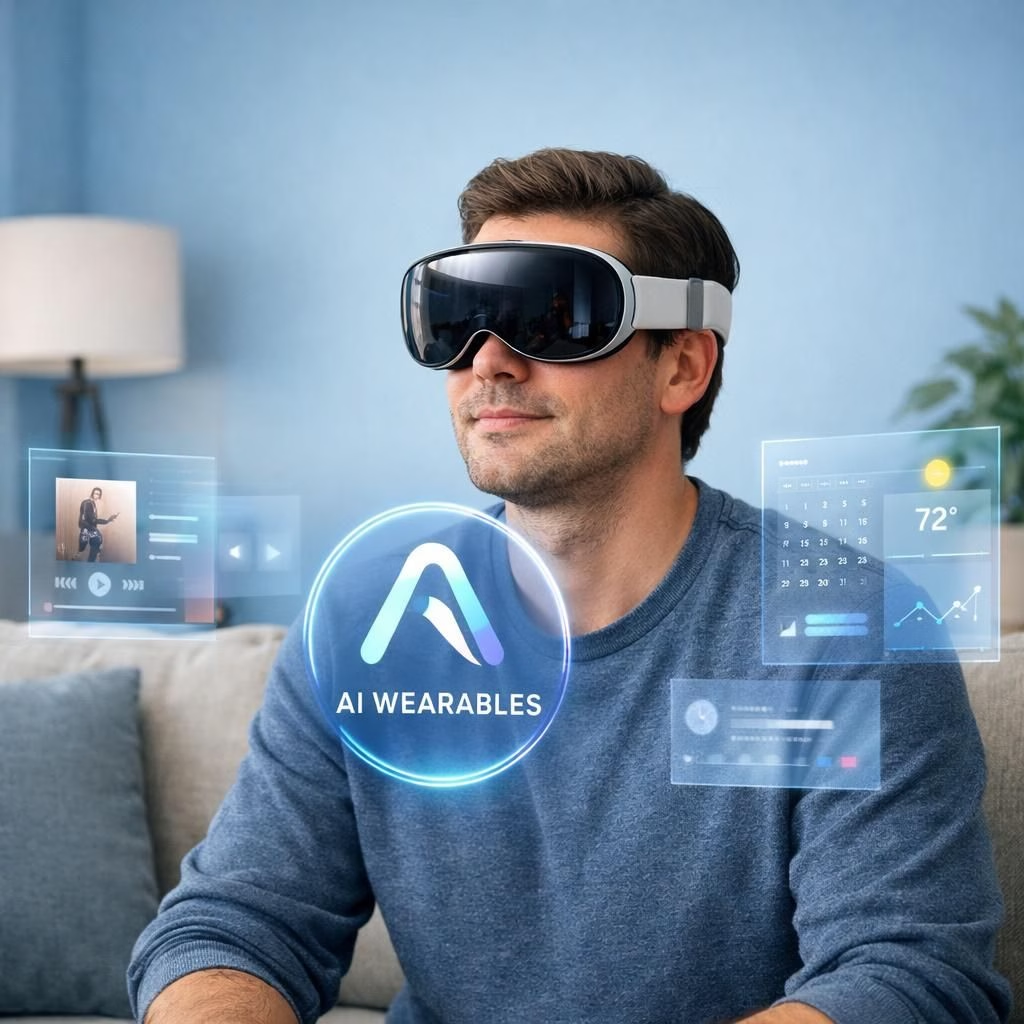
In 2026, Vision Pro and AI wearables are on everyone’s lips, even when the jokes about screens-on-heads still write themselves. Apple hasn’t ditched the headset; it’s stacking the deck with new tech and materials for a cheaper, lighter, enclosed Vision Pro–like device. The goal isn’t vaporware; it’s a practical upgrade that can blend into daily life, not become a fashion emergency. Vision Pro remains the flagship, while AI wearables quietly power the backstage wizardry that makes virtual and real life feel a bit more cooperative.
Vision Pro: The long wait the forward-looking crowd loves
Bloomberg’s Mark Gurman says Apple isn’t pretending the headset never existed. He notes the company is quietly developing new technologies and materials behind the curtain. The intent is to produce a cheaper, lighter enclosed headset that still acts like a capable gateway to mixed reality. There is a caveat, though: no such product is actively in development right now, and the long-rumored Vision Air was canceled last year. Vision Pro isn’t going anywhere, but its successor is likely looking at a longer horizon.
In practice, the next Vision Pro–style device would likely arrive only after Apple finishes a few other experiments. Gurman suggests we’re looking at around two more years at least, because most of Apple’s mixed-reality hardware talent has been diverted to other projects like lightweight smart glasses and more robust AI interfaces. The company wants to avoid overpromising before it finishes tuning the core experience for a broad audience.
AI wearables and the software-sculpted future
Behind the scenes, the focus has shifted toward AI wearables-powered accessories as a broader strategy. Some former Vision team members have moved to the smart glasses effort, alongside improvements to Siri and other AI-enabled devices. The shift is not about abandoning Vision Pro; it’s about expanding a smart-body ecosystem so that the future is less headset-centric and more a network of capable devices that work together.
The retail story of Vision Pro is also part of the equation. A book by Noam Scheiber, a New York Times labor reporter, argues that Apple’s decade-long erosion of its retail workforce contributed to the challenging launch of the $3,499 headset. The takeaway is not that the headset failed for a single reason, but that setting up a premium product in a high-touch retail environment requires a robust support system and well-staffed stores. Apple is listening, and the lessons from the retail chapters are helping shape how it rolls Vision Pro in 2026.
Bloomberg’s Power On newsletter by Mark Gurman has long tracked Apple’s pace of hardware updates; the latest signals suggest a measured cadence that favors reliability over fanfare. The focus on AI wearables-driven features means users can expect smarter prompts with less disruption to daily life.
Apple refreshed the headset in October 2026 with an M5 chip. The upgrade isn’t a radical redesign; it’s a performance boost that improves battery life, thermal management, and on-device AI tasks. The M5 upgrade demonstrates Apple’s pattern: incremental hardware updates that optimize the software stack and improve the real-world experience. This aligns with the broader AI-powered devices push, where more capable silicon supports smarter interactions without requiring you to upgrade every season.
So what does all this mean for everyday users? Vision Pro remains compelling for people who want immersive computation and a private screen that doesn’t rely on a traditional monitor. The broader AI wearables strategy promises more natural interactions with devices, more context for decisions, and better privacy by design. The balance point is practicality: Apple wants a future where you can slip on a lightweight headset when needed, then slip it off and forget you wore it, while your surroundings continue to feel familiar and safe.
From a usability perspective, the paths—the high-end headset experience and the broader ecosystem of AI wearables—might eventually converge. The hardware may stay premium while the software becomes more accessible. That’s a win for developers, who can build smarter experiences, and for users, who can decide when to lean into immersive displays or rely on ambient AI wearables prompts that appear just when you need them.
As with any long game, timing matters. The 2026 strategy seems to be: invest in compelling hardware in the near term (the Vision Pro family and its M5-powered refresh), while preparing the groundwork for future AI wearables that don’t demand a helmet on your head every time you want to do something simple. The company continues to experiment with materials, weight, cooling, and form factors to strike the right balance between comfort and capability, a critical consideration for Vision Pro and all AI wearables that rely on sense-and-respond tech.
In the end, the story is less about a single gadget and more about a broader direction. The headset sets the tone for premium mixed reality, AI wearables become a tapestry of accessories and software, and the ecosystem grows more capable and accessible. The wait is real, but the reasons for optimism are tangible: smarter hardware, better software, and a more thoughtful approach to how we interact with digital information in 2026.
Have you tried any early versions of Vision Pro or experimented with AI wearables in your day-to-day life? What would make you excited to reach for a headset again, or what features would make AI wearables feel genuinely indispensable? Share your thoughts in the comments below, and let’s keep the conversation lively and constructive.
Original reporting courtesy of Bloomberg Power On newsletter by Mark Gurman. Bloomberg Power On team for the original reporting.
Practical steps to evaluate Vision Pro today
- Identify tasks where you value a private screen and immersive context, then test with the headset if possible.
- Consider comfort and weight: adjust the fit, balance, and cooling in a real-world setting.
- Explore AI wearables-driven prompts and how they affect your daily routines without overwhelming you.
- Evaluate battery life during typical activities (work, media, and lightweight tasks) to see if the experience is practical for daily use.
FAQ
- When might a Vision Pro successor arrive? Bloomberg’s Gurman suggests a conservative cadence, with a new device likely years away rather than months. Expect continued refinement rather than a dramatic leap.
- What happened to Vision Air? The long-rumored Vision Air was canceled last year, clearing the path for a lighter, enclosed headset rather than a radically new form factor.
- Will AI wearables replace smartphones? Not soon. The idea is to augment daily life with ambient, context-aware prompts, while smartphones remain a core hub for many tasks. AI wearables are meant to complement, not completely replace, current devices.
- Should I wait to buy Vision Pro now? If you value premium immersive computing and cutting-edge software, waiting for a refinement like a focused M5 upgrade could be worthwhile, but the current model already serves as a capable gateway to mixed reality.