

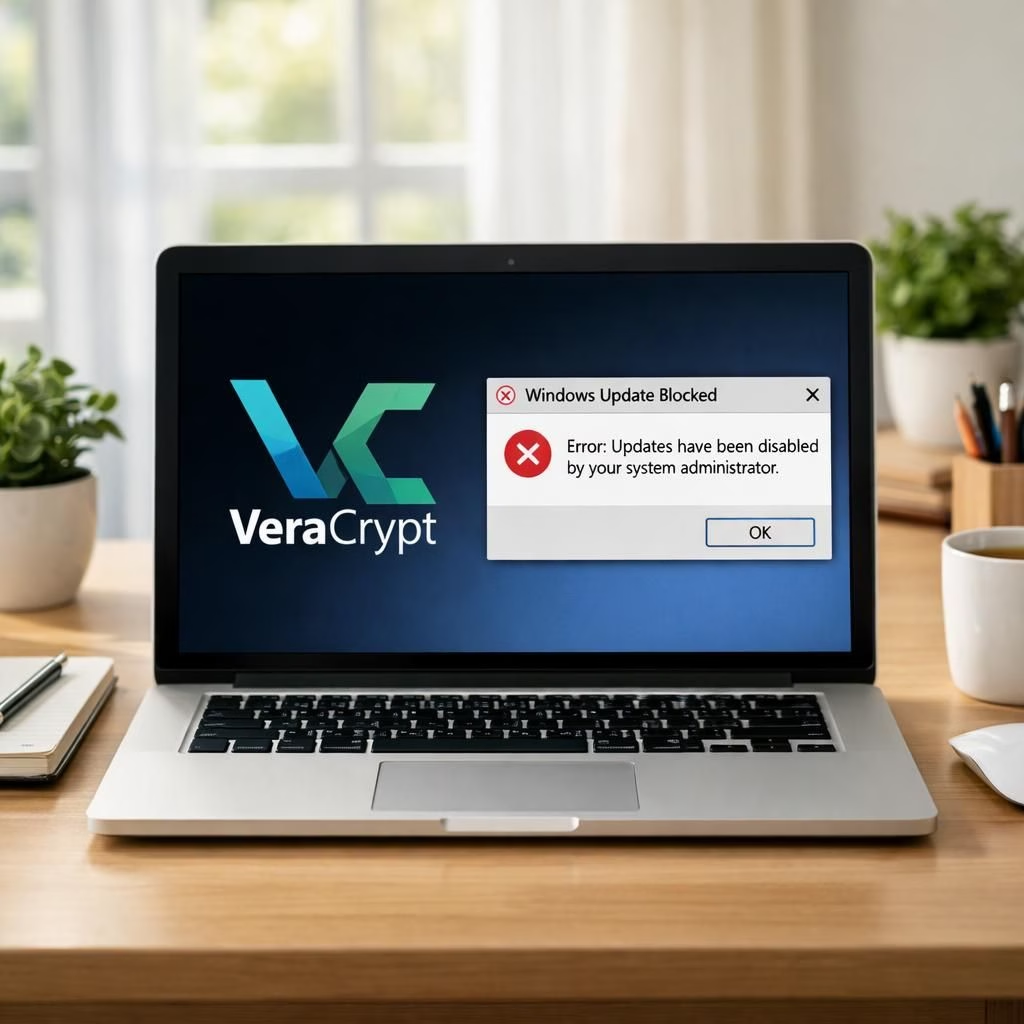
Here’s the punchline for 2026: VeraCrypt users woke up to a surprising decision when Microsoft terminated the VeraCrypt account, stalling Windows Updates for many PCs. The unexpected move felt like a quarterly update you didn’t ask for but somehow needed to survive. Rather than trigger panic, the tech world leaned into calm resilience, a touch of wit, and a playbook for navigating sudden changes. In short, this incident—centered on VeraCrypt and Windows Updates—highlights how communities improvise when a backbone shifts beneath their feet.
In this piece, we honor the core truth while offering practical, upbeat guidance. The goal isn’t sensationalism but steady, informed action. If you rely on VeraCrypt for encryption or on Windows Updates for patching, the event becomes a reminder: build redundancy, stay curious, and keep software habits flexible. The interplay between VeraCrypt and Windows Updates in 2026 teaches a valuable lesson about risk management and user empowerment: you can stay secure without surrendering your sense of humor.
First, a quick reality check. Microsoft’s decision to terminate the VeraCrypt account disrupted a chain of automated updates, security notifications, and routine maintenance tasks. While the timing may have felt dramatic, the takeaway is practical: identify alternative update channels, verify the integrity of your systems, and lean on secure encryption practices as you ride out the turbulence. VeraCrypt remains a trusted method for protecting sensitive data, and Windows Updates stay essential; the challenge is keeping both on your radar when one piece of the puzzle suddenly changes.
VeraCrypt and Windows Updates: The 2026 Reality Check
The abrupt VeraCrypt account termination didn’t erase data or encryption capabilities by itself, but it did pause some automated Windows Updates that rely on account-linked services. The result? Systems paused in a temporary limbo, users pinging IT staff, and a chorus of tech memes about reboot cycles and the fate of password managers. The humor is healthy, but the real focus remains practical: how do you stay protected when a trusted update path is temporarily blocked?
For VeraCrypt users, the primary message is not surrender but strategy. Maintain offline backups of critical vaults, and ensure you can access encrypted data even if cloud-linked update services are temporarily unavailable. Use VeraCrypt containers to segment sensitive files, then keep ordinary data update processes moving with local, manual checks. The synergy between VeraCrypt and Windows Updates should feel less like a cliff and more like a detour with better scenery. If you treat encryption as a baseline and Windows Updates as a defense-in-depth measure, you’ll weather the temporary shutdown with fewer headaches.
On the Windows Updates side, administrators should pivot to reliability-first planning. Microsoft may pause certain account-linked flows, but you can still pull security patches via the Windows Update Catalog or offline installation methods when needed. This is not a moment to panic; it’s an invitation to diversify update sources, test patches in staged environments, and document a rollback plan. The combination of VeraCrypt and Windows Updates in 2026 underscores the necessity of resilience: encrypting data in place, verifying backups, and keeping a rollback strategy handy in case a single account disruption ripples through a larger ecosystem.
Practical Takeaways for VeraCrypt users during Windows Updates drama
Now that we’ve set the stage, here are concrete steps you can take, with VeraCrypt and Windows Updates playing nice again and again. Start with the basics, then layer in smarter habits so future hiccups feel less like a disaster and more like a stubborn software glitch you can outmaneuver.
- Verify account status promptly. If a VeraCrypt-related service is tied to an account, confirm its access level and any notices from Microsoft or your cloud provider. Clear communication reduces uncertainty and speeds up recovery.
- Secure your data with VeraCrypt. Continue to use VeraCrypt to protect sensitive files. Create fresh containers or update existing ones with strong passphrases, and keep a signed copy of recovery data offline.
- Keep offline backups. Maintain offline backups of essential vaults and documents. If Windows Updates pause, you still have a path to restore critical files without exposure to online threats.
- Leverage Windows Update Catalog. When normal update streams stall, the Windows Update Catalog offers a way to download security patches manually and verify their integrity before deployment. This is especially handy for systems that rely on VeraCrypt-protected data.
- Document a recovery playbook. Create a short, clear plan for how to handle future account-related disruptions. Include who to contact, how to verify patches, and how to validate encrypted data access after updates resume.
- Communicate with stakeholders. Whether you’re an IT admin or a home user, share a simple, actionable summary of what changed, what to do next, and when normal operations are expected to resume. Clear messages reduce confusion and speed recovery for VeraCrypt-enabled workflows and Windows Updates schedules.
As you implement these steps, VeraCrypt remains a steadfast shield for sensitive data, while Windows Updates continue to guard the broader system health. The tension between the two in 2026 is not a fatal flaw; it’s a reminder that robust security and reliable patching are best achieved through redundancy, planning, and a dash of humor. When both VeraCrypt and Windows Updates operate with a shared sense of purpose, users experience less downtime and more confidence in their digital workflows.
For tech teams, it’s about balancing risk with resilience. Treat encryption as a first line of defense, treat updates as a continuous defense that you verify, and treat misconfigurations or service interruptions as manageable events rather than existential threats. In practice, that means routine encryption audits, rehearsed disaster-recovery drills, and weekly checks that you can explain in plain language to nontechnical stakeholders. VeraCrypt and Windows Updates are not adversaries; they are teammates within a broader security ecosystem that rewards preparation and adaptability.
In the end, this incident becomes a case study in how to stay calm, stay secure, and stay informed when a major platform shift occurs. The VeraCrypt-Windows Updates dynamic in 2026 shows that encryption tools and patch management can co-exist gracefully, provided you design your processes with flexibility and foresight. The community’s response—sharing workarounds, documenting best practices, and keeping a sense of humor—helps everyone navigate the turbulence more smoothly.
Have you faced a similar update hiccup or account disruption that affected VeraCrypt or Windows Updates in your environment? Share your experiences and practical tips in the comments below. Your insights could help others weather the next surprise with confidence.
Original coverage and attribution: A big thank you to 404 Media for the original article that sparked this discussion. Access the original material here: https://404media.co
References
- Original source: 404 Media
- VeraCrypt official site
- Windows Update Catalog
- Microsoft Learn: Update Windows
FAQ
- What happened to VeraCrypt and Windows Updates?
- A disruption occurred when a Microsoft action affected VeraCrypt’s account-linked update workflow, temporarily pausing certain Windows Updates. The article discusses practical recovery steps and resilience strategies.
- How can I protect data if Windows Updates are paused?
- Keep offline backups, use VeraCrypt to protect sensitive data, and use the Windows Update Catalog to apply patches manually when needed.
- Should I keep VeraCrypt and Windows Updates both active?
- Yes. Treat VeraCrypt as a data protection layer and Windows Updates as ongoing system health protection.
- Where can I learn more about Windows Updates?
- See the Windows Update Catalog and Microsoft Learn resources linked above for official guidance.
References to the original source are provided above to ensure readers can verify the events and follow up with primary reporting.