

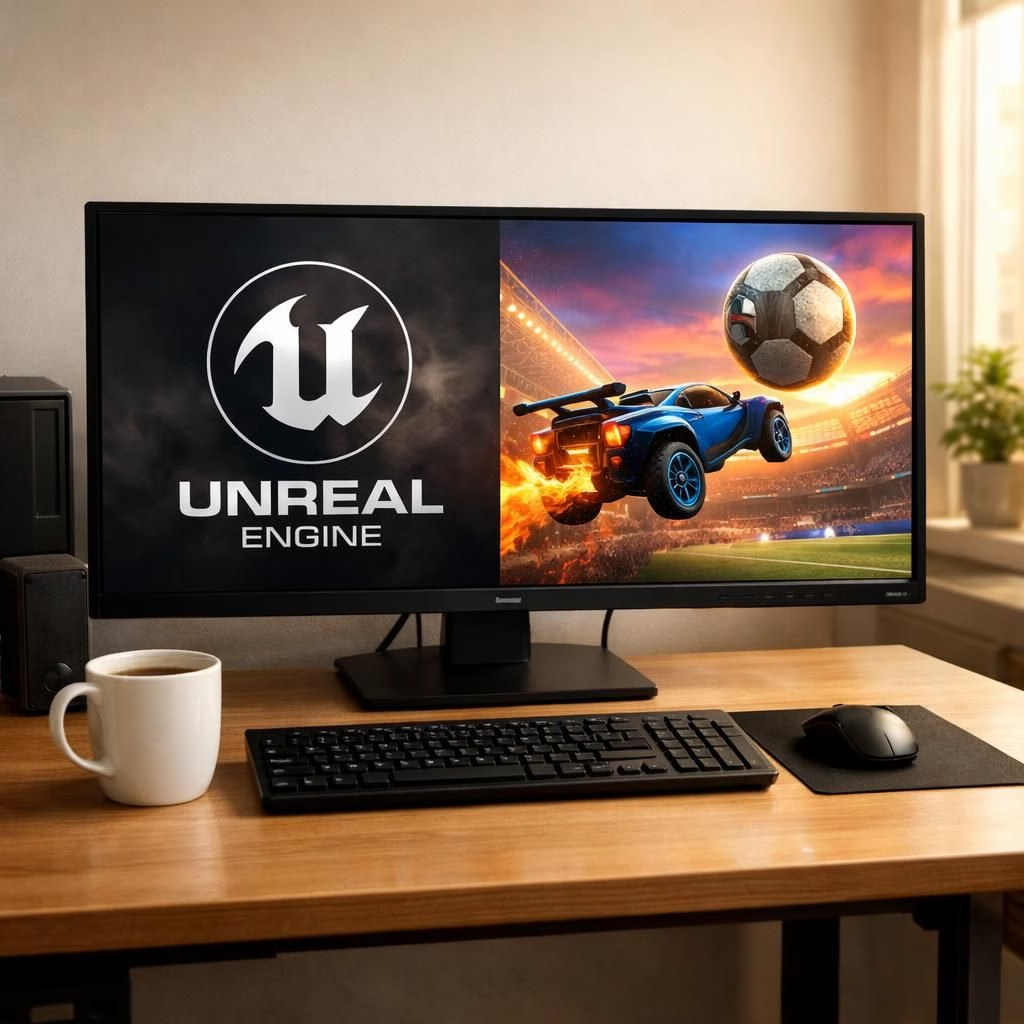
Unreal Engine 6 is stepping into the arena, and Rocket League fans will notice the glow. This upgrade promises a bigger playground for developers and players alike, with lifelike lighting, smarter physics, and polish. The net effect is a shift from GPU bragging to engineering discipline, where performance and beauty walk hand in hand.
Unreal Engine 6: What It Means for Developers
Developers chase faster iterations and clearer pipelines. Unreal Engine 6 delivers improved tooling, better scalability for crowded scenes, and more predictable real-time ray tracing. On the hardware side, the bar rises, but not as a scare story. It is a practical guideline that helps teams plan upgrades rather than panic purchases. In a word: progress. For developers, Rocket League-style titles push streaming and memory budgets.
Asset handling gets smarter. The engine ships with smarter shader caching, tighter memory management, and smarter streaming. This makes it easier to ship expansive cities and stadiums without heating up your PC.
Rocket League: The Hybrid Demands More Than You Expect
Rocket League serves as a living test bed for the new tech. The game requires fast, consistent frame pacing, even as it runs on cross-platform networks. Unreal Engine 6 should help reduce stutter, improve cross-device sync, and deliver more vibrant arenas. Yet the trade-offs are real: bigger downloads, longer builds, and stricter expectations for players with older hardware.
To prepare, players and developers can do a few practical things. For players: update drivers, enable performance mode, and don’t ignore storage. For developers: profile early, test on diverse hardware, and consider dynamic resolution to avoid bottlenecks.
Beyond hardware, the cultural shift sits with accessibility and inclusion. In 2026, teams must balance hype with real playable improvements. The hype around Unreal Engine 6 and Rocket League should not overshadow the craft: code quality, content pipelines, and the art of shipping updates that feel meaningful rather than cosmetic.
Short-term takeaways: expect shinier lighting, smarter physics, and a more modular toolchain. Long-term, the ecosystem will reward teams that lean into optimization and repeatable pipelines. And the sheer joy of flipping a Switch between options and still landing a perfect shot remains.
Original article: Gematsu — thank you for the original Unreal Engine 6 and Rocket League reveal article.
We’d love to hear your thoughts—share them in the comments below.
Practical steps for Unreal Engine 6 deployments
- For players: Update graphics drivers, enable performance mode where available, and ensure fast storage for large asset downloads.
- For developers: Start profiling early, test across a range of hardware, and consider dynamic resolution scaling to maintain smooth frame rates.
- For teams: Build modular asset pipelines to simplify future migrations and updates.
FAQ
- Will UE6 require new hardware for Rocket League players? It raises the bar, but many features scale. A mid-range system can still run the game with adjustments.
- Is Rocket League moving to UE6 right away? The transition is incremental. Tooling matures over time, and updates roll out gradually.
- How can I optimize performance on older PCs? Update drivers, enable performance mode, and lower resolution or quality settings as needed.
Conclusion
Unreal Engine 6 brings higher-capacity visuals and smarter systems. For Rocket League-driven projects, the focus should be on repeatable pipelines and meaningful updates rather than flashy effects alone. Stay tuned for official guidance from Epic and Rocket League developers as the ecosystem settles into this new era.
References
- Gematsu original source: https://www.gematsu.com/2026/05/unreal-engine-6-announced-with-rocket-league-reveal
- Official Unreal Engine blog: Unreal Engine blog
- Rocket League official site: Rocket League