

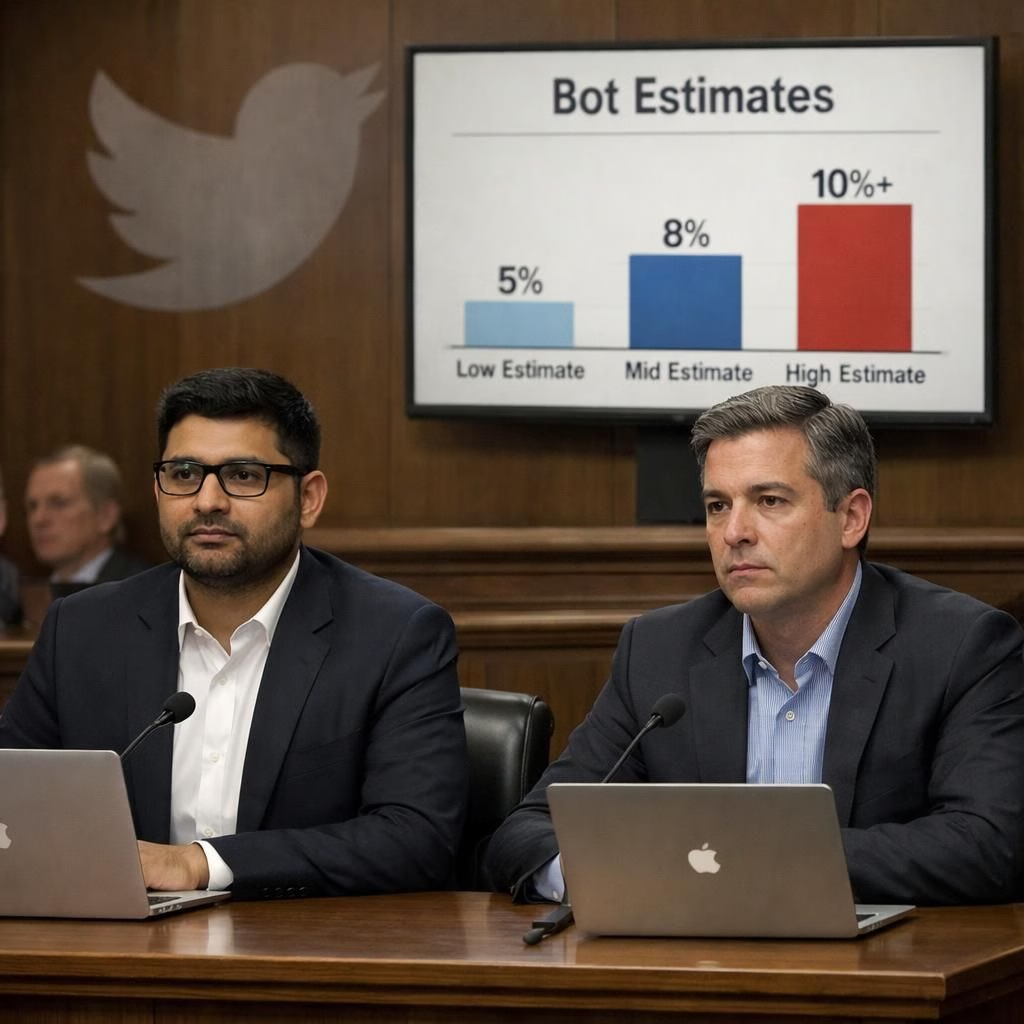
In a courtroom clash that tied the Twitter bot narrative to Elon Musk, Parag Agrawal and Ned Segal testified as investors sought to understand whether public statements about bots and user counts were used to influence the stock during the 2022 takeover. The investors’ suit argued that statements about bots and user numbers could steer the stock price, and the witnesses offered a grounded counterpoint to the drama. The scene illustrates how data ethics and corporate disclosures intersect with high-stakes mergers.
By 2026, this blend of law and tech metrics still shapes how executives discuss online identity and trust. The two former leaders offered measured, coach-like testimony, aiming to shed light without turning the courtroom into a theater of memes. They walked through timeline moments when Elon Musk pressed to pause the deal and when Twitter argued for momentum. The phrase Twitter bot remains a real, data-driven topic that anchors discussions about platform health, user quality, and merger risk.
Elon Musk‘s name keeps resurfacing because his bids, his tweets, and the public narrative are tied together, like a stubborn knot that economists, lawyers, and journalists try to untangle.
Twitter bot transparency and the numbers game
Agrawal and Segal pulled back the curtain on how Twitter estimates bot activity. They described a multi-step workflow: sampling, applying heuristics to detect automation, and calibrating a share of fake accounts against a baseline of human activity.
They stressed that the bot share estimate was less than 5 percent, a figure Elon Musk later challenged with his famous 20 percent claim. The witnesses also noted that the bot topic was just one among nearly twenty items discussed in the May 6 meeting after the deal was signed, and it did not dominate the agenda at the outset. The exchange underscored a fundamental point: numbers do not speak for themselves; context, assumptions, and timing do. The term Twitter bot shows up here as a keyword that anchors a broader discussion about data integrity, governance, and how a platform explains its user base to investors and the public.
Elon Musk and the courtroom clock
Bloomberg News reported that Agrawal and Segal offered limited recollection of the weeks leading up to Musk’s attempt to pause or withdraw from the acquisition. Musk told the jury he was stunned that the team could not provide more granular bot-count details at the first meeting on May 6 after signing the acquisition agreement. He likened the bot issue to inspecting a termite infestation during a house purchase, a metaphor that landed with the courtroom audience. Agrawal and Segal testified that bots were a factor in the conversation but not the sole focus of that initial session; only in a later follow-up meeting did bots rise to prominence, and Elon Musk did not attend that session. A few days later, Elon Musk publicly asserted the bot figure at about 20 percent. In response, Agrawal issued a public thread explaining the methodology, arguing that the actual bot share was well below that figure. The exchange grew into a cautionary tale about how fast facts can travel and how quickly interpretations can diverge, especially when the seller and buyer share headlines and shareholder expectations. The duo also addressed the severance dispute, noting that the matter had been resolved in a confidential settlement, a closure that left the technical questions about bot counts lingering in public discourse.
Twitter bot lessons for investors and readers
Several practical takeaways emerge from this testimony, relevant to investors, regulators, and everyday readers who track platform health. First, transparency matters: a clear, auditable methodology helps separate narrative from numbers. Second, context matters: the same bot metric can be read as a red flag or a reassurance depending on how it is framed and by whom. Third, timing matters: public statements during a volatile takeover can influence market behavior, even if the underlying data remains solid. The saga also shows that a top executive’s public persona can influence how audiences interpret corporate signals, and that the Twitter bot label—repeated enough in media and meetings—can become a shorthand with real consequences. For skeptics, the episode is a reminder to examine the source of a statistic, the method used to derive it, and the freedom of the press to question both. For fans of the numbers, it offers a useful case study in measurement, governance, and the art of explaining complex metrics without oversimplifying them. The bottom line: bot counts matter, but they do not tell the entire story of a platform’s health or a company’s strategy in a rapidly changing environment like 2026.
Twitter bot governance: a quick guide
- Ask for an auditable methodology and a documented data lineage.
- Look for how context and assumptions are disclosed alongside the numbers.
- Note the timing of public statements during mergers and market moves.
Finally, the courtroom narrative around Twitter bot counts and Elon Musk is a reminder that big tech runs on a blend of data, diplomacy, and drama. As the timeline unfolds, readers can apply these lessons to other public controversies: demand credible methodology, watch how numbers are framed, and remember that transparency supports trust. If you enjoy this data-driven storytelling, share your thoughts in the comments. Special thanks to Bloomberg News for the original reporting on this case; you can explore their coverage for a deeper dive.
References
Original source: Times of India