

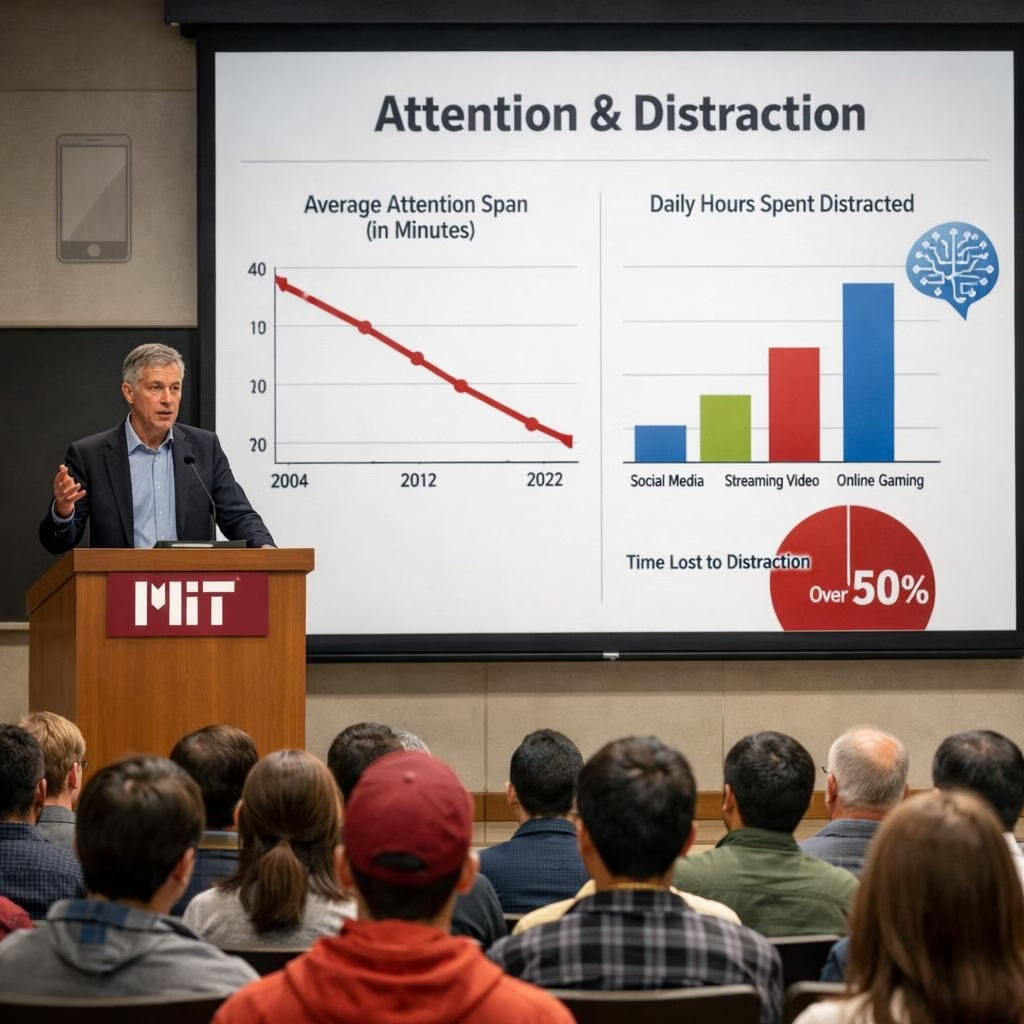
tech-literacy and digital-democracy are not buzzwords; they anchor MIT’s reflection on modern tech. At the center stands Jonathan Haidt, who frames smartphones, social media, and AI as forces shaping attention, cognition, and our democratic norms. MIT News notes that images linked to this coverage are licensed under Creative Commons Attribution Non-Commercial No Derivatives, so you may crop for size and credit the source without altering the original art.
tech-literacy Up Close: The 2026 Compton Lecture and digital-democracy Realities
Haidt lays out a forceful look at how screen time and algorithmic feeds shape our thinking. He notes declines in attention, cognitive stamina, and educational progress that align with the smartphone era, and he emphasizes that the problem is not devices alone but the habits around them. The takeaway is that tech-literacy and digital-democracy can be engines for better learning if we redesign how we teach and how students engage with information.
Practical Paths for tech-literacy to Strengthen digital-democracy
The lecture outlines four reforms designed to curb harms while preserving technology’s benefits. The steps are simple, not extreme: no smartphones for kids before high-school, no social media before 16, schools should be phone-free from bell to bell, and greater independence and responsibility for kids. These measures aim to strengthen tech-literacy and digital-democracy by teaching students to navigate a media-saturated world with discernment and resilience.
- No smartphones for kids before high-school age.
- No social media before age 16.
- Schools should be phone-free from bell to bell.
- Give kids more independence, free play, and responsibility in the world.
Related coverage includes AI storage valuation risks and Beyond Good & Evil 2 Creative Director, offering lessons for tech policy and leadership in complex organizations.
Technology as Ally, Not Adversary: tech-literacy and AI in Balance
Haidt loves technology—modern devices, the internet, and the capabilities they unlock. The moment when a phone rings in the room is a reminder that tech is everywhere, even in a serious talk. The core message is that digital-democracy and tech-literacy should guide how we use AI and social platforms so they support long-form thinking and constructive dialogue rather than eroding attention or judgment.
Holding On to tech-literacy and digital-democracy: Human Agency in 2026
The big takeaway is agency. A robust techlash does not have to end in despair; we can design schools, workplaces, and public forums that support deep work and meaningful engagement. When we equip learners with better attention, critical thinking, and collaborative habits, tech-literacy and digital-democracy become shared responsibilities that improve outcomes for individuals and society.
Original article attribution: A heartfelt thanks to MIT News for the original coverage of Jonathan Haidt’s Compton Lecture. Original article: MIT News coverage. We appreciate the thoughtful reporting that makes this conversation possible and accessible to a broad audience.
We invite readers to share their thoughts in the comments below to help continue the conversation about tech-literacy and digital-democracy in 2026.