

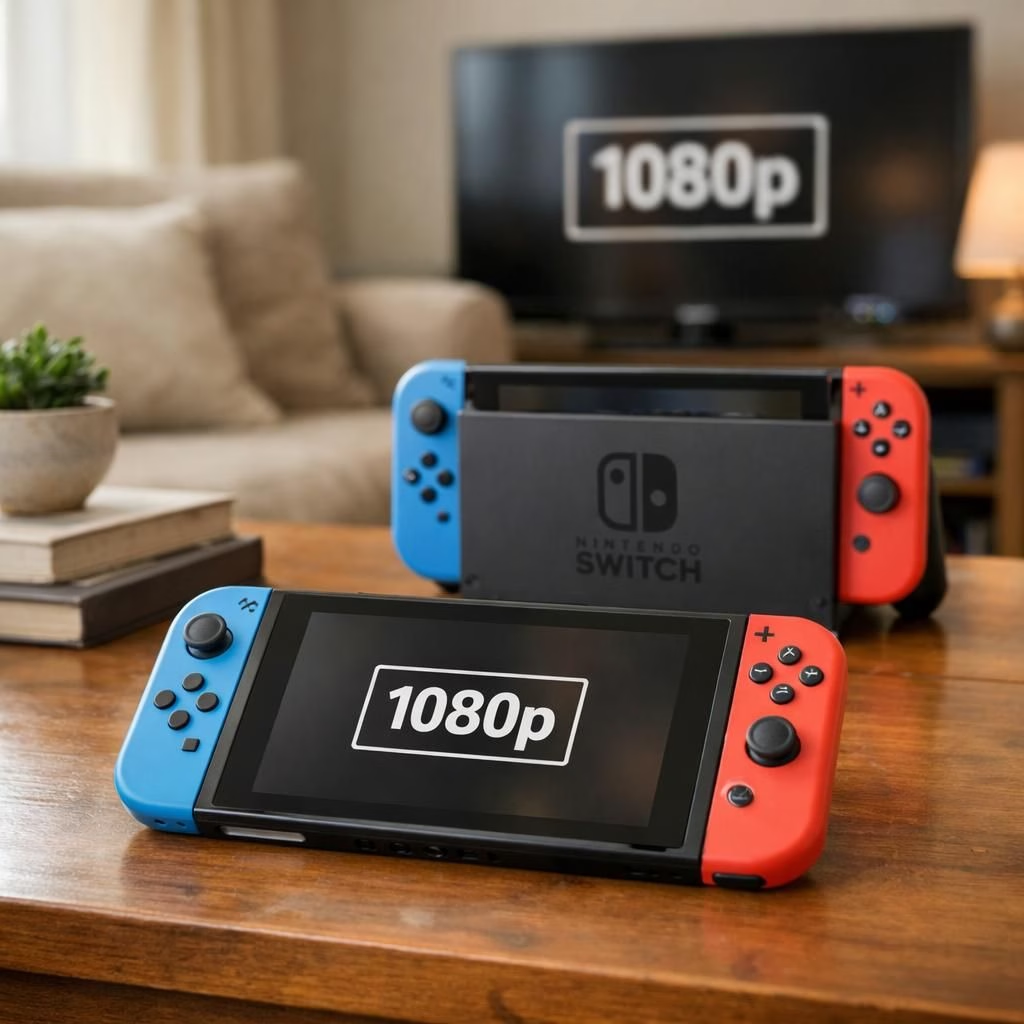
Great news for retro fans and pixel lovers: the Switch 2 compatibility update arrives with a quiet hum and a big grin. Nintendo has expanded backwards compatibility by enabling a new batch of Switch 1 games to run on Switch 2 with fewer hiccups. The practical upshot is simple: a larger playable library, less rummaging through old boxes, and fewer regrets about letting cartridges collect dust. The phrase Switch 2 compatibility keeps popping up because it delivers the smoother bridge players want, and the Handheld Mode Boost is not just a buzzword; it is a real feature that aims to make long handheld sessions feel less like a scavenger hunt for the few titles that still scale nicely.
Switch 2 compatibility gains ground
The update pack includes a careful calibration that respects older titles. Some Switch 1 games now launch with fewer frame drops, better load times, and a smoother handshake with Switch 2 hardware. The architecture stays the same, but the patch nudges it into a more forgiving envelope. There are a few edge cases where control schemes or saves don’t map perfectly, but the overall library is much more usable.
Handheld Mode Boost expands 1080p on the go
Handheld Mode Boost is the star of the update for many players. In practice, original Switch games can render at up to 1080p while in handheld mode. Not every title hits 1080p; some run at 720p and upscale, while others use dynamic scaling to maintain performance. The result is crisper visuals on a smaller screen without always plugging into a TV. If you own a large library of Switch 1 titles, you will notice this benefit especially in action titles and platformers that rely on edge detail.
What this means for players, collectors, and developers
For players, the upgrade lowers the barrier to replaying old favorites. You can squeeze more value from what you already own without buying new hardware. For collectors, the update adds reassurance that a larger portion of the catalog will remain playable on the newer hardware. For developers, the update signals a clearer path: compatibility can be a feature, not a drain on performance. The overall effect is a healthier ecosystem that bridges generations rather than forcing a hard reset.
Tips to maximize compatibility and enjoyment
Start by updating both your Switch 2 and any games that have patches; check settings to ensure you are in Handheld Mode Boost if supported. If your experience stalls, try cycling between handheld and docked modes and verify that the game supports 1080p in Handheld Mode Boost. A few quick steps: back up save data, verify firmware version, and keep an eye on patch notes. People should not expect a flawless experience across all titles; but the majority of favorites will run better, with fewer hiccups. Switch 2 compatibility improvements are not a magic wand, but they push the library forward.
In short, the 2026 update embraces a pragmatic approach: keep classic games alive, welcome new hardware without overpromising, and give players clear paths to enjoy their collections. The two-pronged push—Switch 2 compatibility and Handheld Mode Boost—lets you mix nostalgia with modern convenience, a little lighter on the wallet and heavy on the joy. If you enjoy the synergy between retro and modern, this update is a good reason to fire up your Switch and explore what your library can do now.
Share your thoughts in the comments below and tell us which Switch 1 titles you are excited to revisit with Switch 2 compatibility and Handheld Mode Boost.
Linkback attribution: Special thanks to Nintendo Everything for the original reporting on this topic: https://nintendoeverything.com/.
References
- Nintendo Everything — original reporting on this topic.
- Eurogamer — coverage of Switch 2 updates.
- Game Informer — update notes and hands-on coverage.
- Ars Technica — technical insight into handheld performance.