

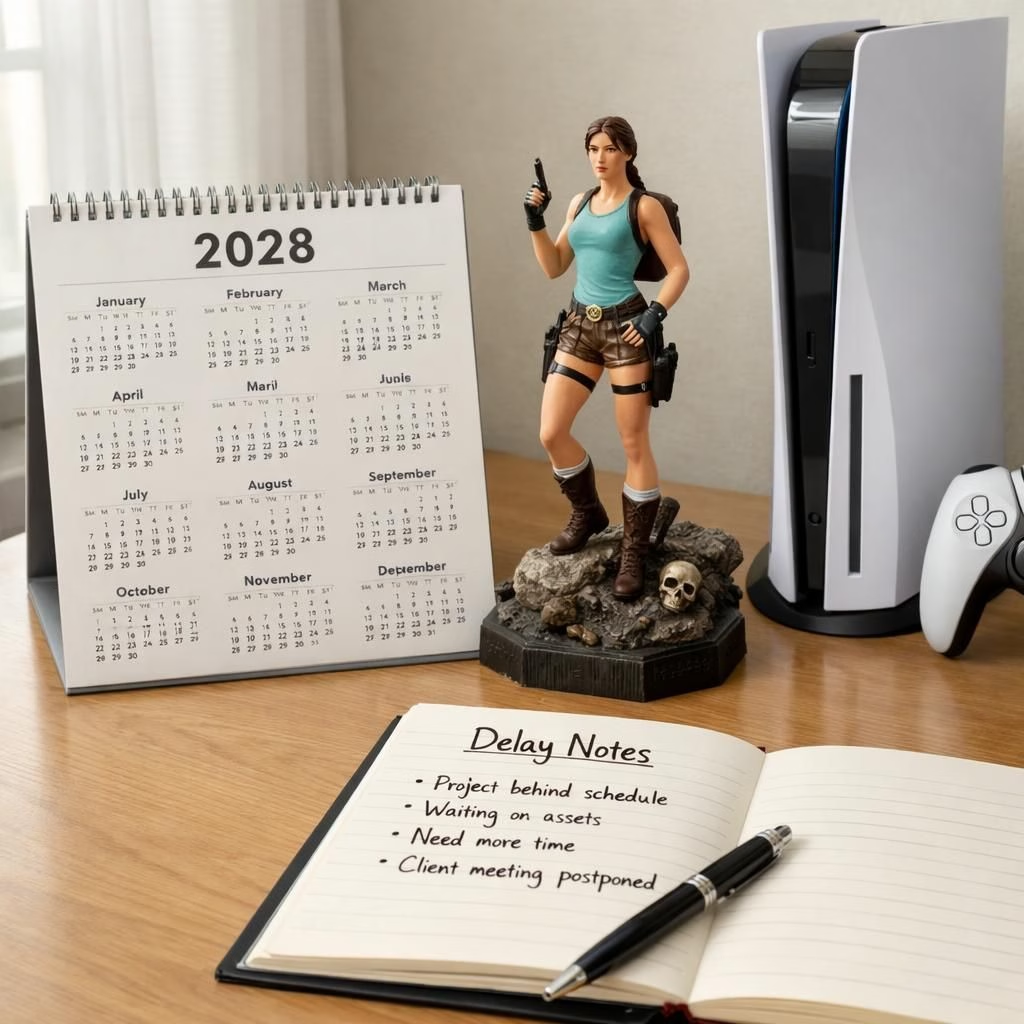
Fans of Tomb Raider and followers of Amazon Games woke to the news that the Catalyst project moves to 2028, with Amazon Games at the helm. The update lands like a precise triangle jump: sudden, undeniable, and a touch inconvenient for anyone counting on a launch. In practical terms, Lara Croft and her squad will have to wait longer to swing through ruins, solve puzzles, and deliver those signature gunfights that fans secretly adore. The chatter spread quickly across outlets like Eurogamer, Kotaku, IGN, Tomb Raider Chronicles, and Wccftech, each echoing the same shift and nudging the community to recalibrate expectations. If you were lining up a preorder, you probably set a reminder for 2028 instead of 2027, and that kind of timeline adjustment quietly reshapes fan calendars.
To frame the core players: Tomb Raider remains the star of the show, a franchise with a loyal audience, and Amazon Games is the publisher steering the ship. The catalyst behind the delay isn’t mere calendar sorcery; it’s a blend of scope refinement, polish requirements, and a practical choice to align with broader market strategy. In 2026, the industry keeps learning that a longer development cycle can sometimes produce a more cohesive, fewer-bug launch experience than a rushed, on-paper-perfect date. For Tomb Raider and Amazon Games, the 2028 target isn’t a fluke—it’s a deliberate, data-informed decision that buys time for more thorough testing, more robust content, and, crucially, a calmer marketing race.
Tomb Raider Momentum: Catalyst Delay and the 2028 Window
The Tomb Raider crowd is accustomed to surprises, but a strategic pause still lands with impact. When Catalyst slides to 2028, the reaction blends patience, curiosity, and a rethinking of expectations for a modern Lara Croft adventure. The brand has learned to weather delays by leaning into storytelling depth, technical polish, and a more transparent dialogue with the community. In this case, the delay means more time to refine level design, ensure the combat feels responsive, and optimize performance across generations of hardware. For supporters of Tomb Raider, the 2028 horizon shifts from a missed date to a deliberate promise of a richer, more thoughtful continuation of Lara Croft’s journey. The longer window invites creative experimentation—could there be a fresh take on exploration, puzzle design, or pacing that a longer timeline makes more feasible? The conversation around the series now centers on quality and confidence as much as patience.
From a broader lens, the delay is a reminder that ambitious projects can benefit from additional polish. It signals a commitment to delivering a cohesive experience that stands up to modern performance standards and player expectations. For fans, this isn’t merely a change in calendar; it’s an invitation to engage with a more deliberate, well-considered iteration of the franchise. The 2028 horizon also opens space for new narrative threads and design experiments that might not have fit into a tighter schedule.
Amazon Games Strategy in 2026 and Beyond
Amazon Games plays a critical role in shaping how this delay translates into market reality. The company’s 2026 playbook leans toward deliberate release planning, broader cross‑platform reach, and a careful balance between big-budget spectacle and sustainable development costs. When Amazon Games delays Catalyst to 2028, the strategic narrative shifts toward a cautious, artistically minded approach. It signals that the publisher values a polished product over a rushed launch window. For gamers, this can mean steadier updates, stronger post‑launch support, and a clearer post‑release roadmap. The 2026 and beyond strategy appears to favor long‑term fandom health over short‑term hype, which is welcome news for players who want a Tomb Raider experience that feels complete and well‑supported in 2028 and beyond. The conversation also invites comparisons with other studios navigating similar production realities, timelines, and resource allocation in an industry where ambitious action, exploration, and storytelling collide.
In practical terms, the approach suggests more frequent check‑ins with fans via developer diaries, playable previews, and transparent milestones. It also implies careful budgeting for post‑launch content, bug fixes, and accessibility options. For readers who follow the industry closely, the stance from Amazon Games underscores a longer planning horizon—one that prioritizes trust and reliability alongside dramatic moments of spectacle.
Tomb Raider Catalyst: What Fans Should Watch For
For fans of Tomb Raider, the shift to 2028 isn’t only about a date. It offers a window to see Lara Croft explore a world that feels cohesive, polished, and thoughtfully paced. The longer development window can translate into more intricate level design, refined combat mechanics, and more meaningful storytelling beats. It also means a more stable launch pipeline for content creators, streamers, and cosplayers who build careers around the franchise’s rhythm. For every Tomb Raider enthusiast, the 2028 plan invites patience, but it also invites a more generous, quality‑forward approach to how the game is introduced to the world. More time often means more possibilities, and that is worth watching closely from a fan’s perspective.
Beyond the mechanics, expect improved accessibility options, better performance across platforms, and a broader post‑launch plan that keeps the experience fresh longer. If developers use this extra time well, fans could see organized demonstrations of new features, expanded puzzle design, and a richer atmosphere that heightens immersion. In short, the delay may become a catalyst for a stronger, more memorable Lara Croft journey.
What This Means for the Community: Practical Takeaways
Delays like this ripple through the gaming community in practical ways. Preorders shift, expectations recalibrate, and events such as demos, live streams, or cross‑promotions get rescheduled. For Tomb Raider fans, the most meaningful effect is the chance to engage with the eventual Catalyst release with a fresh sense of anticipation rather than rushed excitement. For Amazon Games, the delay provides room to refine launch readiness, align marketing with the actual shipped product, and set a confident trajectory for post‑launch support. In short, the 2028 window becomes an opportunity to deliver not just a game, but a well‑supported experience that honors both the Tomb Raider legacy and publishing standards. When measured in years rather than days, the payoff can feel substantial.
- Preorders and pre-launch campaigns will likely shift to a late 2027–early 2028 window, reducing last‑minute risk for both players and publishers.
- Expect ongoing developer updates and milestones that emphasize polish, accessibility, and performance fixes before launch.
- Content creators may space previews to align with a more thorough presentation of gameplay systems and narrative beats.
- Post‑launch support is framed as a core pillar, not an afterthought, with clear pipelines for patches and expansions.
In practice, this delay is a chance to deliver not just a game, but a well‑orchestrated experience that respects the franchise’s legacy while embracing modern expectations for quality and support. For players, that means a 2028 Catalyst could feel like a more complete, durable addition to the Tomb Raider canon. For the publisher, it signals confidence in a long‑term relationship with the community rather than a single big splash.
Broader Industry Perspective
In the wider industry conversation, delays like this remind readers that great games often require patience, discipline, and a willingness to push back when needed. It’s not a sign of stagnation; it’s a signal of ambition. For the Tomb Raider franchise and its publishing partner, 2028 represents a commitment to quality, a promise to honor timelines that matter to players, and a dedication to a richer, more satisfying experience over time. When projects take longer to mature, the payoff can be a more memorable, polished, and immersive adventure that remains relevant years after release.
Readers are invited to share their perspectives. Do you prefer a longer wait with more previews and a stronger final product, or would you rather see earlier glimpses and faster turnover? Your thoughts help shape the ongoing conversation around how big franchises balance ambition with execution.
Credits and thanks go to the original reporting that sparked this discussion. Original outlets and authors include Eurogamer, Kotaku, IGN, Tomb Raider Chronicles, and Wccftech. A heartfelt thank you for keeping the conversation alive and for providing the initial context that made this analysis possible.
Original reporting and appreciation: Eurogamer, Kotaku, IGN, Tomb Raider Chronicles, Wccftech.