

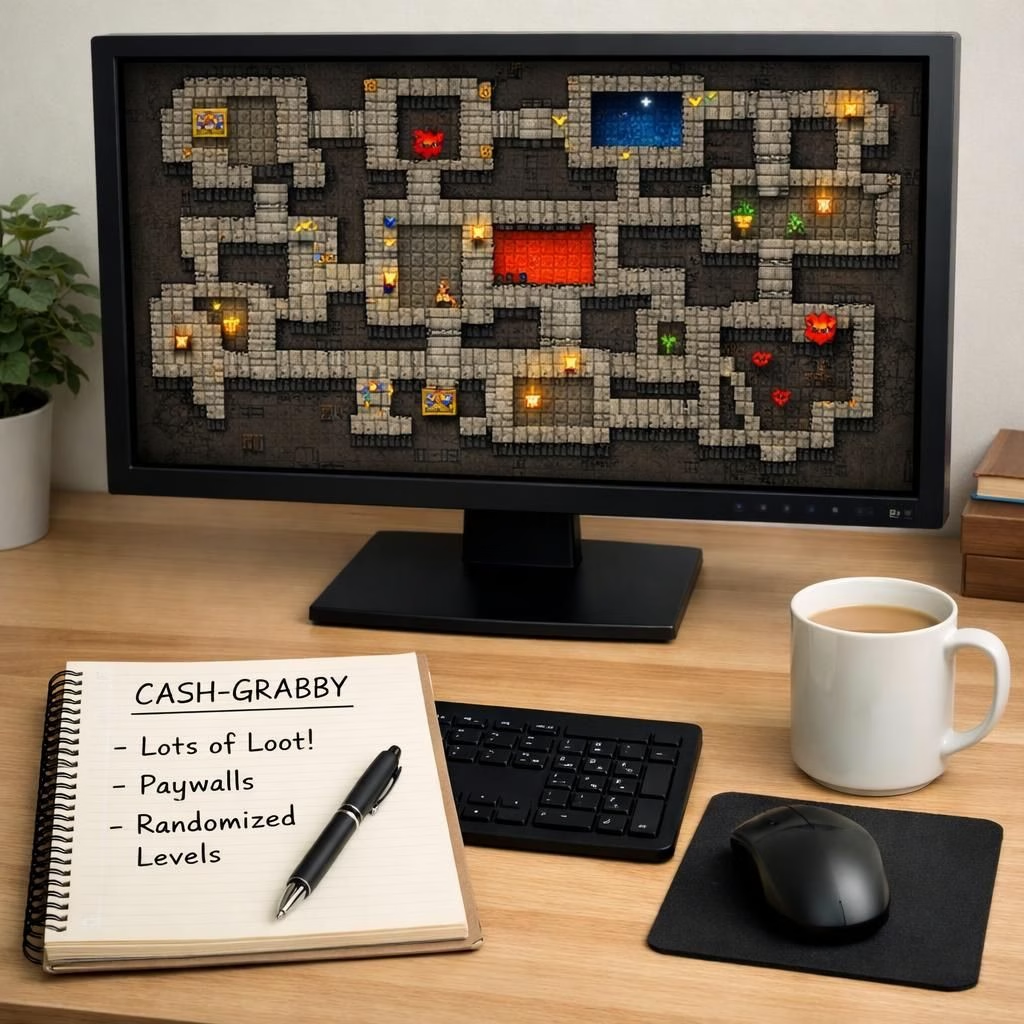
Welcome to a breezy, slightly satirical look at roguelikes and the cash-grabby conversation that won’t die, even in 2026. When the Enter The Gungeon creators spoke up, they didn’t call for a purge of loot boxes. They raised a practical question about how far a studio should push monetization while keeping the core loop alive. The core loop is king in roguelikes: you die, you reroll, you learn, you adapt. That loop should feel fair and fresh, not stitched together with paywalls or drip campaigns. The main point in their reflection was not doom, but discipline. A genre built on procedural generation and permadeath can still evolve without turning into a cash machine. The humor here helps because it keeps players honest about their time and wallets. In other words, we can enjoy the surge of new mechanics while guarding against a cash-grabby vibe that hurts new players.
roguelikes in 2026: Why the cash-grabby label sticks
Roguelikes in 2026 have transformed from compact prototypes into living worlds. The label cash-grabby sticks because some studios mix cosmetic drops and seasonal passes with core game loops, creating the sense that progress depends on purchase power rather than skill. The debate isn’t a sermon against cosmetics; it is a plea for balance. Cosmetic skins, non-essential boosters, and seasonal events can coexist with fair pricing if they respect the player’s time. When a game promises endless replayability but ships with sunk costs in the early hours, players notice. The best examples demonstrate that a steady cadence of free updates, thoughtful quality-of-life fixes, and optional paid add-ons can coexist with a strong roguelikes identity. The result is a healthier ecosystem where new players feel welcome and long-time fans feel valued. The goal for developers is to fund creative experimentation without turning every run into a potential checkout line. The phrase cash-grabby might be pejorative, but it also pinpoints a real tension between monetization strategy and player trust.
Balancing roguelikes design with a cash-grabby reality
Balancing roguelikes design with a cash-grabby reality means choosing what to offer and when to offer it. The core game must sing first; monetization should support ideas, not drown them. A good roguelikes title keeps permadeath meaningful while offering cosmetic skins or optional helper modes as optional extras. Developers who proceed with care can reward players for time spent, not money spent. Season passes can feel fair if they grant cosmetic items, early access to experiments, and predictable cadence rather than random unlocks. The best studios treat time as a resource and reward creativity with transparent pricing. Players respond to honesty: clear value, steady updates, and a sense that the team is listening. The result is a culture where the roguelikes catalog grows richer, not just bigger. In practice, this means prioritizing bugs, balance, and new run formats over endless monetization hooks. It also means embracing community feedback, not ignoring it, and building tools that let players measure their own progress.
Enter The Gungeon’s crew remind us that the genre started with clever design, not clever price tags. The roguelikes DNA includes relics like procedural level generation, diverse item pools, and meaningful risk versus reward. When studios lean into predictable monetization, the variety in item synergies and run-lengths can feel hollow. The cure is to ship content that adds meaningful choice: new boss fights that alter how you play, new run modifiers that encourage experimentation, and accessibility options that widen the audience. The cash-grabby accusation becomes a catalyst for better craft rather than a defeatist meme. In 2026, small teams can still push big ideas without selling out early. The trick is to frame paid content as expansions that extend the core roguelikes loop rather than as gatekeeping fences around the game world.
Players do not hate money; they hate surprises that feel engineered to squeeze coins. When a roguelikes game respects their time by ensuring that each run teaches a new lesson, the money choices feel like fair trade. The community thrives on thoughtful mods, fan art, and shared strategies that don’t require a credit card. A healthy market rewards designers who ship with intention: varied, replayable experiences that fit within a transparent model. If developers keep the core roguelikes loop intact and use monetization to fuel experiments rather than to fence off content, the genre will stay vibrant. The line between innovation and intrusion is fine, but clear communication makes it easy to walk it together.
We all want games that feel honest. The goal is to preserve the thrill of a fresh run while respecting someone’s budget. The conversation about cash-grabby tactics is not a death sentence for the genre; it is a call to craft, price, and promise with care. If you are a player who loves tinkering with item synergies, or a designer who dreams up new run modifiers, you have a seat at this discussion. The future of roguelikes looks bright when developers treat the loop as a living engine rather than a cash register.
Share your thoughts in the comments. What experiences have you had with roguelikes that felt fair and fun, and where did monetization cross a line for you?
Original article via Google News, special thanks to Kotaku for the original reporting. For the full context, you can revisit the piece via the linked source. Thank you to Kotaku for the original coverage and insights that sparked this reflection.
Practical paths forward for roguelikes
- Clarify the core loop: death, reroll, learn, adapt, with permadeath as a feature, not a gate.
- Offer cosmetic options and optional helpers as add-ons, not prerequisites for progress.
- Use season passes to unlock variety without draining early play-time.
- Prioritize bug fixes, balance, and new run modifiers to keep discovery fresh.
FAQ
- What exactly is a roguelike? A game that emphasizes procedural generation, permadeath, and meaningful risk-versus-reward decisions, encouraging repeat plays.
- How can monetization be fair in roguelikes? By respecting time, offering optional content, and providing transparent pricing with regular free updates.
- What should players look for when evaluating a roguelike’s monetization? Check whether primary progression relies on skill and learning, not on purchases, and whether paid extras genuinely expand choices without closing off content.