

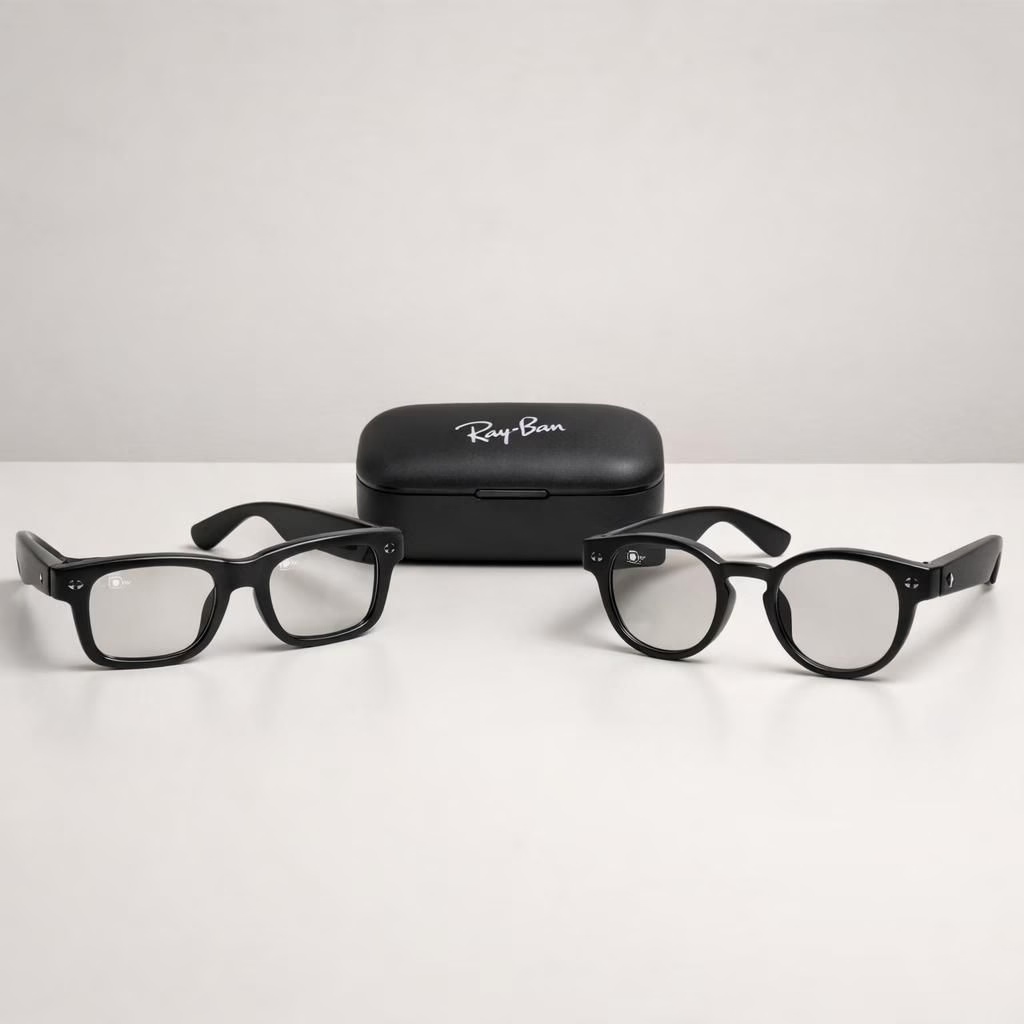
In 2026, Ray-Ban Meta evolves as a platform for smart, AI-powered eyewear designed for users who wear prescription glasses. The goal is to offer accessible, everyday tech that fits real life. The two models, Scriber and Blazer, signal a pragmatic pivot rather than a flagship AR upgrade.
Ray-Ban Meta: design choices for AI eyewear
Developed with EssilorLuxottica, the devices reportedly come in rectangular and rounded frames. The emphasis is on comfort, field of view, and the option to pair with current prescription lenses. In other words, style meets practical vision correction, not a sci‑fi tease.
While Meta markets this as a step toward a mainstream AI interface, not a headset-first leap, the aim is to make the glasses a daily companion. A built-in charging case and seamless phone connectivity are classic moves that keep the focus on usable tech, not just flashy specs.
Prescription glasses go mainstream: what this means for wearables
The FCC filing hints at a measured rollout rather than a dramatic AR reveal. It sits alongside existing Ray-Ban Frames lineage and the broader Meta glasses portfolio, suggesting expansion into everyday vision needs.
The partnership with EssilorLuxottica stays central, reinforcing the idea that prescription glasses will be a big part of the AI glasses future.
Publicly, the market has shown healthy appetite for wearable eyewear. Analysts point to steady sales momentum, with millions of units finding homes in households that value convenience and connected devices. Yet the chatter around privacy remains loud. Critics warn that hands-free AI glasses could nudge society toward more ubiquitous surveillance, even as other tech players chase similar ideas.
Meta has faced litigation and regulatory inquiries about user privacy and data handling. The company reiterates its standard stance: media captured with their AI glasses stays on the user’s device unless shared by choice. When data is shared with Meta AI, contractors may review it to improve the product experience, with safeguards to limit identifying information. It’s the classic balance: useful AI and privacy safeguards, sometimes at odds with the speed of innovation.
In the unfolding narrative, the headlines include whispers of a potential Ray-Ban Meta Blazer Large variant. If that exists, it would simply be a larger size option for Blazer, not a radical design departure. The underlying tech—Bluetooth, Wi‑Fi, phone sync, and a charging case—remains the staple that keeps the glasses usable in real life, not just in a lab demo.
Ray-Ban Meta and prescription glasses in 2026: privacy and practicality
Ultimately, the plan seems built on a simple premise: AI should help, not complicate, everyday vision. The pairing of Ray-Ban Meta with prescription glasses gives millions a reason to consider AI eyewear as a normal, accepted tool. The story is less about a single product launch and more about a shift in how we think about glasses as a computing interface.
What happens next is both practical and playful. Will the privacy debates slow momentum, or will stronger controls and clearer disclosures win trust? The market will test that answer as more prescription-ready glasses hit shelves in 2026.
Original article: The Verge. Thank you to The Verge for the original reporting. The Verge.
External notes: The Verge coverage of the filing; FCC filings related to smart glasses; Bloomberg coverage of AR eyewear plans.
Practical adoption steps for Ray-Ban Meta
- Confirm lens compatibility with your optician before purchase.
- Pair with your phone to enable notifications, calls, and on-device processing.
- Review privacy controls to decide what data can be shared with Meta AI.
- Use the glasses for daily tasks like reading, navigation, and video calls to gauge comfort.
Frequently asked questions (FAQ)
- Are Ray-Ban Meta glasses truly prescription-ready? Yes. Meta works with EssilorLuxottica to support prescription lenses in models designed for everyday wear.
- Will there be different sizes? A Blazer Large variant is mentioned as a possible option; other frames are expected to follow.
- What about privacy? Meta says media stays on-device unless shared, and contractors review data to improve the experience with safeguards.
Conclusion: a practical shift in how we wear computing
As eyewear becomes a common computing interface, prescription-focused Ray-Ban Meta glasses could broaden adoption. The key is balancing usable AI with clear privacy protections and real-world comfort.