

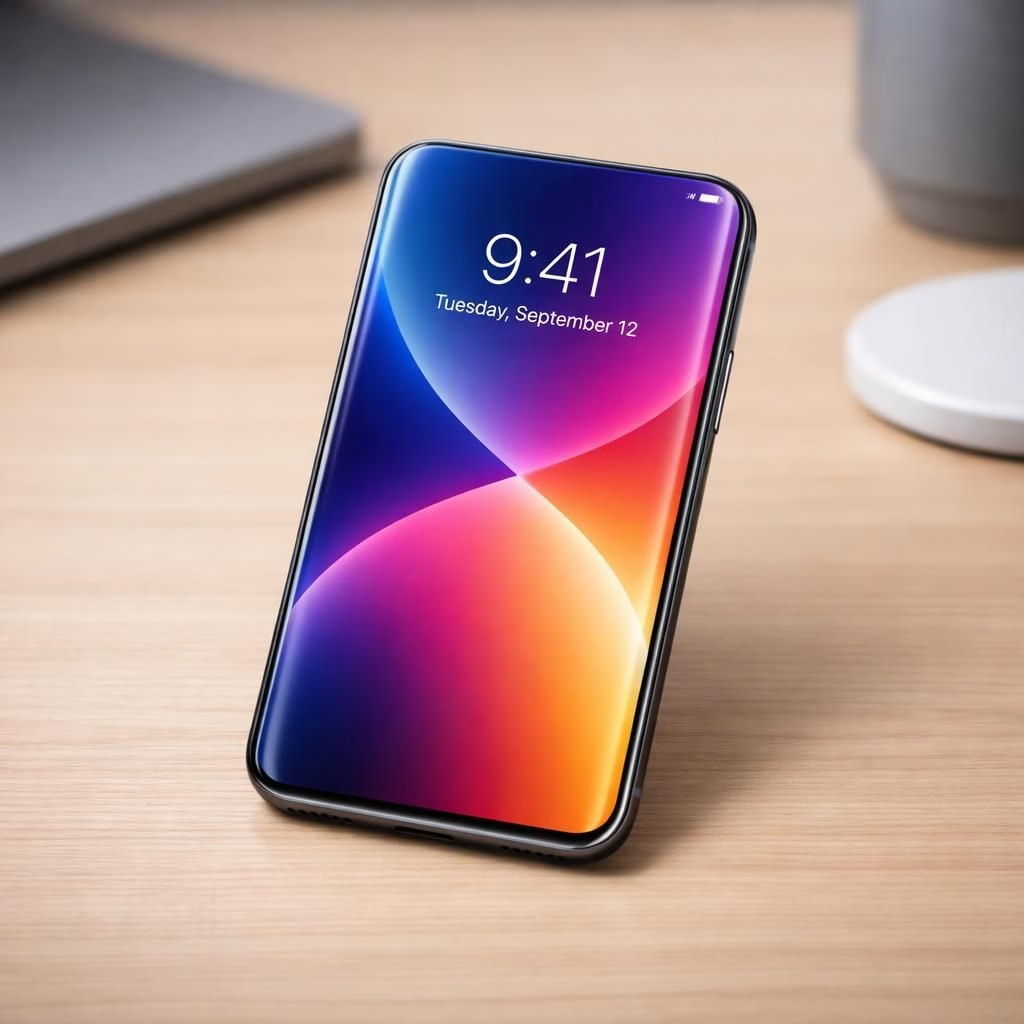
quad-curved display is not just a buzzword—it’s the headline in the latest iPhone chatter. A leaker from Digital Chat Station on Weibo claims Apple is testing an [Tag B](https://www.geekyopinions.com/tag/iPhone-19-Pro) with a quad-curved display around all four edges. The notion of hiding Face ID under the panel while keeping a camera hole-punch remains a high-wire act—ambitious, but not guaranteed to land without sacrificing camera quality. If the rumor is even half-true, we might be looking at a device that makes the current borders feel a little shy.
quad-curved display and iPhone 19 Pro: design dreams and real constraints
Beyond headlines, the core question is how many models Apple would offer with such an extreme design. The original chatter hints at parallel paths: a quad-curved display on the 20th-anniversary iPhone could serve as the flagship showpiece, while the iPhone 19 Pro might balance curvature with visible cameras in some form. The aim is a cleaner screen, a deeper immersion, and engineering that makes the screen behave in daily life. The quad-curved display keeps returning as a premium badge of future design, and fans imagine a device that looks sculptural rather than flat glass.
iPhone 19 Pro vs quad-curved display: chasing a notch-free future
On the ground, the mechanical problem is stubborn. The front-facing camera and Face ID sensors live in front of the display today because the way light meets sensors matters. Plastering them under glass would require new materials, firmware, and a precision alignment that makes the current stainless-steel frame look like a warm-up act. Digital Chat Station’s claim signals Apple is exploring every possible path toward an uninterrupted screen, but timing matters. If suppliers can’t deliver a panel that hides the camera without compromising image quality or facial recognition, Apple could decide that the 20th-anniversary edition gets the quad-curved treatment, while the [Tag B](https://www.geekyopinions.com/tag/iPhone-19-Pro) models keep a more traditional front. In other words, the 20th-anniversary device might be the showpiece, while the Pro lineup offers a practical balance between design and performance.
The tech community loves the idea of a holeless front—and the marketing teams love the narrative even more. A panel that blends into the glass is as close as you can get to a “disappearing” bezel without magic. However, the practical realities of camera fidelity, ambient light compensation, and infrared Face ID mapping pose real constraints. If a perfect hide is unattainable without tradeoffs, Apple could reserve the quad-curved design for the commemorative model and give the regular Pro models a more traditional front face. The outcome would still be a leap in aesthetics, even if not every pro user gets the full, uninterrupted front panel.
Digital Chat Station is an influential voice—one with a large following on Weibo and a track record that includes accurate takes on the iPhone Air and iPhone 17 Pro. The credibility may differ by rumor, but the pattern is clear: Apple tests bold ideas in small, reversible steps, then chooses a path that makes sense in production realities. The 20th-anniversary device remains the battleground for the first complete showcase of the quad-curved idea, while the rest of the lineup negotiates a balance between display aesthetics and camera performance. It’s a bit of theater, but there’s real engineering behind every decision, and the stakes—battery life, image quality, and security—matter more than the marketing slickness of a notch-free dream.
In addition to the display debate, observers are watching for how Apple would frame the anniversary device from a pricing and feature perspective. If the brand signals that the quad-curved screen is a premium upgrade, it could justify a price premium that separates the commemorative handset from the Pro line. Meanwhile, the base iPhone version would need to survive the rumor mill without becoming a second-class citizen in the factory line’s eyes. The idea of differentiating models through hardware design, while preserving core performance, isn’t new, but the scale of a quad-curved front makes it feel like a more dramatic pivot. Whether Apple will risk the leap or gently graze the idea remains to be seen, but the conversation itself is valuable for consumers who want to understand how design and engineering interact in a living product roadmap.
For readers who want a quick takeaway, here are the main points: the quad-curved display remains a provocative idea; the iPhone 19 Pro could be among the first to test it; the 20th-anniversary device might be the vehicle for a world where selfies and Face ID hide behind glass; and the final decision will hinge on real-world performance, not just aspirational renders. The key — and this is a critical insight — is that Apple tends to test bold concepts in controlled steps, validating technical feasibility, supply chain readiness, and consumer demand before committing to a full-scale rollout. So while the rumors create excitement, they also underscore how product development in 2026 remains a careful dance between imagination and engineering.
Original reporting note: Thank you to Digital Chat Station for sharing the initial leak details on Weibo; this attribution helps readers understand the source and historical context of the chatter. For a direct reference, you can explore the original posts here: Digital Chat Station on Weibo.
What do you think about the possibility of a quad-curved display on the iPhone 19 Pro? Do you want a notch-free front, even if it means risking camera performance? [Tag B]
Share your thoughts in the comments below to continue the conversation and help us gauge what this design could mean for daily use, photography, and app design.
quad-curved display FAQ
- Q: Is a quad-curved display confirmed for the iPhone 19 Pro?
A: No official confirmation yet. The rumor mill points to exploration, with official decisions to come after testing and validation. - Q: Could the commemorative iPhone become the only model with the quad-curved front?
A: It’s possible if engineering hurdles prove too costly or risky for the broader lineup. - Q: How would a notch-free design affect camera quality?
A: Trade-offs could include sensor performance, autofocus behavior, and lighting handling; notches or punch-holes might persist in some models to preserve reliability.
Conclusion: Apple tends to test bold ideas in controlled steps, weighing feasibility, supply constraints, and market appetite. The quad-curved display may remain a compelling design concept until concrete testing proves otherwise. Watch for official statements or production updates as 2027 approaches.