

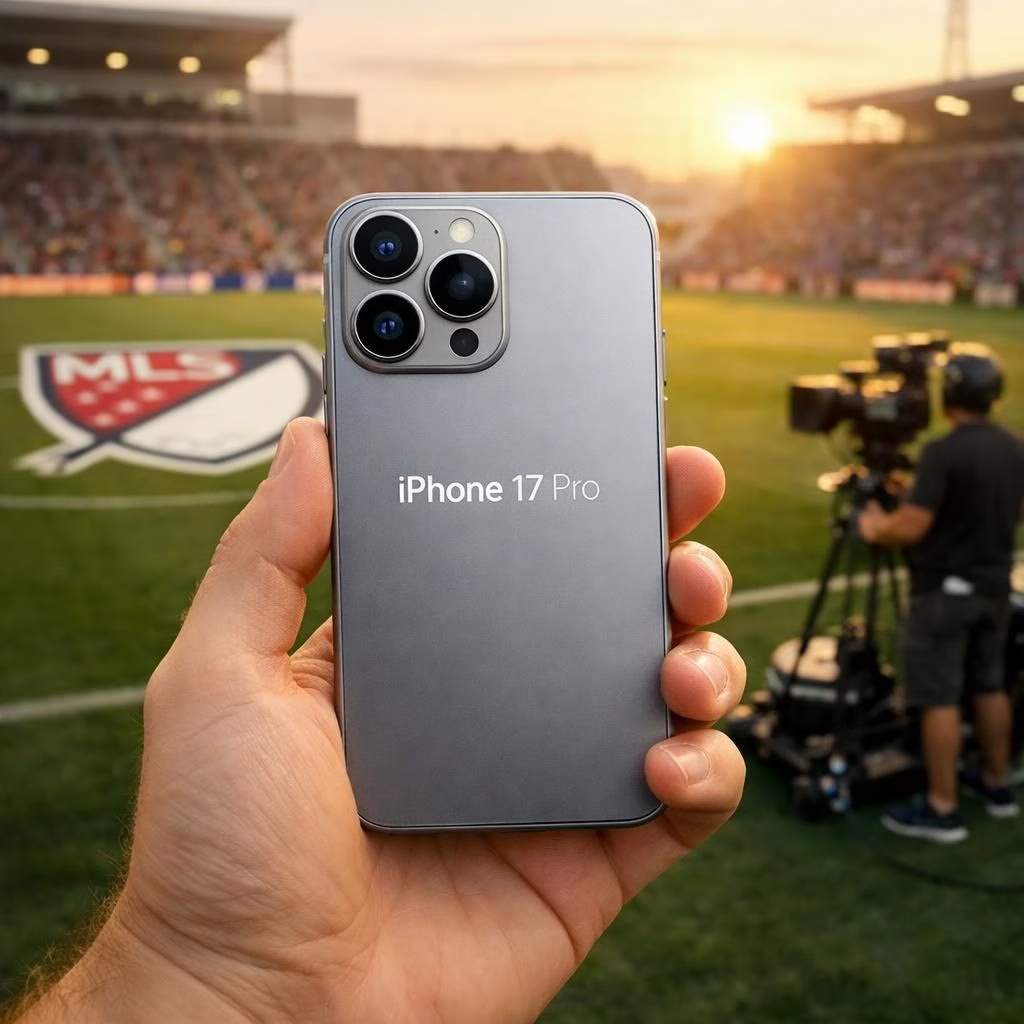
In a bold crossroad of consumer tech and live sports, the iPhone 17 Pro teams with MLS for a broadcast that feels like an intimate documentary and a stadium living room. Apple TV will mount the device you carry in your pocket as the main camera, while the crowd’s roar becomes the soundtrack. The pairing signals a shift in how we think about live sports capture: a compact powerhouse steps into the spotlight without asking for a permit. If you like your broadcasts with personality and a dash of innovation, this weekend’s game offers a front-row view of the near future. This isn’t a gimmick; it’s a carefully planned demonstration that everyday tools can carry big moments when guided by purpose and good planning.
iPhone 17 Pro in MLS Coverage: A New Lens Era
The iPhone 17 Pro is built to shoulder a broadcast-sized burden without looking overwhelmed. It packs three 48MP Fusion cameras, delivering the equivalent of eight viewpoints in a compact frame. For the LA Galaxy vs. Houston Dynamo FC clash at Dignity Health Sports Park in Carson, California, the production leans on Apple Log 2 to preserve latitude for color grading in post, aligning with the finesse you expect from big-budget cinema while staying within a handheld sweet spot. The result is a vivid, film-like stream that keeps pace with MLS action—from warmups on the pitch to the moment the whistle sounds. The real magic lies in balancing resolution, color nuance, and the rapid angle-shifts that keep fans engaged rather than overwhelmed by options.
Beyond pure camera tech, the iPhone 17 Pro’s portability reshapes the workflow. Cameras mounted around the venue complement the handheld footage, producing a multi-layered feel that brings fans closer to the action without turning the stadium into a rig-filled maze. The lighting in late afternoon and twilight matches is handled with grace, preserving both harsh sunlight and the warm glow of the crowd’s glow sticks. The iPhone 17 Pro and MLS are crafting a visual language that respects the sport while inviting viewers to experience immediacy previously reserved for personal footage—only in this case, the footage is purpose-driven, broadcast-ready, and shareable in real time.
MLS Broadcasts Reimagined with iPhone 17 Pro
What does this mean for fans? First, a richer set of angles without lugging a heavy rig into every corner of the stadium. The iPhone 17 Pro’s compact form lets more cameras cover more moments, delivering a narrative tapestry that includes intimate moments with players during warmups, high-energy goal celebrations, and a front-row feel for the stadium atmosphere—yet you stay comfortably seated at home. The Fusion cameras deliver sharp detail and solid color fidelity, while Apple Log 2 provides a flexible palette for skies and branding on the field. It’s not just resolution; it’s a more expressive storytelling toolkit in a device you can actually carry around with you.
The timeline behind this shift reads like a well-planned arc rather than a stunt. Apple first integrated iPhone into a live sports workflow during September 2025’s Friday Night Baseball, featuring a Red Sox vs. Tigers matchup that drew attention for its brave ambition. The National Baseball Hall of Fame and Museum even added an iPhone used in that broadcast to its permanent collection—a small but symbolic nod to the convergence of consumer devices and professional storytelling. After that success, Apple broadened the approach to the MLS Cup 2025 and then extended the use of iPhone across MLS broadcasts and Friday Night Baseball throughout 2026. The progression is deliberate: it combines accessible tools with disciplined production practice to show what’s possible when the goal is storytelling first, equipment second.
What Fans Can Expect This Saturday
This Saturday’s LA Galaxy vs. Houston Dynamo FC match, streaming at 7:30 p.m. PT on Apple TV, marks the next leap forward: a major league game captured entirely with an MLS iPhone 17 Pro system. This isn’t a stunt dressed up as a broadcast; it’s a disciplined attempt to deliver a consumer-grade device into a professional workflow and see how far the lens can reach when guided by intent and care. Viewers should notice a sense of presence—the field, the players, the coaching staff, and the stadium atmosphere—rendered with the clarity you’d expect from a larger camera ecosystem, but with the tactile immediacy of a handheld perspective. The cinema-like qualities come from a thoughtful blend of high-quality video modes, Log encoding for post-process, strong stabilization, and smart exposure management that stays steady even in sudden shifts of light and pace.
From a production standpoint, the key is balance. The iPhone 17 Pro doesn’t replace a full crew; it expands what a crew can achieve when a handful of talented operators and editors work in concert with a capable display pipeline. The result is storytelling that respects MLS branding, keeps color fidelity with the teams’ kits, and maintains narrative momentum without surrendering the purity of the sport’s flow. If viewers leave with a heightened sense of closeness to the action and a better appreciation for the craft behind the broadcast, the project has achieved more than novelty; it has helped redefine what “live sports” can feel like in 2026.
Onward: The Future of Mobile Broadcasting in MLS and Beyond
There is a broader implication here: when you put professional standards on a consumer device, the lines between “fans who film” and “professionals who broadcast” blur in the most delightful way. The MLS iPhone 17 Pro era promises more accessible experimentation for teams, leagues, and broadcasters who want to test new storytelling angles without overhauling their entire production pipeline. It also invites fans to imagine, in real time, what a future broadcast might look like if every camera on the field could fit in a pocket. Will this approach scale for larger venues or for international broadcasts? Time will tell, but the early signs point to a future where innovation travels with the game—literally in your hands and figuratively in your eyes.
Original article: Apple Newsroom: Apple TV to broadcast first major professional live sporting event shot entirely on iPhone 17 Pro. Thank you to the original source for the inspiration and material that sparked this deeper dive into the future of sports broadcasting.
FAQ
- What makes this iPhone-based broadcast different from traditional MLS coverage?
- It relies on the iPhone 17 Pro’s triple 48MP Fusion cameras, Apple Log 2, and a portable production workflow to deliver cinema-like visuals from a handheld device.
- Will MLS games continue to use this approach?
- Apple has tested the method in MLS and Friday Night Baseball as part of a broader push toward mobile-first storytelling across multiple sports.
- Where can I watch the match this Saturday?
- The game streams on Apple TV at 7:30 p.m. PT, with the broadcast designed to feel immersive from home.
- Are there more detailed technical notes available?
- Yes. Look for official behind-the-scenes explainers from Apple and MLS in the days after the game.
Conclusion takeaway: The iPhone 17 Pro’s MLS experiments illustrate a future where high-quality, portable gear can coexist with professional workflows. Fans gain intimate access, teams test new storytelling angles, and broadcasts become more adaptable in real time.