

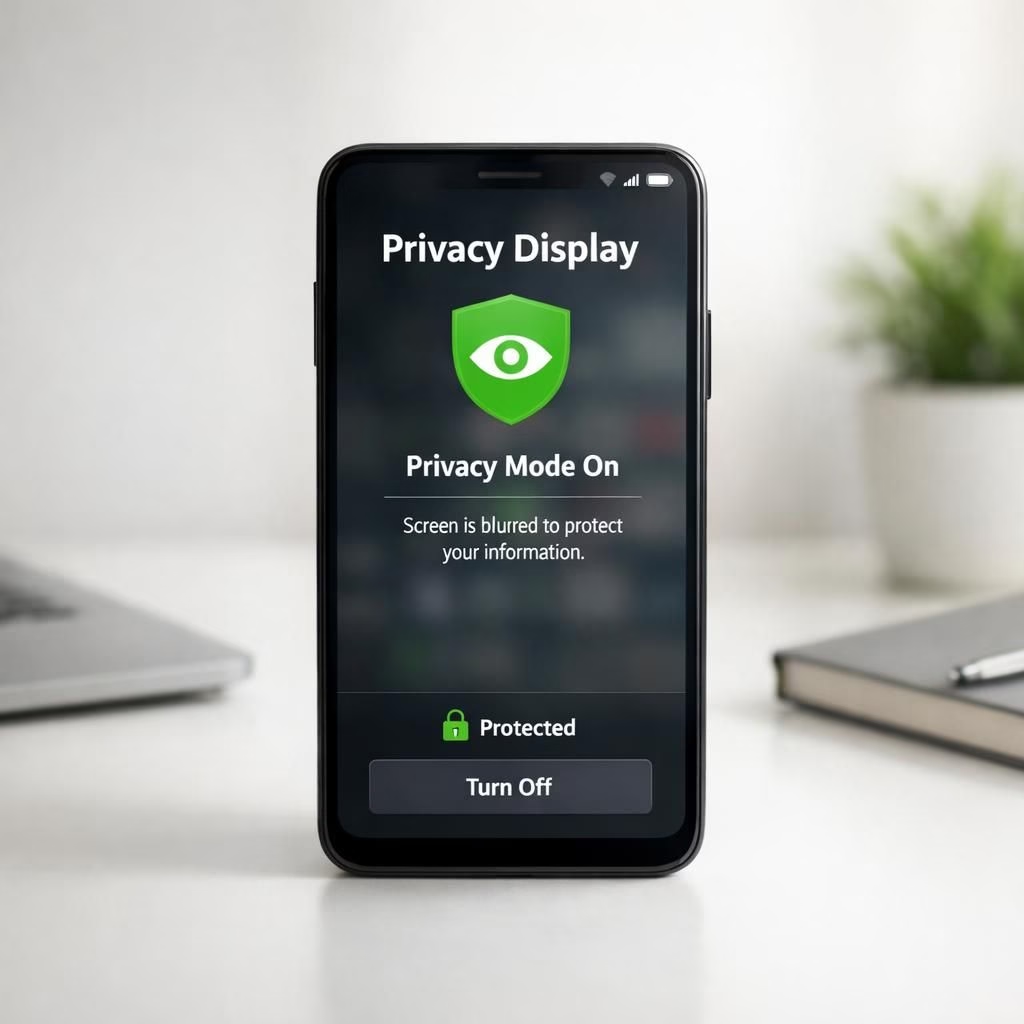
With Privacy Display and Galaxy S26 Ultra at the center, this upbeat, practical take explains why they matter in day-to-day life rather than headlines. We’ll describe how Privacy Display works, why it’s not just a gimmick, and how it fits into a broader trend toward user-centric design. The Galaxy S26 Ultra shines for people who value control and calm amid a noisy, distraction-filled day.
Privacy Display in the Galaxy S26 Ultra: A Friendly Look
Galaxy S26 Ultra isn’t a spy trick; it’s a thoughtful design that protects your content in public spaces. When the phone detects a side angle or distant gaze, the on-screen content dims or masks itself, reducing the chance that a passerby reads your messages. This is more about giving you control than about making headlines.
On the Galaxy S26 Ultra, Privacy Display feels like a quiet superpower. It doesn’t demand attention in the middle of a meeting; it quietly behaves, letting you peek without turning your notifications into gossip. The feature works with apps, camera previews, and most scrolling content, so you aren’t forced into a special mode every time you need to read a chat while standing in line. In 2026, privacy design continues to mature, and this is a practical example.
Privacy Display in daily life
How to enable it? Step-by-step: open Settings, go to Privacy and Security, and toggle Privacy Display on. You can further adjust the sensitivity and the angle at which content hides. In daily use, this means fewer awkward glances and more focus on what matters—your work, your memes, and your next coffee run. The Galaxy S26 Ultra’s approach to Privacy Display is not a gimmick; it’s a gentle nudge toward mindful tech use.
Galaxy S26 Ultra and Privacy Display: Practical Privacy Wins
In practice, Privacy Display on the Galaxy S26 Ultra shines in public spaces: commuting, cafés, or crowded events. Content remains legible to you but less obvious to others. This is particularly handy when you ride the bus with sensitive chats or banking apps open. It doesn’t block functionality; it shifts the balance toward user consent and discretion. The phone’s orientation detection helps you avoid constant manual tweaks—most days it just works.
From a design perspective, the pairing of Privacy Display with the Galaxy S26 Ultra’s hardware strengths makes sense. The display is bright enough for outdoor use, and the feature preserves readability while protecting privacy. It also reduces the risk of shoulder-surfing, a modern nuisance that tech users know all too well. The result is a phone that respects your privacy without asking you to disable notifications or carry a privacy screen overlay. That’s a win for both form and function.
Of course, no feature is perfect. There are moments when the privacy mask might blur content a tad more than you expect, or when ultra-wide lighting fools the sensor. In those moments, a quick manual toggle or a brief pause to adjust the angle resolves the issue. Even then, Privacy Display remains a thoughtful touch that reminds you that your device is on your terms, not on the terms of strangers.
The early adopter story from the lot shows curiosity about this feature. People are excited about more than speed; they want confidence that their data stays theirs. The Galaxy S26 Ultra answers that call with a smile and a subtle wink.
In summary, Privacy Display on the Galaxy S26 Ultra is a practical, pleasant upgrade for daily use. It blends privacy with usability, and it frames the device as a tool that respects public contexts. If you value control over your content, this approach will feel familiar and friendly. The Galaxy S26 Ultra isn’t hiding from privacy; it’s embracing it with a light touch.
- Practical privacy in transit: Privacy Display helps you stay focused while you commute or wait in line.
- Public settings, private messages: Privacy Display nudges you toward discretion without sacrificing usability.
- Ease of use: minimal setup, smart auto-adjustment, and few interruptions to your flow.
FAQ
- What is Privacy Display?
- Privacy Display is a design feature that dims or masks on-screen content when you’re viewed from the side, helping reduce shoulder-surfing in public spaces.
- How do I customize it?
- Go to Settings > Privacy and Security > Privacy Display to toggle it on and adjust sensitivity and angle preferences.
- Does it work with all apps?
- It works with most apps, camera previews, and scrolling content, so you don’t have to change modes to stay private.
- Will it affect battery life?
- Privacy Display uses orientation sensing and simple display adjustments, generally with minimal impact on battery life.
Conclusion
For anyone who wants more control over what others see, Privacy Display on the Galaxy S26 Ultra offers a thoughtful, everyday privacy tool. It respects public contexts without requiring you to mute notifications or add bulky accessories. If you value calm, clear focus, this approach should feel natural and reassuring.
References
Further reading: Forbes and Android Central cover Galaxy S26 Ultra-related rumors and features as they emerge.