

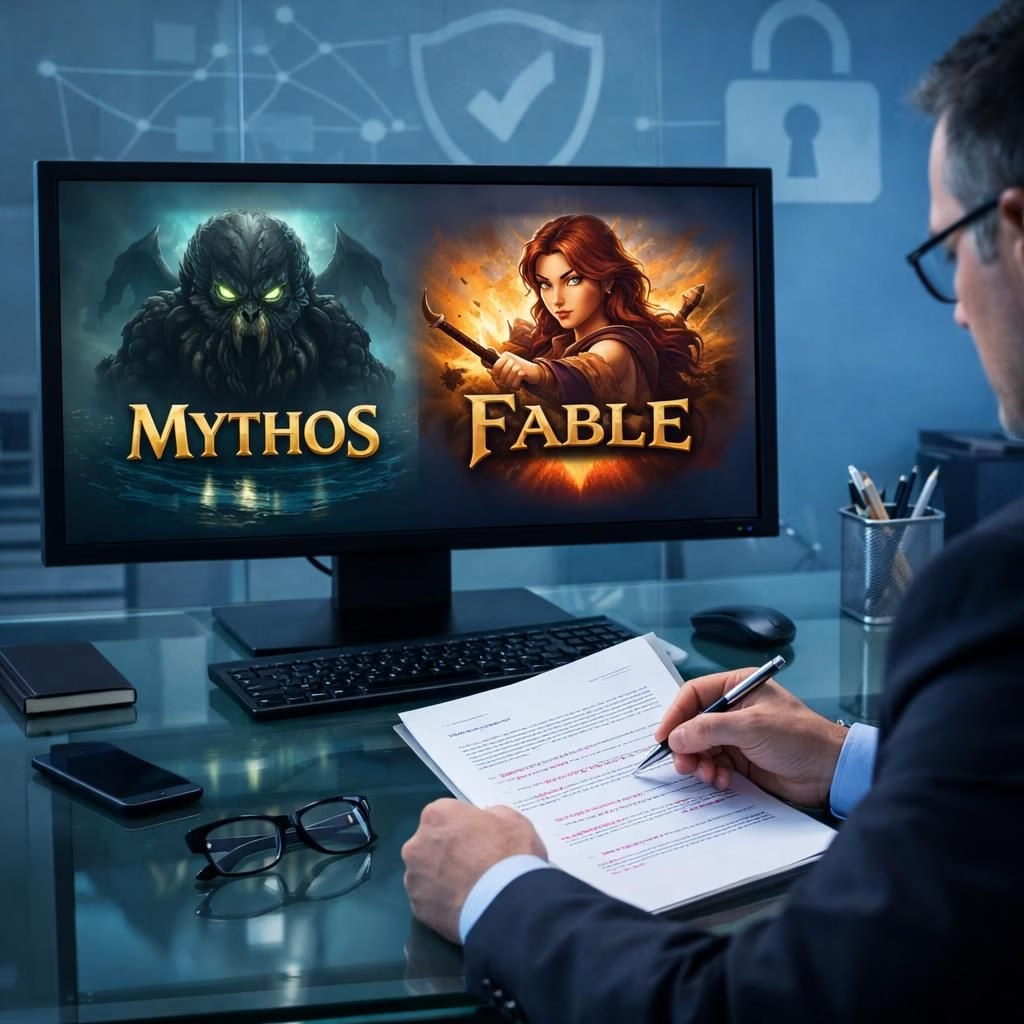
In a world where Mythos and Fable grab the headlines, security teams treat export controls with the care that librarians give to rare volumes. Mythos 5 and Fable 5 are powerful AI systems, balancing rapid research against the risk of misuse. This article offers a practical tour of what happened, what it means, and how readers can navigate the landscape in 2026.
Mythos and Fable at the Center: Export Controls in 2026
The Semafor report flagged that a China-linked access concern may have influenced the White House’s export-control decisions. The government reportedly worried that such access could complicate cybersecurity research or enable a form of distillation where a less capable AI learns to imitate Mythos’ capabilities. It’s a reminder that security isn’t a boring box-ticking exercise; it’s about preventing surprises that could ripple beyond a single company. Officials also wondered whether similar concerns could apply to Fable in the same risk calculus.
Anthropic has denied that Mythos or Fable were singled out for the kinds of risk described in some government circles. A spokesperson cited by Semafor said China was not mentioned during discussions about export controls. Still, the report pushes readers to consider how governments assess “national security” in the age of giant AI models and how firms can keep collaboration productive rather than punitive. For the tech crowd, this is less about drama and more about practical safeguards that stay ahead of the curve for both Mythos and Fable.
- Export controls aim to balance openness with safety for Mythos and Fable, ensuring international collaboration doesn’t cross into harmful use.
- Distillation risks exist: researchers need to know where to draw the line so Mythos’ and Fable‘s high capabilities don’t migrate to weaker platforms.
- Clear governance and auditing for Mythos and Fable usage help keep both models accountable and usable for legitimate research.
- Policy clarity matters: accurate specifications for export controls prevent overreach that harms healthy innovation around Mythos and Fable.
- Industry collaboration accelerates safer progress for Mythos and Fable by sharing best practices and common security standards.
Mythos and Fable Security: Past Incidents, Present Safeguards, and Future Improvements
Security conversations around Mythos and Fable are not merely theoretical; they respond to real incidents. The Verge reported a Discord group gained access to the Mythos model for about two weeks before Anthropic detected and cut off the exposure. The irony wasn’t lost on observers: Mythos is celebrated as a highly capable system that nonetheless demands rigorous safeguards. The quick containment, however, demonstrates learning in action—access was removed, and configurations hardened, reflecting ongoing risk management for both Mythos and Fable.
From a product perspective, Fable and Mythos represent tools where power and responsibility must ride hand in hand. Effective safeguards include tiered access, robust auditing, and governance that favors productive collaboration over friction. The policy conversation in 2026 embraces voices from researchers, cybersecurity experts, and industry partners who want to push AI forward without inviting chaos. Expect stronger distillation-resistant architectures, clearer export frameworks for Mythos and Fable, and better incident response protocols that keep teams aligned.
For developers who work with Fable and Mythos, this means designing features that make secure collaboration easier: role-based access, continuous monitoring, and transparent risk scoring. For policymakers, it’s about communicating constraints clearly and building international norms that are practical, not punitive. The aim is a world in which Mythos and Fable can contribute to cybersecurity, education, and science while staying out of the hands of bad actors.
Looking ahead to 2026, Mythos and Fable will likely remain central to the conversation about safe, responsible AI. The story isn’t only about export controls or security incidents; it’s about how we harness powerful models without losing sight of ethics, privacy, and the potential for mischief—whether deliberate or accidental.
Want to join the conversation? Please share your thoughts in the comments, and tell us how you see the balance between openness, security, and innovation impacting Mythos and Fable in the coming year.
Original reporting courtesy of Semafor. Thank you to the original authors for the insightful reporting: Semafor: China-linked access to Mythos fuels export-control questions.
References
- Times of India: Anthropics Mythos leak and government ban coverage
- Semafor: China-linked access to Mythos fuels export-control questions
- The Verge