

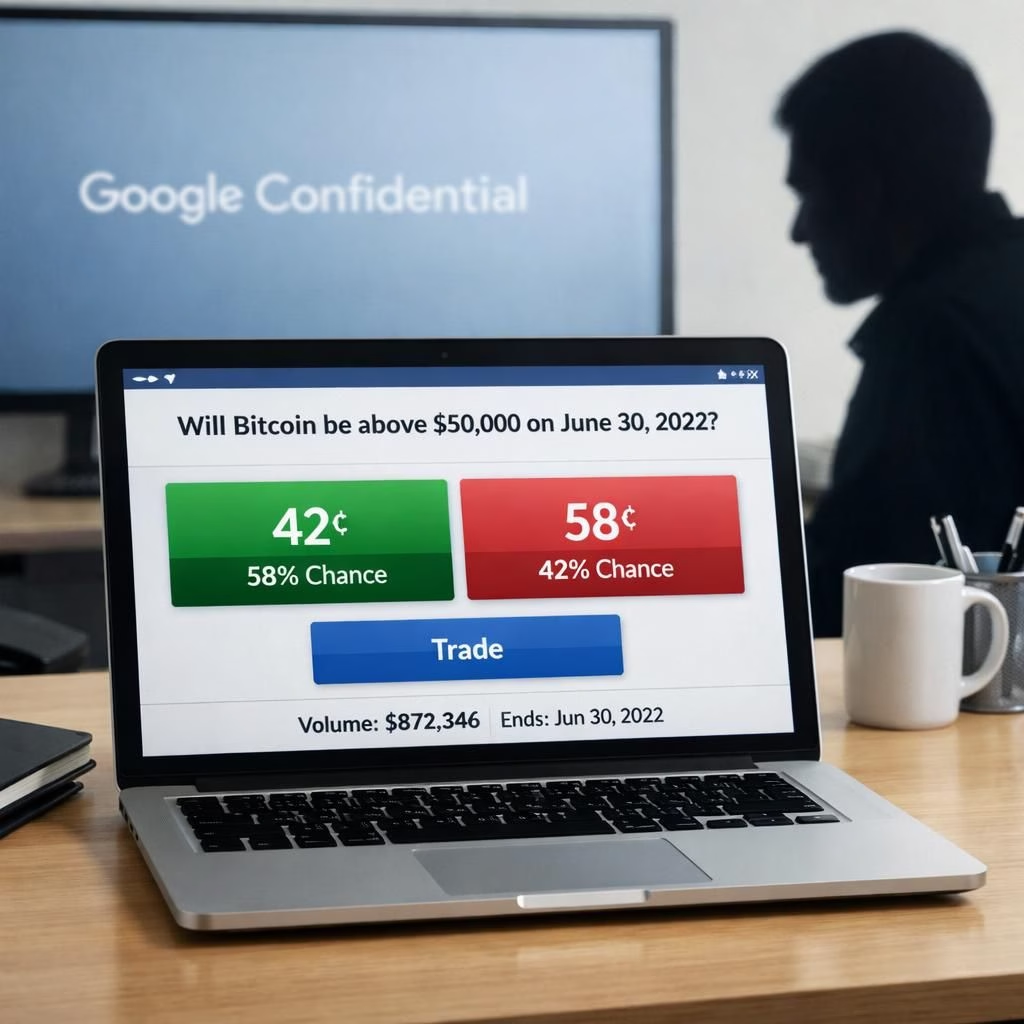
Prediction Markets and Insider Trading are the twin elephants in the room of modern finance, and the 2026 case involving a Google engineer on Polymarket shows why we can’t ignore either. The Department of Justice alleges that Michele Spagnuolo used confidential Google data to place bets that paid out when the Year in Search 2025 results dropped, demonstrating a knack for turning non-public information into a tidy profit. Yes, this is as dramatic as it sounds, but there are lessons here that smarter operators and fair markets can embrace.
Spagnuolo, a 36-year-old Italian citizen living in Switzerland, allegedly traded under the alias AlphaRaccoon and used internal Google data to back a series of Google-related markets on Polymarket. The DoJ notes that he created a Polymarket account in May 2024 and placed bets totaling around 2.75 million dollars on Google-linked outcomes between October 15, 2025 and December 4, 2025. The profit, about 1.2 million, flowed when Google’s internal info became public as the Year in Search 2025 results were released. The case is a reminder that Prediction Markets can be a barometer for information flow, but they also attract attempts to game the system.
Prediction Markets and Insider Trading: The Polymarket Case in 2026
The charges weave together several legal threads: the Commodity Exchange Act, wire fraud, and potential money laundering, with a possible maximum sentence of 50 years behind bars. The Commodity Futures Trading Commission also brought a civil action, underscoring that regulators treat non-public data as a serious risk. Spagnuolo was arrested in New York, released on a 2.25 million bond, and now awaits trial. US Attorney Jay Clayton emphasized that corporate insiders cannot monetize confidential information in our markets, a line that echoes in many public speeches about fair play and clean data.
Officials described access to Google internal data systems that included a confidential tool showing a banner reading Google Confidential. Spagnuolo reportedly certified understanding of the confidentiality and ethics policies, which the prosecutors argue he circumvented by turning private signals into bets. The LinkedIn listing places him on a team cataloging AI agent inventories across Alphabet, a detail that adds color to the tech pedigree behind the story, even as the law moves to close the gap between internal data and market bets.
Prediction Markets: Compliance, Fairness, and Public Data
Google described the incident as a serious breach of policy, noting that the employee accessed internal materials through a tool available to all staff. Polymarket, for its part, reiterates its commitment to accurate, fair, and transparent markets and to cooperating with regulators. This case does not threaten the idea of Prediction Markets; it sharpens the call for robust compliance, stronger monitoring, and clearer lines between public information and price signals. For readers who care about risk, reliability, and responsible innovation, the episode offers a warning against gaming and a motivation to improve oversight across platforms.
Beyond the drama, the case invites a broader look at how Prediction Markets can still serve as useful sentiment gauges when rules are clear and enforcement is consistent. The market might still reward well-sourced forecasts and verified data while punishing attempts to edge the system. The balance between open access and secure data remains delicate, but it is a balance worth fighting for, because well-governed prediction markets can deliver useful insights without becoming a playground for insiders.
Regulators stress that Insider Trading undermines trust in markets and creates unfair advantages for a few. This case highlights the need for stronger monitoring, clearer rules, and transparent enforcement for all platforms that host prediction markets.
Practical steps for platforms and traders
- Institute strict access controls and audit trails for internal data and software tools used by employees.
- Clearly separate public information signals from private datasets that could influence bets.
- Use automated monitoring to flag unusual patterns between private signals and market outcomes.
- Communicate transparent policies and provide training to reduce inadvertent breaches.
FAQ
-
What is Insider Trading and why does it matter for Prediction Markets? Insider Trading refers to using non-public information for financial gain. In markets that rely on crowd-sourced forecasts, such activity undermines fairness and trust.
-
What safeguards can prevent abuse on prediction markets? Strong data governance, real-time monitoring, and clear, well-enforced rules help keep bets based on public signals rather than confidential material.
-
What does this mean for users? Traders should rely on verifiable sources and monitor platform disclosures to gauge risk and avoid conflicts of interest.
Original reporting: India Today.
External resources
- Polymarket — platform overview
- U.S. Department of Justice — official releases and guidance
- U.S. Commodity Futures Trading Commission — market integrity and enforcement
References
Original reporting: India Today.