

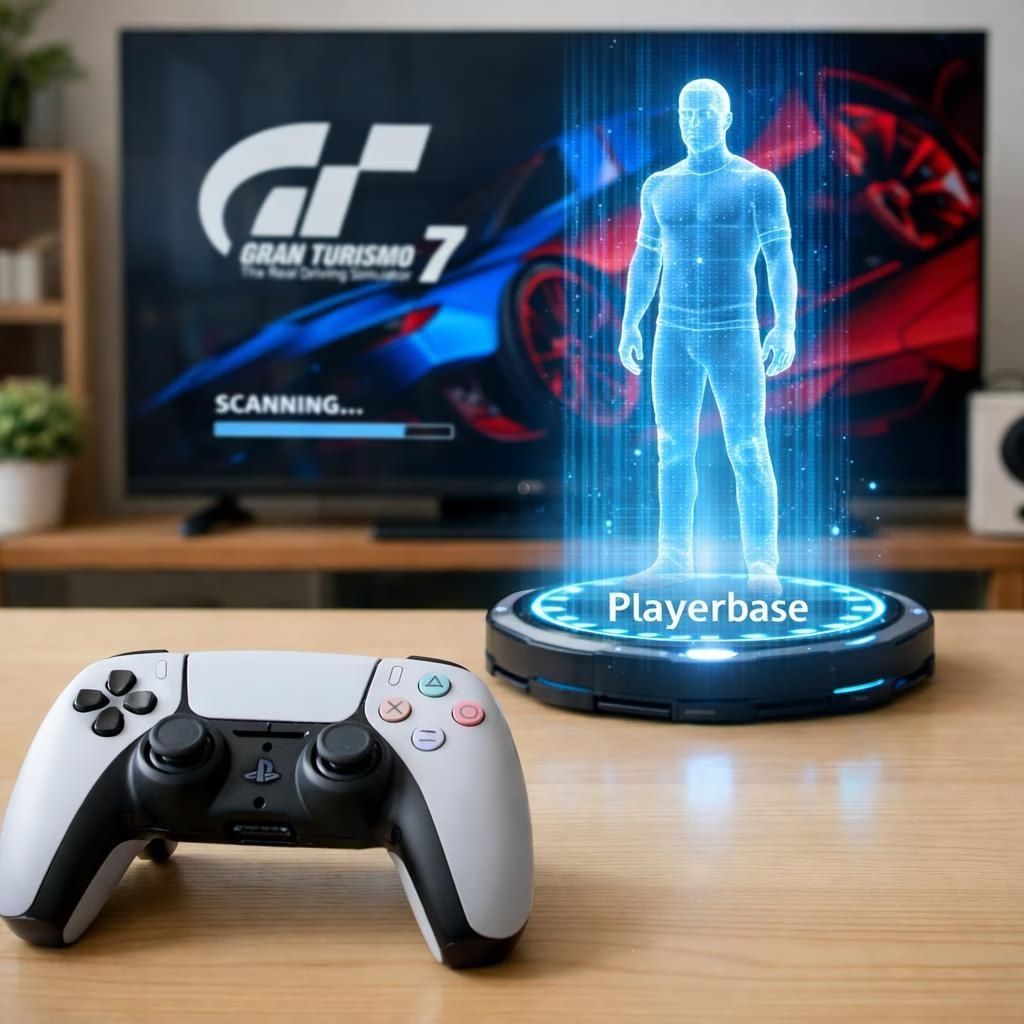
In 2026, PlayStation unveils its Playerbase program, a bold concept inviting fans to be scanned into Gran Turismo 7 and other titles. It’s part fan club, part tech demo, and entirely modern in its ambition to blur lines between player and character. The idea celebrates community and curiosity, while nudging traditional game design toward more personalized storytelling, a hallmark of the Playerbase initiative.
What does this actually mean for players? In practical terms, the platform says one lucky gamer will be scanned into a Playerbase scene in Gran Turismo 7, becoming a living driving companion inside the race. This is opt-in, with consent and clear boundaries. The novelty is bright: you could drive a digital version of yourself on real-world circuits, backed by a polished ecosystem and guided by careful QA teams at the intersection of entertainment and technology.
The idea also nudges avatars toward richer in-game presence. It can strengthen brand affinity, especially when players feel seen and included. The Playerbase concept offers fans opportunities for in-game visibility, character interactions, or events tied to Gran Turismo 7 and beyond. From a design perspective, the approach prompts developers to consider avatar representation, voice integration, and the ethics of player presence in immersive simulations—alongside robust safety measures. The core priority remains protecting players and their privacy, a commitment echoed across the broader PlayStation community and its Playerbase participants.
PlayStation and Playerbase: benefits and caveats
On the upside, the program can bring fresh social value and marketing energy. It may spark new story ideas and collaborations that push Gran Turismo 7 toward more personalized experiences. It also gives developers data-driven insight into how players engage with avatar systems, helping guide future features. For fans, the chance to see themselves in the game world is a playful reminder that entertainment is a two-way street. But there are caveats: privacy, consent, and a clear opt-out path must be non-negotiable in official policy notes tied to the Playerbase program.
In practice, teams behind the scenes must guard edge cases: what if a scan fails quality checks, or a participant wants an update to their avatar? The platform teams can design robust consent forms, transparent data handling, and easy withdrawal options. The aim is to keep the PlayStation experience safe and respectful while the Playerbase concept invites exploration. A thoughtful rollout avoids turning avatars into mere marketing props and instead treats them as living participants who enrich the game world.
PlayStation design goals for avatar integration
For studios, the concept acts as a test bed for modular storytelling. The Playerbase framework encourages modular NPCs and avatar integrations that can be swapped, updated, or retired without breaking the game’s vibe. It also raises questions about long-term asset management: if a real player becomes a permanent pixel, how do you handle consent, moderation, and licensing changes? The best-case scenario is a harmonious blend where players enjoy personalization and studios benefit from feedback loops. The emphasis stays on safety, performance, and a light footprint on the console’s resources, so a Playerbase feature does not churn the frame rate. Clear consent and transparent data handling keep the PlayStation brand trustworthy even as it pioneers avatar-forward engagement.
From a consumer education standpoint, the rollout should explain clearly what data is captured, how it’s used, and who benefits. The idea is exciting, and the execution must stay careful and respectful. A game industry that communicates about scanned characters in straightforward terms earns trust. The PlayStation ecosystem has long championed accessibility and user empowerment, and the Playerbase initiative can extend that legacy if handled with care and humor—two traits the brand often uses to keep complex tech approachable.
On a technical note, the scanning pipeline would rely on opt-in 3D capture and optimization that fits the Gran Turismo 7 engine. The design team should ensure a scanned avatar integrates with car physics, lighting, and UI. The result must feel seamless, not invasive. If done well, the Playerbase project can become a model for ethical avatar integration that other studios may emulate in a positive, consent-first way. The idea is magical and surreal, and the process should honor that wonder without sacrificing privacy.
As this concept moves toward reality in a controlled, transparent way, the community can weigh in. Do you want to see yourself zooming down the track in Gran Turismo 7? Are you comfortable with scanned avatars representing you in virtual life? The Playerbase is as much a social experiment as a technical one, shining brightest when players stay informed and engaged. The more people participate with curiosity and caution, the better the outcome for the platform—and for fans who love this curious form of digital immersion.
Original article and inspiration: Thank you to the source article on PlayStation’s official channels.
Tell us your thoughts in the comments below.
Practical steps for participating
- Visit the official announcement page and review the consent terms for the Playerbase program.
- Use the opt-in flow to authorize capture with privacy controls you can adjust later.
- Learn what data is collected, how it’s stored, and who can access it; you can opt out at any time.
- Keep an eye out for events or campaigns tied to Gran Turismo 7 that may feature eligible avatars.
Frequently asked questions
- Is participation optional?
Yes. You opt in, and you can withdraw later according to the terms published by the platform.
- What data is captured?
The process focuses on consent-based 3D capture with privacy protections and clear retention guidelines.
- Can I update or delete my avatar?
Yes. The policy includes options to modify your avatar or request removal.
- Will it affect gameplay performance?
Engine teams aim to minimize impact; the feature is designed to be lightweight and non-intrusive.
Takeaway: this is a careful, consent-first experiment that could redefine avatar presence in racing and beyond. If you’re curious, monitor official channels for opt-in details and review privacy terms before deciding to participate.