

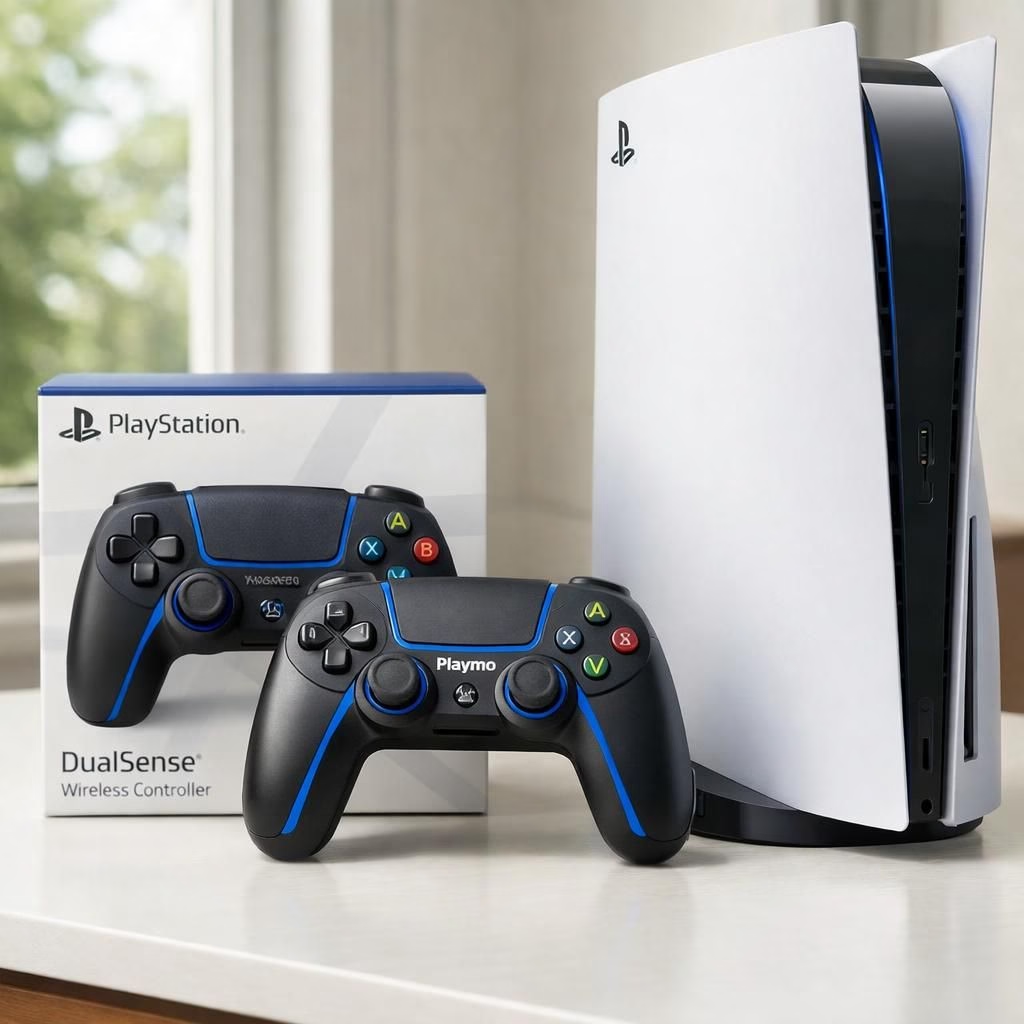
Fans of console hardware woke up to a headline announcing Playmo, a next-gen PS5 Tag B controller that promises to change how you play games forever. The briefing from Sony was tight, visuals crisp, and IGN gave the teaser a thumbs-up. This isn’t just a new shell for an old idea; it’s a thoughtful nudge toward a future where input feels like personality. If you’ve ever wished your controller understood your moods, you’re not alone. Playmo is positioned as the next generation of the PS5 experience, promising deeper haptics, smarter triggers, and a design that can ride the wave of a new era without feeling bloated. This is not marketing fluff; it’s an invitation to reimagine how a controller can carry a story across a dozen different genres, all while keeping a grin on your face.
Playmo DualSense: A Leap for PS5 Controllers
In the design language, Playmo blends a familiar silhouette with refinements. The Tag B heritage remains recognizable—still a controller with adaptive triggers, a responsive haptic engine, and a microphone array—but now with improved balance, a more comfortable grip, and a battery profile that promises longer sessions without a sprint to the charger. Think of Playmo as the friend who shows up with a spare power bank and a grin. The name Playmo signals a shift toward a modular mindset: easier maintenance, better cooling, and firmware upgrades that unlock new tactile flavors rather than merely new icons in a menu. For Tag B fans, this is a respectful upgrade that keeps the familiar vibe while inviting you to lean in a little closer to the future.
From a design standpoint, this is where Playmo earns its keep: the hand feels at home, but there’s a whisper of upgraded materials and refined weight distribution that makes long play sessions feel less like a test of endurance and more like a chat with a trusted tool. The Tag B lineage remains a strong base—haptics that tell you when you’re about to be detected in a stealth corridor, or when a big explosion rumbles through the screen. Yet Playmo adds measurement and calibration steps that help tailor the experience to your hand size, grip, and preferred game genre. The practical upshot is a controller that becomes more personal over time, not just more powerful out of the box.
Playmo DualSense: What Makes This Next-Gen Tick
The real promise lives in the reimagined haptics. If you’ve felt the weight of a heavy landing or the gentle tremor of an approaching gust in a game, you know how a controller can shape immersion. Playmo aims to elevate that with a richer, more expressive range of sensations—designed to respond in real time as you move through a game world. The Tag B triggers aren’t just about resistance; they’re about signaling stealth sequences versus frantic chases. Sony positions this as a continuous conversation with your hands, not a one-off feature drop. The PS5 experience remains recognizable, but with a sharper edge, a more purposeful weight, and a battery plan that recognizes the demands of streaming, cloud saves, and longer play sessions.
Beyond the hardware, Playmo’s software and ecosystem story matters. The pitch emphasizes accessibility features, better grip textures, and a microphone setup that picks up voices more reliably for co-op sessions and late-night raids. It’s not merely about a brighter light bar or a louder vibration; it’s about a controller that respects your time, your space, and your need to focus on the moment, not the hardware itself. In practice, that means faster onboarding, easier calibration, and a smoother bridge from your current Tag B experience to this next-gen cousin—without a steep learning curve or an avalanche of firmware updates to apply before you can play. For dedicated players who already trust the Playmo line, this promises a stable baseline with enough new muscle to make each action feel a touch more decisive.
Getting Started with Playmo: A Quick Checklist
- Charge the controller and update your PS5 firmware to ensure full compatibility.
- Calibrate grip and trigger sensitivity in the new setup wizard, paying attention to how Tag B reacts in different genres.
- Test a few titles across genres to feel how the Tag B interactions respond in different contexts.
The timing of this announcement also matters. If 2026 becomes a year where small, meaningful improvements accumulate across the ecosystem, Playmo stands as a well-timed exercise in trust-building. It’s the kind of upgrade you can recommend to your friends without explaining a dozen new quirks. Developers are invited to craft more nuanced control schemes, and players get to test a more nuanced input language. The hope is a richer library of experiences—from precision platforming to chaotic party games—where the controller truly enhances the sense of presence rather than simply adding features on top of features. In short, Playmo feels like a deliberate step forward, designed to please both the casual gamer and the enthusiast who chews on spec sheets for breakfast.
In the end, the message is simple: if you love the idea of a controller that grows with you, Playmo could be a meaningful step forward for your living room ritual. It’s not a revolution in a single press, but a thoughtful invitation to rethink how you interact with your favorite games. The tone of the coverage—playful yet practical—encourages players to stay curious, test boundaries, and celebrate a console ecosystem that continues to evolve without losing its core identity. For once, the future doesn’t feel like a distant rumor; it feels like a natural extension of the handheld connection we’ve come to expect from the PS5 rhythm.
Original article attribution: Thanks to IGN for the original coverage of Project Playmo. Original article: IGN: PlayStation Announces Project Playmo. We appreciate the original source material for sparking this thoughtful update and for inspiring readers to explore how input devices shape our gaming journeys. If you’ve got ideas, questions, or playful predictions about Playmo and the Tag B evolution, drop them in the comments and let’s build the conversation together.
References
For broader context, coverage from The Verge and CNET helps frame how haptics and adaptive triggers shape immersion today.