

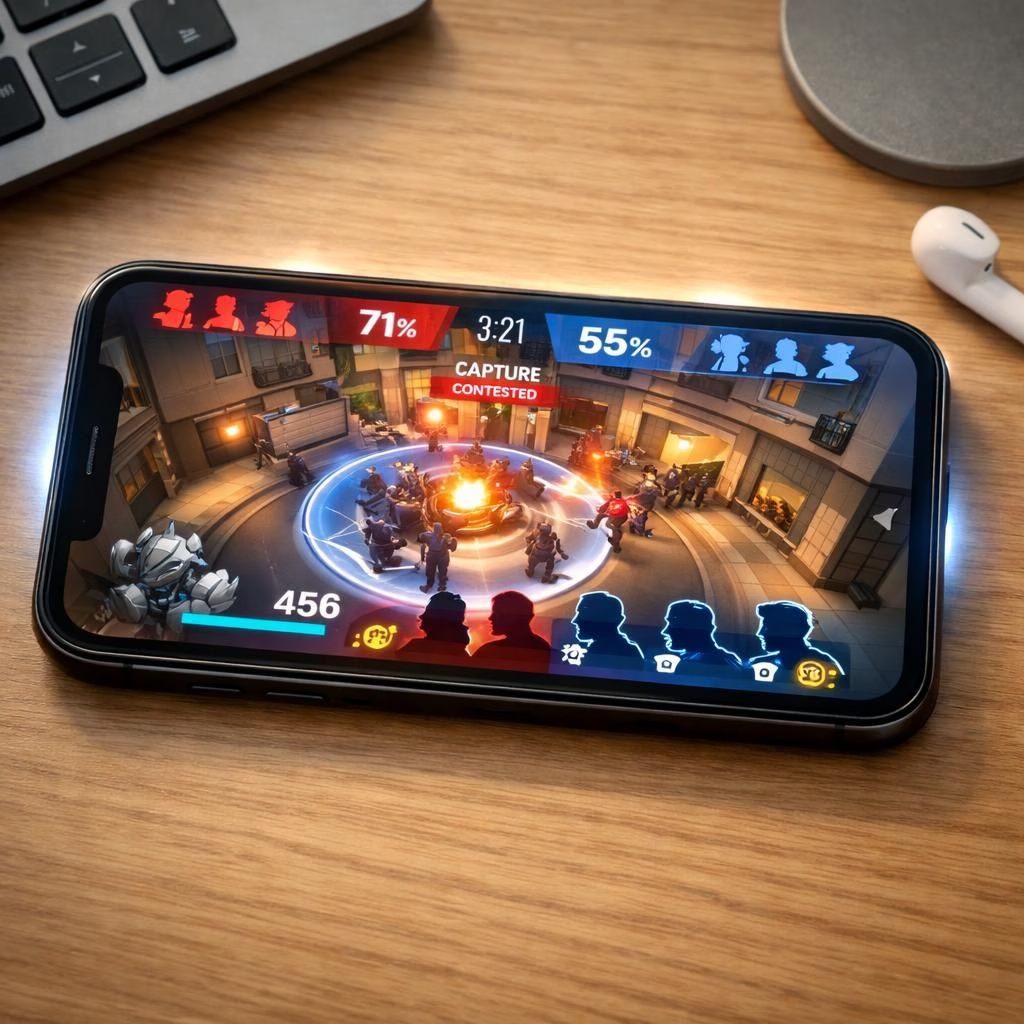
In a move that feels almost inevitable in the era of tiny screens and bigger ambitions, Overwatch Rush is coming to iOS and Android. Coverage from outlets like Gematsu and Blizzard News frames the announcement as a mobile-friendly twist on a famed hero shooter. For longtime fans and newcomers alike, this is less a reboot and more a portable nudge toward quick clashes between cooldowns and clever positioning. The headline is simple, but the implications are deliciously complex: Overwatch Rush on a phone lets you flex your aim, your timing, and your team coordination without booting up a console or PC. In short, Overwatch Rush is stepping onto the mobile stage, and mobile gaming will never be the same when you sprint through payloads on a commute or a coffee break.
The game is described across previews as a 4v4, free-to-play experience that distills the essence of the original into a lean, more approachable form. You’ll swap the crowded lobby for tight skirmishes, and the familiar heroes for a control scheme tuned for touch. Early previews peg it as a top-down reinterpretation rather than a straight port, preserving the strategic tempo of Overwatch while removing some of the frenetic camera work that can complicate mobile gaming play. Blizzard News emphasizes that the core identities of the heroes remain, even as the battlefield scales down to bite-sized rounds designed for quick bursts of action between errands. If you’ve dreamed of a portable arena where you can test a new ult while waiting for your latte, this is the kind of news that makes you grin at the convenience without pretending it isn’t exciting. For background context, see Overwatch’s new story-driven era launch.
Overwatch Rush and mobile gaming collide in a new mobile vision
From a design perspective, the developers balance familiarity with accessibility. Expect streamlined aiming, simpler input methods, and a pacing that rewards swift decision-making more than brute reflexes. The 4v4 format hints at intense skirmishes where every move counts, yet the free-to-play model opens doors for a wider audience. For players who prefer to savor a match during a short stroll or a lunch break, Overwatch Rush promises to deliver a satisfying sprint without the grind. This mobile vision of a classic IP aligns neatly with the broader shift in mobile gaming, where publishers want to capture the same emotional high of their franchises while respecting the constraints of a touchscreen.
Overwatch Rush on mobile gaming: early impressions
Expect a clever balance between depth and accessibility. The hero roster will likely retain recognizable abilities, but the learning curve should be softened for touch controls. In practice, that means shorter hero combos, faster flanks, and smarter map reading that fits into a six-to-ten-minute clash rather than a marathon session. Monetization, as with many modern mobile titles, should be mindful of fairness; cosmetic options may exist, but pay-to-win dominance would dull the experience. Early discussions across outlets (including Game Informer’s top-down preview and initial Blizzard take) suggest a thoughtful approach to progression that rewards skill and teamwork more than raw grind. For fans of mobile gaming who crave strategic depth, the blend of familiar heroes with accessible controls could offer a surprisingly satisfying balance.
From a player’s standpoint, the risk is that the mobile format changes some of the iconic pacing that defined the original. The risk is offset by the sheer convenience: shorter rounds, quick matchmaking, and a chance to test new tactics on a micro-stage. The mobile gaming ecosystem may also invite content creators to share bite-sized clips that highlight clutch plays, new hero synergies, and clever ult timing—perfect for highlight reels during a coffee break. If you’re curious about latency and how controls translate, the beta will reveal how well touch inputs map to complex combos.
What mobile gaming fans should expect from Overwatch Rush
Expect a balanced approach that keeps depth without overwhelming new players in mobile gaming. The hero lineup should stay familiar, while the touch controls streamline combos and timing. Shorter rounds support rapid matchmaking and quick exits, which suits the on-the-go mindset. Monetization should favor cosmetics and fair progression, not pay-to-win schemes. Early previews from outlets like Game Informer and Blizzard sketch a thoughtful progression system that rewards teamwork and skill more than grind. For fans seeking strategic depth, the mash‑up of known heroes with accessible controls offers a surprisingly engaging balance.
From a practical angle, the mobile format brings risks and rewards in equal measure. The bite-sized rounds and micro-messaging can speed up play but might demand new habits for aiming and ability usage. The mobile-friendly design could spur creators to post compact clips of clutch plays, clever ult timing, and fresh team synergies—ideal for quick highlights during a break. Watching how touch controls translate complex sequences in beta tests will be telling for fans who quantify every input. Overall, the early messaging is cautiously optimistic: this isn’t a lazy port but a thoughtful mobile take on a beloved IP.
As with any major announcement in the space, expectations rise with curiosity. Will Overwatch Rush live up to the promise of fast, accessible play without sacrificing the strategic nuance that drew players to the original? Will the control scheme feel fluid on a palm-sized screen, or will it demand a new routine for aiming and using abilities? Early previews acknowledge these questions, but they also celebrate the core concept: a mobile iteration that invites both seasoned fans and curious newcomers to explore the same universe through a compact, shareable lens. The excitement isn’t simply about a new game; it’s about a new way to engage with a beloved IP during moments when mobile gaming takes center stage.
For content creators and community organizers, Overwatch Rush offers fresh material to dissect. Patch notes, balance chatter, and hero reconfigurations will fill timelines as players compare the mobile version to its PC counterpart. The shift to mobile may broaden the audience, inviting casual players who previously felt excluded by PC constraints. In the end, the question is less about whether the game exists on mobile and more about how it feels to play a hero shooter in a pocket-sized arena. The potential for rapid-fire content, live streams between errands, and collaborative team play makes this release a notable milestone in the ongoing evolution of mobile gaming.
In closing, the sentiment across previews is cautiously upbeat. Overwatch Rush for iOS and Android is positioned as a thoughtful mobile reimagining rather than a reckless port. It aspires to preserve the energy and identity of the original while delivering a user experience that respects the realities of mobile play. If you’re curious, you can keep an eye on official channels for additional details, including timing, testing opportunities, and more nuanced breakdowns of gameplay systems. And if you have a favorite hero you’d love to test on the go, now might be a great time to start building your mobile gaming strategy before the gates open.
We’d love to hear your thoughts about this mobile reimagination of a classic shooter. Share your ideas, hopes, and questions in the comments as we all await more details and hands-on impressions.
Original coverage and thanks to the source material: Gematsu: Overwatch Rush announced for iOS, Android. Thanks to the original article for laying the groundwork and sparking this conversation.
Frequently Asked Questions
- When will Overwatch Rush be released on iOS and Android?
- Blizzard has not announced a firm date yet. Expect regional testing windows and staged rollouts.
- Will there be cross-play with PC or console?
- Cross-play details are not confirmed. The initial focus appears to be a strong mobile-first experience.
- How will monetization work?
- Cosmetics are expected, with a fair progression system friendly to Skill and teamwork rather than grind.
- What perspective and controls will it use on mobile?
- Previews point to a top-down reinterpretation with touch controls designed for quick, precise actions.
Practical steps for readers
- Follow official channels for release timing and beta opportunities.
- Watch early clips to gauge how well touch controls handle key sequences.
- Consider testing on a mobile device during commutes to understand latency and responsiveness.