

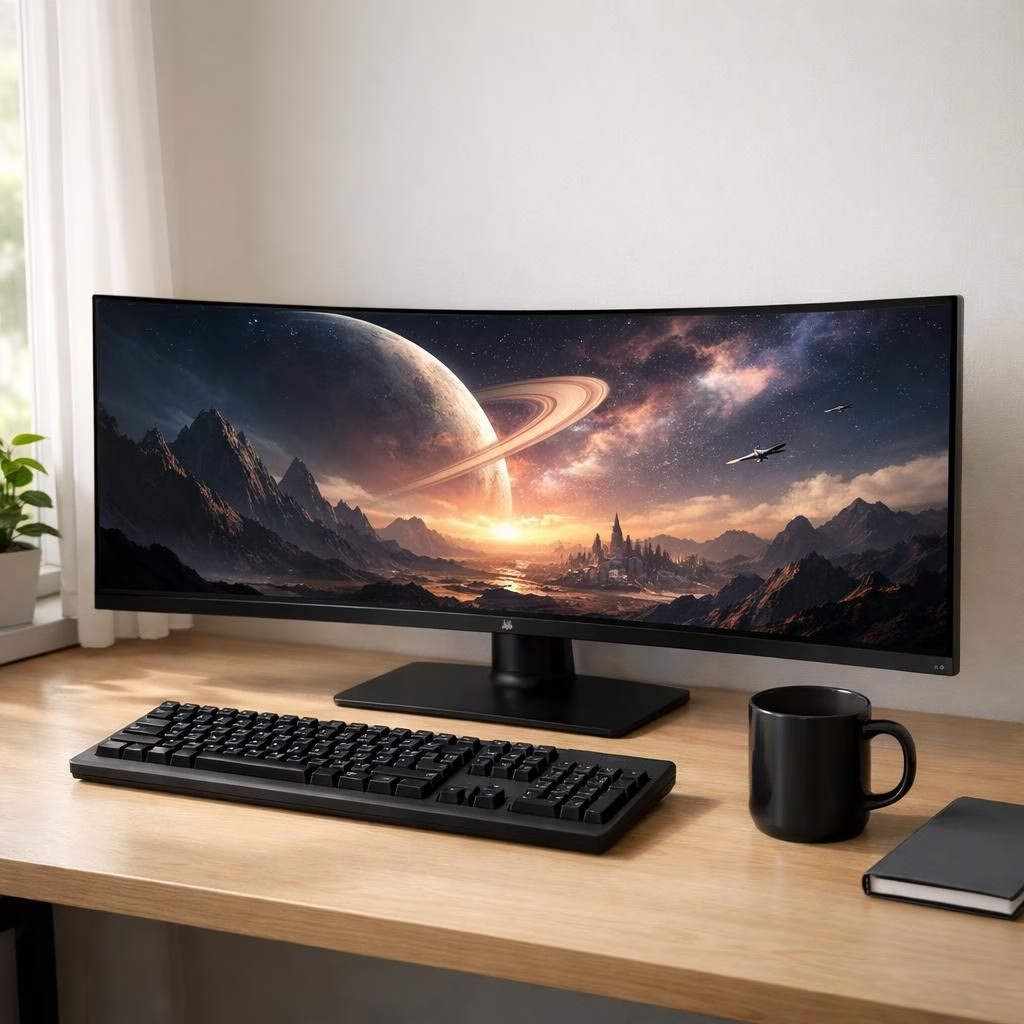
OLED Monitors in 2026: More Color, Less Compromise
Welcome to 2026, where OLED Monitors and Gaming Monitors have moved from niche corners into the living room. The latest round of deals proves premium screens can be practical and fun. If you thought your setup mattered only in theory, the curve is real, and so are the prices. This guide stays human, practical, and eager to help you compare panel tech, size, and value.
Gaming Monitors: Curves, Clarity, and Competitive Edge
When we look at Gaming Monitors, the story centers on speed, VRR, and immersion. The Samsung Odyssey family, including the 27-inch and 57-inch Neo G9, carves space for high-refresh rates and cinematic-scale immersion. For many players, the payoff is a more responsive feel in competitive titles and a cinematic aura in story-driven adventures.
Buying tips: Consider whether you want cinematic depth or speed, and pick a category that leans toward your primary use. If you lean to films and creative work, aim for OLED Monitors with wide viewing angles. If you chase competitive play, prioritize high refresh rates, low latency, and VRR support on Gaming Monitors. Look for a solid stand, good cable routing, and HDMI 2.1 compatibility. A thoughtful setup blends the strengths of OLED Monitors and Gaming Monitors without forcing a compromise.
Additionally, consider future-proofing: ensure the monitor supports your console or PC’s latest standards, and verify warranty expectations align with risk tolerance. You’ll also want to consider mounting options, cable management, and the ergonomics of a curved display. A well-chosen monitor becomes a comfortable, long-term companion rather than a flashy but fleeting purchase from a holiday sale.
To sum up, OLED Monitors and Gaming Monitors continue to push the envelope in 2026. The balance between immersive visuals and practical performance is increasingly accessible, with deals that let more people experience premium panels without breaking the bank. If you’re evaluating a curve-heavy setup, the current crop of devices offers meaningful upgrades in color, contrast, and motion clarity—without requiring you to empty your wallet.
We invite you to share your thoughts in the comments below, tell us which model grabbed your attention, and how you plan to use it in your own space.
Special thanks to Mashable for coverage on this topic and for sparking discussions about OLED technologies and gaming monitors. Original Mashable article link: Mashable.
OLED Monitors: Color, Contrast, and Comfort
OLED Monitors deliver color that feels punchy and true, with contrast that makes HDR pop. In fast-paced games and cinematic scenes, the pixel-level control keeps motion clean and shadows deep. If your room has ambient lighting challenges, OLED Monitors help maintain consistency across seating positions.
Gaming Monitors: Speed, Sync, and Immersion
Gaming Monitors reward players who match panel type, refresh rate, and aspect ratio to their play style. The Odyssey lineup emphasizes quick response, high brightness, and smooth motion, while partnerships with VRR tech reduce tearing for competitive play.
Practical Setup Tips
- Check for HDMI 2.1 and VRR support to future-proof your console or PC.
- Prefer sturdy stands with clean cable routing and reliable ergonomics for long sessions.
- Evaluate viewing angles and brightness in your typical seating arrangement before buying.
FAQ
- Do OLED Monitors suffer from burn-in in gaming? Most modern OLED panels mitigate risk with pixel shifting and automatic protection; typical gaming use rarely causes visible burn-in.
- Is an OLED Monitor worth it for casual gaming? If you value color accuracy and contrast, OLED can be a strong match even for casual play, though price-to-feature balance matters.
- Should I choose curved or flat panels? Curved displays enhance immersion in large or ultrawide sizes, but some gamers prefer flat panels for precise crosshair alignment in competitive titles.